
Saudi Minister: New OPEC+ Mechanism to Stabilise Oil Markets

Introduction
In a landmark decision on December 1, 2025, OPEC+ approved a new mechanism to assess and set members’ maximum oil production capacity — a move designed to bring greater clarity, transparency and long-term stability to global crude markets.
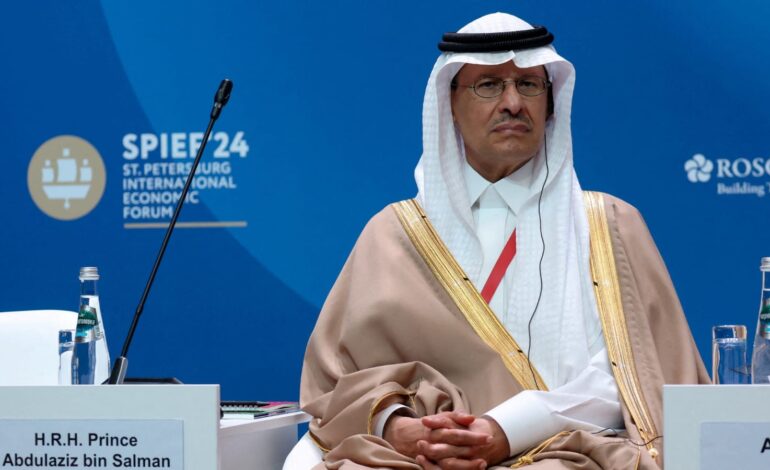
Prince Abdulaziz bin Salman, Saudi Arabia’s Energy Minister, hailed the agreement as a “turning point” in the group’s history, calling the mechanism “fair and transparent,” and promising it would reward countries that invest in expanding their production capabilities.
This article unpacks what the agreement entails, why it matters for oil-markets and Gulf economies (including the UAE), and what stakeholders should watch in the months ahead.
What is the New OPEC+ Production Mechanism?
1.Production-Capacity Assessment & Baseline Setting
Under the new rules, OPEC+ will conduct a comprehensive assessment of each member’s maximum sustainable crude output capacity (MSC) between January and September 2026. The outcome will define baseline quotas for production starting from 2027, replacing older quota frameworks.The mechanism is designed to be technical, objective and verifiable — aiming to reduce disputes over outdated quotas, production claims and over-capacity claims.
2.Immediate Output Policy: Freeze for Q1 2026
Alongside the mechanism approval, OPEC+ agreed to keep aggregate oil output levels unchanged through the first quarter of 2026 — signaling a cautious approach in the near term while preparing for long-term recalibration.
Why This Decision Matters — Key Implications
1.Enhanced Market Stability & Predictability
The new mechanism promises to bring more transparency and predictability to global oil supply planning — a crucial factor for markets that have been rattled by volatility, geopolitical risks, and capacity disputes. By anchoring future output quotas to audited capacities, OPEC+ aims to reduce the risk of sudden supply gluts or overshoots.
2.Encouraging Investment and Capacity Growth
According to Prince Abdulaziz, the mechanism will reward countries that invest in expanding their production capacity — incentivizing upstream investments. This could encourage major oil producers to invest in new wells, technology, maintenance, and infrastructure, ensuring long-term supply resilience.
3.Improved Credibility & Cohesion Within OPEC+
One of the long-standing challenges for OPEC+ has been maintaining cohesion — especially when member states have uneven capacity trends. The new mechanism offers a more equitable and fact-based baseline, potentially reducing conflicts and increasing trust among members.
4.Relevance for Gulf Economies & Global Stakeholders
For Gulf producers — including the UAE, Saudi Arabia and Kuwait — this offers a stable framework to plan budgets, investments and revenues. For global markets, it may reduce the volatility that often follows uncoordinated supply changes.
Risks, Challenges & What to Watch
1.Accuracy of Capacity Assessments:
The mechanism relies heavily on accurate, transparent data. Under-reporting or over-estimating capacity could still cause distortions.
2.Demand Uncertainty & Energy Transition:
With growing global focus on renewables and energy transition, long-term demand may shift — which could undermine incentives tied to capacity.
3.Sanctioned or Special Cases:
Some members (e.g. sanctioned countries, those with structural constraints) may face separate rules or exemptions, complicating uniform application.
4.Implementation & Compliance Risk:
Enforcement, verification, and monitoring will be vital. If not managed well, the mechanism risks becoming symbolic rather than effective.
What This Means for the UAE & Regional Observers
1.Gulf governments and investors should observe how quotas are reshaped, especially for countries like the UAE with growing production capacity.
2.Regional energy firms might see new opportunities — upstream investments, joint ventures or expansion projects — as the mechanism rewards capacity growth.
3.Markets (equities, bonds, sovereign funds) may respond to increased stability in oil supply, which could influence currency peg-dynamics, fiscal planning, and regional macroeconomic outlooks.
Conclusion
The new OPEC+ production-capacity mechanism marks a significant evolution in how global oil supply is governed. By basing future quotas on audited capacity rather than legacy figures or political bargaining, the alliance aims for a more transparent, stable and investment-friendly oil market.
For the Middle East — particularly Gulf producers — this offers a powerful tool to manage revenues, plan growth and stay relevant in a rapidly changing energy landscape. For the rest of the world, it could signal a period of relative calm in oil markets, at least in the short to medium term.
But its success will depend on transparency, compliance, and the ability to adapt — especially in the face of shifting demand trends, energy transition pressures and global economic uncertainties.




2 Comments
[…] Factors such as geopolitical developments, global economic growth, energy demand forecasts and OPEC production decisions all contribute to price movements. If crude prices have risen during December […]
[…] stability remains a cornerstone of OPEC+ strategy. After oil prices recorded one of their steepest annual declines in 2025 since the […]
Comments are closed.