AI, Blockchain to Redefine Finance by 2035: Binance CEO

Introduction
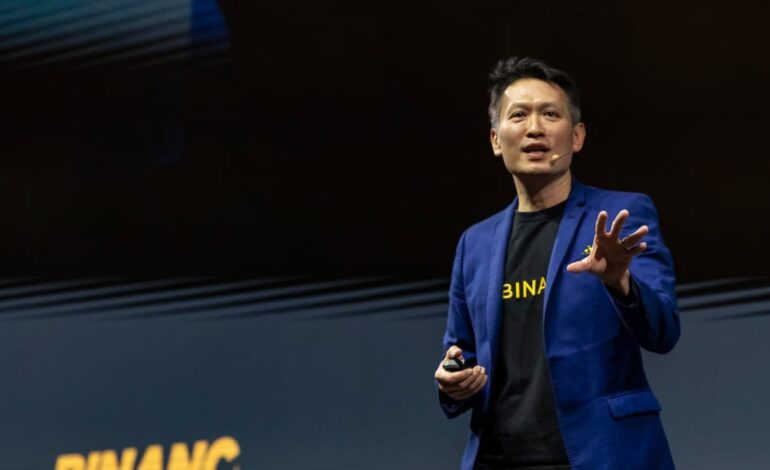
At the recently concluded Binance Blockchain Week 2025 in Dubai, Binance CEO Richard Teng made a striking forecast: AI and blockchain are poised to transform the global financial system over the next 5–10 years.
Teng argued that the convergence of these technologies — stablecoins, decentralized finance (DeFi), smart contracts and AI-enhanced financial infrastructure
In this article, we explore what this transformation could look like, why it matters especially for the Middle East and UAE, and what investors, regulators and businesses should watch for.
Why Now? What’s Driving This Predicted Transformation
1.Convergence of AI + Blockchain = New Financial Architecture
According to Teng, combining blockchain’s transparency, decentralisation, and immutable ledger features with AI’s data-processing and decision-making capabilities could dramatically reshape finance.
This isn’t just about cryptocurrencies — stablecoins, tokenised assets, digital identity, smart-contract automation, AI-driven analytics and risk-assessment,
2.Institutional Adoption & Stablecoins Gaining Ground
Teng pointed out that despite recent market volatility, institutional interest in digital assets remains high. Stablecoins and digital payment systems are driving the next phase of crypto growth.
That institutional backing — combined with rising use of blockchain tech and regulatory clarity — may accelerate transition away from traditional banking models.
3.Global Trends: Innovation + Regulatory Evolution
As more countries and financial hubs update regulations, invest in blockchain infrastructure, or experiment with central-bank digital currencies (CBDCs), the landscape is rapidly evolving.
In parallel, AI’s growing use in everything from credit scoring to fraud detection to compliance further enhances potential for systemic change — giving financial firms new tools to automate, personalise, and scale services.
What Could Change — What to Expect in 5–10 Years
Here’s a breakdown of possible impacts if AI + blockchain transformation proceeds as forecast:
1.Payments & Money Transfer: Faster, Borderless, Cheaper
Stablecoins or tokenised currencies may enable real-time global payments, bypassing traditional banking rails, SWIFT or correspondent-bank delays.
Cross-border remittances, trade settlements, and international transfers could become almost instant, drastically reducing cost and time.
2.Credit, Lending & Financing: Transparent, Automated & Smart
AI-driven credit scoring + blockchain-based identity / credit records could make loans more accessible, especially in emerging markets.
Smart contracts could automate collateral, repayments, liquidation — lowering risk and operational friction.
3.Asset Management & Investment: Tokenisation, Fractional Ownership
Real-world assets — real estate, infrastructure, commodities — could be tokenised, enabling fractional ownership and global investment with minimal entry amounts.
Portfolio management, risk analytics and compliance could be enhanced by AI + blockchain synergy, improving transparency and liquidity.
4.Financial Inclusion & Emerging Markets
Unbanked or under-banked populations may gain access to digital finance via stablecoins, digital wallets and identity solutions — transforming financial inclusion globally.
Digital-asset infrastructure may reduce dependency on legacy banking systems, making finance more accessible in underserved regions.
5.Institutional Finance & Legacy Finance Adaptation
Traditional banks, financial institutions and regulators may evolve or integrate digital-asset solutions, creating hybrid systems combining crypto, blockchain, and legacy finance.
Risk-management, compliance, audits, KYC/AML could be enhanced via blockchain-based transparency + AI-powered detection, reducing fraud and inefficiency.
What This Means for UAE & Middle East — A Strategic Opportunity 1.UAE as Regional Digital-Finance Hub
Given UAE’s proactive stance on blockchain regulation, crypto adoption, and fintech infrastructure, the region is well placed to benefit from this transformation. Hosting Binance Blockchain Week in Dubai underscores its ambition to be a global fintech hub.
Regional investors, sovereign-wealth funds, and regulators could lead adoption using tokenisation, stablecoins, and AI-powered finance tools to diversify economies and improve financial efficiency.
1.Boost for Innovation, Fintech Startups, & Institutional Investment
Fintech companies, asset managers, and financial institutions in the Middle East may find new opportunities in digital-asset management, tokenised real-assets, and blockchain-based financial products.
Crucially, early movers may gain competitive advantage as the global finance landscape shifts — gaining from lower friction, broader reach, and tech-enabled financial services.
2.Regulatory & Compliance Readiness — Key for Stability
As blockchain and AI disrupt finance, regulators in the region will need to balance innovation with oversight. The UAE’s evolving regulatory approach will be central: ensuring security, trust, transparency, while enabling growth.
Because of this, jurisdictions that adopt strong, clear frameworks may attract more capital, talent and global financial flows.
Challenges & Risks to Watch
Of course, such a transformation isn’t guaranteed — and risks remain:
Regulatory uncertainty and fragmentation — different countries move at different paces; lack of harmonised standards may slow global adoption.
Security, privacy, and governance concerns — blockchain + AI implementations need robust security, data protection, transparency and ethical safeguards.
Volatility, instability & speculative bubbles — digital-asset markets remain volatile; tokenised assets or stablecoins risk misuse if not properly regulated.
Legacy system inertia and institutional resistance — traditional banks, regulators and legacy financial institutions may resist or delay transformation.
Technical, interoperability and scalability challenges — integrating AI + blockchain globally at scale remains complex; systems, standards and infrastructure need development.
Conclusion
The forecast by Binance’s CEO that AI and blockchain will rewrite global finance within a decade signals a potentially transformative era — one where payments, credit, investments, asset ownership and financial inclusion are re-imagined with technology at the core.
For the UAE and Middle East, this transformation could accelerate ongoing fintech growth, boost institutional capital flows, and position the region as a global digital-finance hub.
However, realising this vision will require thoughtful regulation, robust infrastructure, and global collaboration — balancing innovation with stability.
If done right, the next 5–10 years could see the financial world being rewritten — in code.