

Introduction
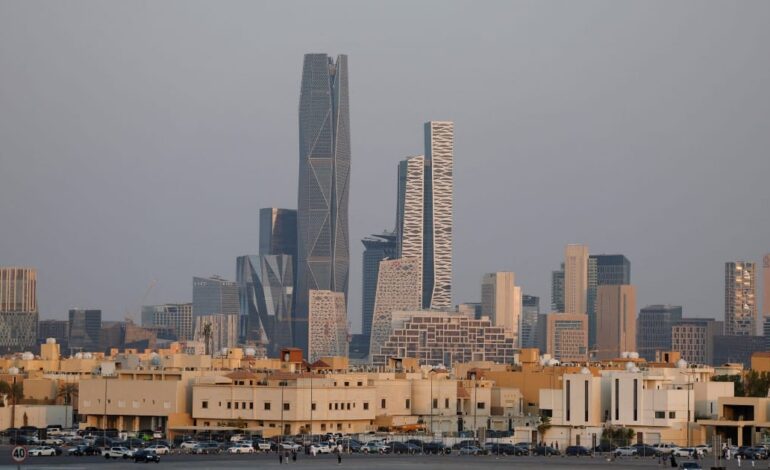
The International Monetary Fund (IMF) has publicly welcomed a recalibration of spending under Saudi Arabia’s long-term economic blueprint, Vision 2030.
According to the IMF, the Kingdom’s move to prioritise efficiency and quality over sheer scale in its expenditure strategy marks a pragmatic shift, aimed at strengthening fiscal stability while ensuring continued delivery of essential services and transformational projects.
What Is the “Recalibration”?
1.The recalibration refers to a planned reshuffle in how Saudi Arabia allocates public funds under Vision 2030 — placing greater emphasis on spending efficiency, value-for-money.
2.As part of this, some of the so-called “giga-projects” may be scaled back, deferred or re-prioritised according to changing fiscal conditions and strategic priorities.
3.The recalibration does not mean abandonment of Vision 2030 — rather, the Kingdom has emphasised that key strategic and transformative projects will continue, alongside improved cost-control.
Why the IMF Supports the Shift
1.According to the IMF, the Kingdom has made commendable progress: non-oil economic activity is robust, inflation remains under control, and unemployment has fallen to historically low levels.
2.The re-prioritisation of funds under Vision 2030 increases fiscal resilience, especially in the face of uncertain global oil-market conditions and external economic shocks.
3.By focusing on critical projects and delivering essential services more efficiently, the Kingdom improves long-term sustainability and enhances its capacity to absorb future headwinds.
What It Signals: A New Phase for Vision 2030
1.The recalibration signals a shift from “big spending for its own sake” to “strategic, outcome-oriented investment.”
2.It also means greater scrutiny — both internal and external— on deliverables, timelines, and fiscal discipline.
3.The shift may improve confidence among international investors, lenders, and partners who value stability and pragmatic governance as much as ambition.
Potential Benefits & Challenges Benefits
Fiscal Sustainability:
Smarter spending reduces waste and overspending risk, especially when oil revenue becomes unpredictable.
Better Public Services:
Redirecting funds toward essential services (health, education, public infrastructure) rather than megaproject glitz could improve overall citizen welfare.
Improved Investor Confidence:
A clearer, disciplined fiscal framework makes the Kingdom more attractive to foreign investment and partnerships.
Flexibility:
The Government retains the ability to scale, defer, or cancel projects as needed, ensuring adaptability.
Challenges & Risks
Slower Pace for Some Ambitious Projects:
Some mega-developments could be delayed or downsized — possibly disappointing stakeholders or international expectations.
Managing Expectations:
Citizens and investors used to ambitious announcements may perceive recalibration as a slowdown or retreat.
Need for Transparent Communication:
To avoid misinterpretation, authorities must clearly communicate which projects proceed and which are re-prioritised.
Balancing Ambition and Prudence:
Ensuring that recalibration doesn’t stifle innovation or strategic long-term investments will be a delicate balance.
Implications for Saudi Arabia & the Region
1.This may mark the beginning of a new, more mature phase of economic transformation: one that balances bold vision with carefully managed fiscal responsibility.
2.Other Gulf economies — many looking to diversify beyond oil — may take note. The recalibrated Vision 2030 could become a regional case study for balancing ambition with sustainability.
3.From a broader view, this shift might lead to more sustainable investment, stable growth rates, and improved macroeconomic resilience
Conclusion
The IMF’s welcome for the recalibration of Vision 2030 spending reflects a growing global recognition that long-term economic transformation demands not only bold vision, but disciplined execution.
For Saudi Arabia, this marks a possible turning point — from exuberant mega-project expansion toward responsible resource management, sustainable growth, and stronger institutional credibility.
For global investors, regional partners, and citizens, the message is clear: Vision 2030 remains alive, but its next chapter will be defined by strategy, prudence.





2 Comments
[…] This achievement highlights the PIF’s transformation from a traditionally conservative sovereign investor into a dynamic global investment powerhouse. It also underscores Saudi Arabia’s broader ambition to diversify its economy and expand its international economic footprint as part of Saudi Vision 2030. […]
[…] behaviour can create volatility in financial markets. The IMF warns that these developments could slow economic growth in many countries. Emerging markets could […]
Comments are closed.