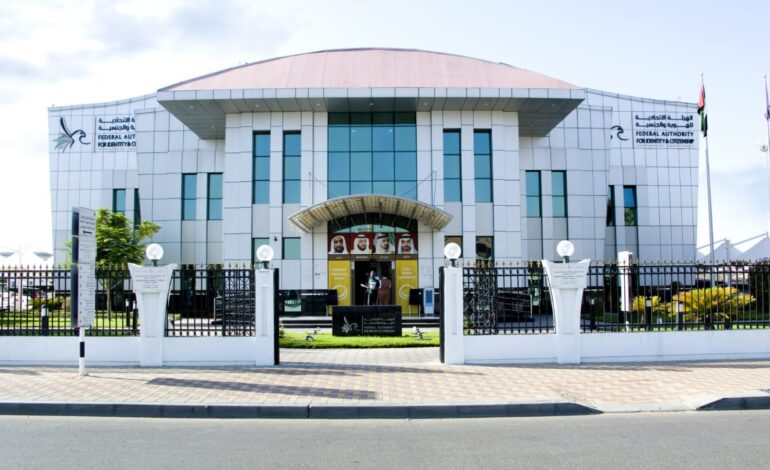

The United Arab Emirates is intensifying its drive to modernise public services through a nationwide effort to eliminate red tape and deliver faster, smarter and more integrated government experiences. At the centre of this transformation is the Federal Authority for Identity, Citizenship, Customs and Ports Security (ICP), which has launched 15 pioneering projects under the second cycle of the national Zero Bureaucracy Government Programme.
This ambitious initiative aims to reduce paperwork, consolidate fragmented procedures and significantly accelerate service delivery for citizens, residents, investors, visitors and business owners. More importantly, it reflects the UAE’s broader vision of building a proactive, digital-first government that anticipates needs rather than reacts to requests.
By embedding artificial intelligence, secure data sharing and integrated digital platforms into everyday government interactions, the UAE is reinforcing its reputation as one of the world’s most efficient and technologically advanced public service ecosystems.
A National Push to Eliminate Red Tape
For years, the UAE has prioritised efficiency, customer satisfaction and innovation in government services. However, as population growth, economic diversification and global mobility increase, the need for faster and more seamless public services has become even more critical.
The Zero Bureaucracy Government Programme represents a strategic response to this challenge. Instead of incremental improvements, the programme targets the root causes of inefficiency, such as duplicated procedures, manual approvals and disconnected systems. As a result, government entities are re-engineering services from the ground up rather than simply digitising outdated processes.
Through this approach, the UAE aims to ensure that interacting with government services becomes simpler, faster and largely frictionless for everyone.
Understanding the Zero Bureaucracy Government Programme
The Zero Bureaucracy Government Programme is a national reform initiative designed to remove unnecessary administrative steps, shorten processing times and improve the overall quality of government interactions. Its core objective is to replace fragmented, paperwork-heavy procedures with integrated digital journeys that rely on automation and trusted data exchange.
Traditionally, customers were required to submit multiple applications, upload the same documents repeatedly and visit government offices in person. Under the zero bureaucracy model, these burdens are systematically eliminated.
Instead, government entities share verified data securely, systems communicate automatically and services are increasingly delivered proactively. Consequently, customers experience fewer delays, fewer requests for information and fewer interruptions.
ICP’s Role in Driving Government Transformation
As one of the UAE’s most service-intensive federal authorities, ICP plays a critical role in translating the zero bureaucracy vision into reality. Its responsibilities span identity services, passports, residency, border control and customs—areas that directly affect millions of people every year.
By launching 15 zero bureaucracy projects in the programme’s second cycle, ICP is addressing some of the most frequently used and time-sensitive government services. At the same time, it is setting new benchmarks for how large-scale public services can operate efficiently in a digital environment.
Overview of the 15 Zero Bureaucracy Initiatives
The second cycle of ICP’s zero bureaucracy projects covers a broad spectrum of services. Each initiative focuses on reducing steps, eliminating duplication and improving the user experience.
1. UAEKYC Facial Recognition Project
This project introduces a unified facial recognition system for identity verification across government entities. As a result, individuals no longer need to submit the same identification documents repeatedly, while security and accuracy are enhanced.
2. Proactive UAE Passport System
Passport issuance and renewal are now more automated, with fewer manual steps. Eligible individuals can receive services faster, with minimal intervention.
3. National Government Enablement and Data System
This system enables secure reuse of verified data across federal entities. Consequently, customers are spared the inconvenience of re-uploading documents already held by the government.
4. “Taqdeer” Services Package
Older people and people of determination receive eligible services and benefits automatically, without the need for repeated applications or follow-ups.
5. Single Integrated Passport and ID Renewal
Citizens can renew both passports and Emirates ID through one streamlined process, significantly reducing time and effort.
6. Resident Family Services Package
Family-related services—such as visas and residency permits—are bundled into a single digital journey based on life events like marriage or childbirth.
7. Proactive Family Data Updates
Civil events, including births, marriages and divorces, are automatically updated across systems through coordination with other federal authorities.
8. Single-Window Land Ports Project (WAM Port)
This initiative streamlines border processing at land ports, improving efficiency for travellers and goods while reducing congestion.
9. Investor Journey Services
Investors benefit from a unified digital pathway covering residency, registration and licensing, enabling faster market entry and reduced administrative burden.
10. Tourist Visa Issuance Services
Tourist visas are integrated with digital health insurance systems, simplifying entry authorisation for visitors.
11. Smart E-Gates at Al Ghuwaifat Land Port
AI-enabled e-gates speed up border clearance and reduce reliance on manual inspections.
12. Smart Service-Fee Refund System
Service fee refunds are automated when applicable, eliminating delays and unnecessary customer follow-ups.
13. Integrated Smart Customs System
A unified customs platform enables faster clearance through digital data exchange and real-time coordination.
14. Domestic Worker Recruitment Package
Recruitment, documentation and management of domestic workers are consolidated into a single streamlined process.
15. Smart Travel Project
This project enhances travel-related procedures using proactive digital services and intelligent data integration.
Technology as the Backbone of Zero Bureaucracy
Technology lies at the heart of all 15 initiatives. Rather than treating digital tools as add-ons, ICP has embedded them directly into service design.
First, secure data sharing ensures that verified information flows seamlessly across government platforms. As a result, duplication is eliminated and accuracy improves.
Secondly, artificial intelligence plays a central role in automating decisions, reducing manual workloads and predicting service needs before customers make requests.
In addition, proactive service delivery replaces reactive models. Instead of waiting for applications, systems initiate updates and approvals automatically when eligibility conditions are met.
Finally, integrated service bundles combine previously separate procedures into single journeys, saving time for both users and government staff.
Benefits for Individuals and Businesses
The impact of these zero bureaucracy initiatives is wide-ranging. Citizens and residents benefit from faster processing times for passports, visas, IDs and civil services. Meanwhile, investors and businesses experience smoother onboarding, reduced compliance friction and faster operational readiness.
Key benefits include:
-
Faster service delivery across major government transactions
-
Significant reduction in paperwork and repeated submissions
-
Improved data accuracy and security
-
Lower error and rejection rates
-
Seamless coordination between federal entities
-
Enhanced digital experiences for diverse user groups
Together, these improvements translate into higher satisfaction and greater trust in government services.
Supporting Economic Growth and Global Competitiveness
Beyond operational efficiency, the zero bureaucracy programme supports the UAE’s broader economic and strategic goals. By simplifying government procedures, the country becomes more attractive to investors, entrepreneurs and global talent.
Moreover, efficient public services reduce costs for businesses, speed up decision-making and improve the overall ease of doing business. In an increasingly competitive global environment, these advantages play a crucial role in sustaining economic growth.
A Model for Future-Ready Governance
Internationally, governments are watching the UAE’s zero bureaucracy efforts closely. By combining policy reform with advanced technology, the UAE is demonstrating how governments can deliver services that are fast, secure and user-centric at scale.
Rather than relying on incremental digitalisation, the UAE is reimagining how public services should function in a connected, data-driven world.
Conclusion
The launch of 15 zero bureaucracy initiatives by ICP under the second cycle of the Zero Bureaucracy Government Programme marks a significant milestone in the UAE’s public sector transformation.
By eliminating unnecessary procedures, integrating services and leveraging AI-driven systems, the UAE is redefining how citizens, residents, investors and visitors interact with government.
Ultimately, these reforms strengthen efficiency, enhance quality of life and reinforce the UAE’s position as a global leader in smart, future-ready governance.