UAE and Philippines Sign Historic CEPA
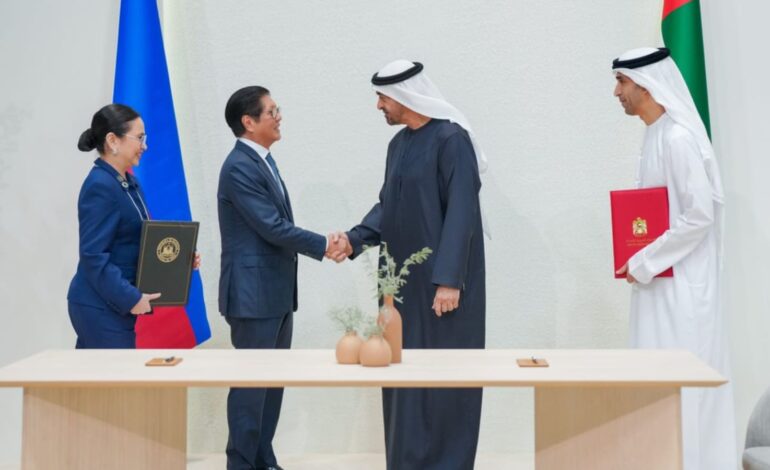

In a landmark development for international trade and economic diplomacy, the United Arab Emirates and the Republic of the Philippines have formally signed a Comprehensive Economic Partnership Agreement (CEPA) in Abu Dhabi. The historic agreement was witnessed by Sheikh Mohamed bin Zayed Al Nahyan, President of the UAE, and Ferdinand R Marcos Jr, President of the Philippines, during the Abu Dhabi Sustainability Week Summit 2026.
The signing marks a major milestone in bilateral relations and represents the first free trade agreement between the Philippines and a Middle Eastern country, opening a new chapter in economic cooperation between Southeast Asia and the Gulf region.

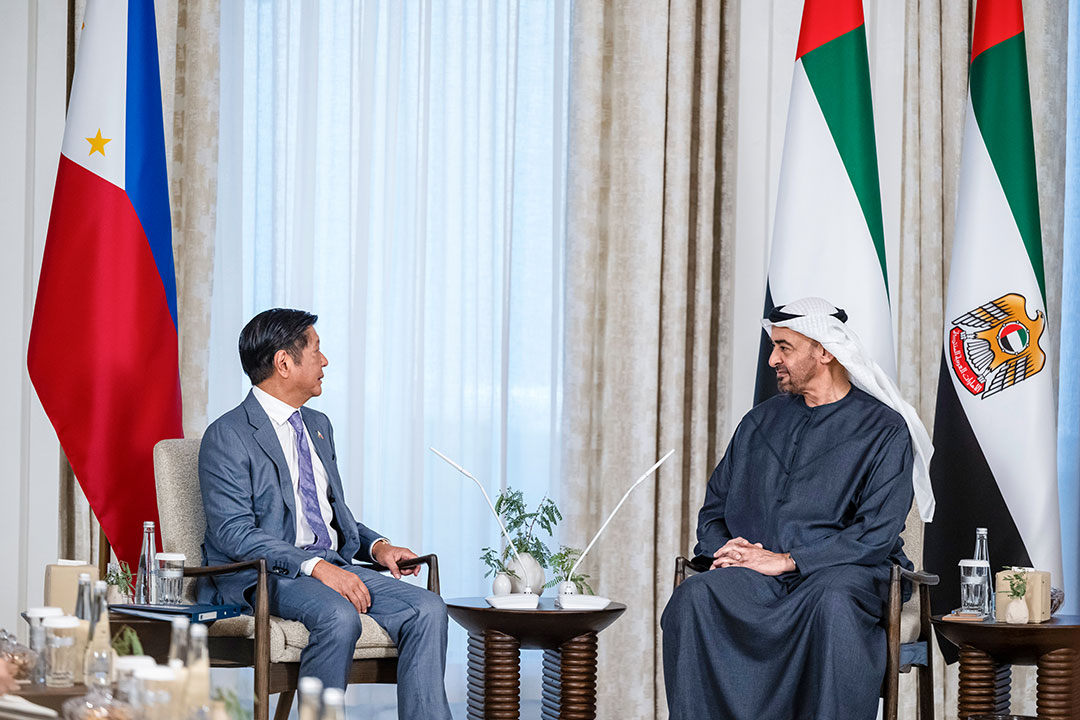
A Landmark Trade Agreement With Global Significance
The UAE–Philippines CEPA is a wide-ranging and forward-looking economic pact designed to deepen trade ties, enhance market access, and promote investment flows between the two nations. It reflects a shared commitment to open markets, economic diversification, and long-term growth driven by innovation and cooperation.
By signing the agreement in Abu Dhabi, both countries underscored the strategic importance of the partnership and highlighted the UAE’s role as a global trade hub linking Asia, the Middle East, and Africa.
What the Comprehensive Economic Partnership Agreement Covers
The CEPA goes beyond traditional trade agreements by offering a modern, inclusive framework that addresses both goods and services, as well as emerging areas of the global economy.
Key Provisions of the CEPA
The agreement aims to:
-
Reduce or eliminate tariffs on a wide range of traded goods
-
Enhance market access for Emirati and Filipino products
-
Promote two-way investment and cross-border business activity
-
Create new opportunities for professionals, service providers, and MSMEs
In addition, the CEPA includes chapters covering:
-
Digital trade and e-commerce
-
Sustainable development
-
Intellectual property rights
-
Competition policy and consumer protection
-
Government procurement
-
Technical cooperation and capacity building
This comprehensive structure ensures the agreement remains relevant in a rapidly evolving global economy.
First Free Trade Agreement Between the Philippines and the Middle East
The UAE–Philippines CEPA is historic in scope, marking the first time the Philippines has entered into a free trade agreement with a Middle Eastern nation. It reflects Manila’s long-term strategy to diversify its trade partnerships and strengthen engagement beyond traditional markets.
For the UAE, the agreement aligns with its broader CEPA programme, which seeks to expand trade networks with high-growth economies and reinforce the country’s position as a global commercial gateway.
Expected Economic Benefits for Both Countries
Economic assessments indicate that the CEPA will deliver tangible benefits for both economies over the coming years.
Boost to Philippine Exports
Preliminary projections suggest the agreement could increase Philippine exports to the UAE by around 9%, supported by reduced tariffs and improved market access. Key export products expected to benefit include:
-
Bananas and pineapples
-
Canned tuna and seafood
-
Electronics and machinery
-
Processed food and consumer goods
These sectors stand to gain from greater competitiveness and stronger demand in the UAE market.
Strengthening the UAE’s Global Trade Role
For the UAE, the agreement reinforces Abu Dhabi and Dubai’s standing as international trade and logistics hubs. It also strengthens economic links with Southeast Asia, one of the world’s fastest-growing regions.
The CEPA is expected to stimulate investment flows into:
-
Tourism and hospitality
-
Healthcare and education
-
Professional and financial services
-
Logistics and supply chain solutions
Strategic Sectors Poised for Growth
The UAE–Philippines CEPA has been strategically designed to benefit a wide range of industries on both sides.
Digital Economy and IT Services
Reduced barriers and regulatory cooperation are expected to support growth in:
-
IT and digital services
-
Business process outsourcing
-
Fintech and digital platforms
This aligns with both countries’ ambitions to expand their digital economies.
Healthcare and Education
The agreement opens opportunities for collaboration in:
-
Medical services and healthcare management
-
Education and training services
-
Knowledge exchange and professional mobility
Tourism and Hospitality
Easier market access and investment frameworks are expected to boost:
-
Tourism flows
-
Hospitality investments
-
Joint ventures in leisure and travel services
Construction, Engineering, and Infrastructure
Filipino and Emirati firms are expected to find new opportunities in:
-
Infrastructure development
-
Engineering and technical services
-
Construction project collaboration
Bilateral Trade Context and Existing Cooperation
Bilateral trade between the Philippines and the UAE reached approximately $1.83 billion in 2024, making the UAE one of the Philippines’ most important trading partners in the Middle East.
The CEPA builds on a strong foundation of existing agreements, including:
-
Investment Promotion and Protection Agreement
-
Cooperation frameworks in energy, logistics, tourism, innovation, and defence
Together, these agreements form a comprehensive partnership framework that supports long-term economic integration.
Leaders Highlight Strategic Importance of the Agreement
President Sheikh Mohamed bin Zayed Al Nahyan described the CEPA as a reflection of sustained efforts to build bridges of partnership between nations. He reaffirmed the UAE’s commitment to fostering global economic growth, shared prosperity, and long-term opportunity.
President Ferdinand R Marcos Jr emphasised the agreement’s importance in expanding Philippine exports, attracting investment, and strengthening economic resilience. He described the CEPA as a milestone in the deepening friendship and cooperation between the Philippines and the UAE.
Role of Abu Dhabi Sustainability Week Summit 2026
The signing took place during the Abu Dhabi Sustainability Week Summit 2026, one of the world’s leading platforms for dialogue on sustainability, economic development, and innovation.
Hosting the signing at this summit highlights the growing intersection between:
-
Trade liberalisation
-
Sustainable development
-
Climate-aligned economic growth
It underscores the idea that modern trade agreements can support both economic expansion and sustainability goals.
Gateway to the Wider Gulf Region
Beyond bilateral gains, the CEPA is widely seen as a gateway for the Philippines to strengthen engagement with the wider Gulf Cooperation Council (GCC) markets, including:
-
Saudi Arabia
-
Qatar
-
Kuwait
-
Oman
By leveraging the UAE’s position as a regional hub, Philippine exporters and investors may access broader regional opportunities across the Middle East.
Long-Term Outlook and Strategic Impact
With the CEPA now in force, both countries are expected to deepen collaboration across:
-
Trade and investment
-
Workforce mobility
-
Digital economy initiatives
-
Sustainable development projects
The agreement is also likely to encourage further cooperation between Southeast Asia and the Gulf, contributing to more diversified and resilient global supply chains.
Conclusion: A New Chapter in UAE–Philippines Relations
The signing of the Comprehensive Economic Partnership Agreement between the UAE and the Philippines represents a historic achievement in bilateral economic cooperation. By reducing trade barriers, expanding market access, and creating new opportunities across goods, services, and investment, the CEPA lays the foundation for sustained shared growth.
As global trade dynamics continue to evolve, the UAE–Philippines CEPA stands as a forward-looking model for how nations can build modern, inclusive, and resilient economic partnerships that deliver long-term prosperity for their people and businesses.