
Dubai Launches AI Literacy Programme for Schools
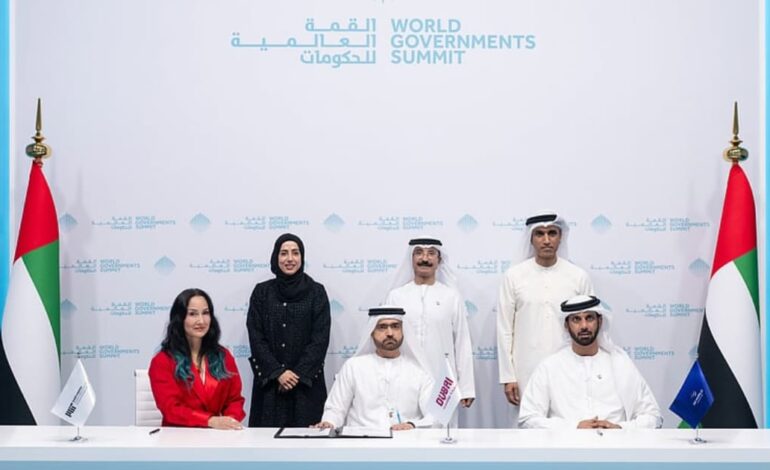

The Government of Dubai has announced a landmark education initiative the AI Literacy Programme for Schools at the World Governments Summit in Dubai. This forward-looking programme aims to equip children and young learners with essential artificial intelligence (AI) knowledge and digital skills needed to thrive in an increasingly technology-driven world.
The initiative reflects Dubai’s long-standing commitment to innovation, future readiness, and human capital development. By introducing AI education at the school level, Dubai is positioning itself as a global leader in preparing the next generation for careers shaped by artificial intelligence, automation, and advanced digital technologies.
Vision Behind the AI Literacy Programme
As artificial intelligence becomes deeply embedded in everyday life from smartphones and social media algorithms to healthcare diagnostics and smart transportation systems the need for AI literacy has become critical. Recognising this shift, Dubai’s leadership has prioritised early exposure to AI education to ensure students are not merely users of technology but informed, ethical, and creative contributors to the digital economy.
The AI Literacy Programme is designed to build a strong foundation in AI concepts while nurturing critical thinking, problem-solving, and ethical awareness. Officials emphasised that the initiative aligns with Dubai’s broader vision of building a future-ready workforce capable of competing in global knowledge economies.
This strategic move underscores the belief that education systems must evolve alongside technological advancements to remain relevant and inclusive.
What the AI Literacy Programme Entails
The AI Literacy Programme will introduce structured AI learning modules into school curricula across Dubai’s public and private educational institutions. These modules will be carefully designed to match students’ cognitive and developmental stages, ensuring age-appropriate learning outcomes.
Key Learning Objectives
The programme aims to equip students with:
-
Foundational understanding of AI concepts
Students will learn what artificial intelligence is, how it works, and where it is used in daily life. -
Introduction to machine learning and data concepts
Learners will gain hands-on exposure to basic machine learning tools, data analysis, and AI-driven applications. -
Problem-solving and digital skills
The curriculum will emphasise computational thinking, logical reasoning, and creative problem-solving relevant to AI careers. -
Ethical and responsible AI use
Students will explore AI ethics, bias, privacy, and accountability, fostering responsible digital citizenship. -
Understanding AI’s societal impact
Lessons will highlight how AI influences business, governance, healthcare, education, and social structures.
Age-Appropriate and Progressive Learning Design
A key strength of Dubai’s AI Literacy Programme lies in its progressive structure. Officials confirmed that the curriculum will be adapted for different age groups:
-
Primary level:
Focus on basic digital awareness, logical thinking, and simple AI concepts through interactive activities and storytelling. -
Middle school level:
Introduction to data, algorithms, and simple machine learning models, combined with problem-based learning. -
Secondary level:
Advanced AI literacy, including real-world applications, ethical debates, and exposure to AI career pathways.
This tiered approach ensures that students gradually build confidence and competence in AI, rather than being overwhelmed by complex technical content.
Why the AI Literacy Programme Matters
1. Preparing Students for Future Job Markets
AI is transforming industries such as healthcare, finance, logistics, education, entertainment, and public administration. Many future jobs will require at least a basic understanding of AI systems, data interpretation, and automation.
By introducing AI education early, Dubai is ensuring that students develop future-ready skills that align with emerging job markets, increasing employability and adaptability.
2. Bridging the Digital Skills Gap
Globally, a widening digital skills gap threatens economic growth and social inclusion. Dubai’s initiative aims to democratise access to AI knowledge, ensuring that students from diverse backgrounds have equal opportunities to participate in the digital economy.
Education experts at the summit highlighted that AI literacy is no longer optional — it is becoming as essential as reading, writing, and numeracy.
3. Encouraging Critical Thinking and Creativity
Rather than focusing solely on technical coding skills, the programme emphasises critical thinking, creativity, and analytical reasoning. Students will learn how to question AI outputs, evaluate algorithms, and design innovative solutions using AI tools.
This approach nurtures independent thinkers who can adapt technology to solve real-world problems.
4. Promoting Ethical Awareness
As AI raises concerns around data privacy, surveillance, bias, and automation, ethical education becomes vital. Teaching students about responsible AI use from an early age fosters awareness of digital rights, fairness, and accountability.
Integration with Existing School Curriculum
The AI Literacy Programme will be introduced in phases and integrated into existing subjects such as:
-
Science
-
Mathematics
-
Computer Studies
-
Social Studies (for ethical and societal discussions)
Rather than functioning as a standalone subject, AI concepts will be embedded across disciplines, encouraging interdisciplinary learning and real-world application.
This integration ensures that AI education complements existing academic frameworks rather than overburdening students or teachers.
Teacher Training and Capacity Building
Recognising that effective implementation depends on educators, Dubai has placed strong emphasis on teacher training and professional development.
Teacher Support Measures Include:
-
Specialised AI training workshops
-
Certification programmes in AI literacy
-
Access to AI teaching tools and platforms
-
Continuous professional development sessions
Teachers will be trained not only to deliver AI content but also to use AI tools in classroom instruction, personalise learning experiences, and guide ethical discussions.
This focus ensures that educators remain confident and current with evolving AI trends and pedagogical methodologies.
Partnerships with Global Technology Leaders
The programme will be supported by partnerships with global technology firms, educational organisations, and research institutions. These collaborations will provide:
-
AI platforms and learning resources
-
Curriculum development expertise
-
Access to innovation labs and mentorship programmes
-
Exposure to real-world AI projects
By connecting students with industry experts and practical applications, Dubai aims to bridge the gap between classroom learning and real-world experience.
This ecosystem-based approach encourages innovation, experimentation, and entrepreneurship among young learners.
Dubai’s AI Education Initiative in Global Context
Dubai’s AI literacy push aligns with global trends in education reform. Across Europe, North America, and Asia, governments are integrating coding, computational thinking, and AI education into national curricula.
Experts agree that AI literacy enables students to:
-
Understand algorithmic decision-making
-
Engage with ethical challenges of automation
-
Prepare for emerging roles in AI development and oversight
-
Navigate digital risks and cybersecurity responsibly
By acting early, Dubai places itself among progressive global leaders shaping education systems for the future.
Long-Term Impact on Society and Economy
The AI Literacy Programme is not only an education reform but also an investment in human capital development. As AI adoption accelerates across industries, societies will increasingly rely on citizens who understand technology rather than fear it.
Long-term benefits include:
-
A skilled and adaptable workforce
-
Increased innovation and entrepreneurship
-
Stronger digital governance and ethical awareness
-
Enhanced global competitiveness for Dubai and the UAE
The programme reinforces the idea that a future economy depends on people equipped with knowledge, creativity, and responsibility.
Conclusion
Dubai’s announcement of the AI Literacy Programme for schools at the World Governments Summit represents a bold and forward-thinking investment in the future of education. By embedding AI knowledge into school curricula, training educators, and partnering with global technology leaders, the initiative prepares young learners for a world where artificial intelligence plays a central role in daily life and work.
This strategic move highlights Dubai’s commitment to innovation, workforce readiness, and global education leadership. As AI continues to reshape economies and societies, Dubai’s approach offers a powerful model for how cities and nations can proactively prepare students for an AI-driven future.







2 Comments
[…] that successfully cultivate AI-ready talent pools will likely enjoy a long-term competitive advantage in the global digital […]
[…] investments proved critical during earlier remote learning phases and continue to support hybrid and emergency education […]
Comments are closed.