
Ukraine Russia US Talks Held in Abu Dhabi to Seek Peace
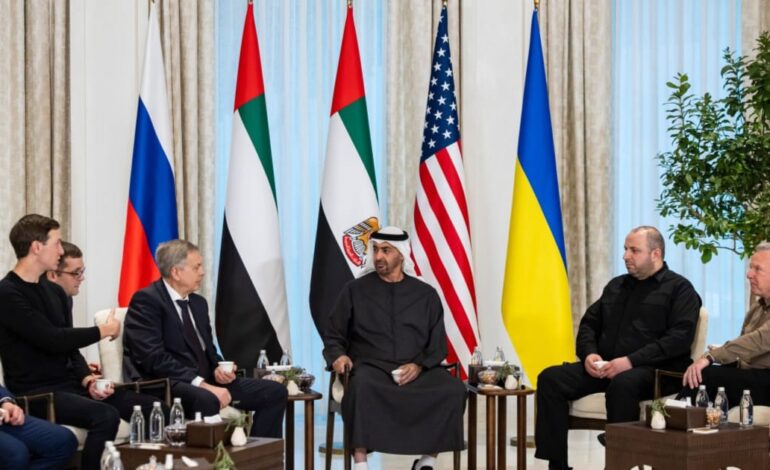

In a notable diplomatic development, high-level representatives from Ukraine, Russia, and the United States held talks in Abu Dhabi, signalling renewed diplomatic engagement amid the protracted conflict in Eastern Europe. The discussions brought together senior officials in the capital of the United Arab Emirates, underscoring the UAE’s growing role as a neutral platform for international dialogue.
The meeting attracted close attention from governments, analysts, and international observers, as it marked a rare instance of trilateral engagement involving the three key parties most directly shaping the course of the Ukraine conflict. While no formal agreement was announced, the talks were widely seen as an important step in keeping diplomatic channels open at a time of heightened geopolitical tension.
Why the Abu Dhabi Talks Matter
The conflict between Ukraine and Russia has reshaped global security, energy markets, and humanitarian dynamics for nearly a decade. Since its escalation in 2022, the war has intensified divisions between Russia and Western nations, making direct or indirect dialogue increasingly difficult.
Against this backdrop, the Abu Dhabi talks represent a significant diplomatic moment. The participation of all three sides reflects a shared recognition that continued communication even without immediate breakthroughs — is essential to managing risks, preventing escalation, and addressing humanitarian consequences.
The involvement of the United States is particularly significant. As Ukraine’s principal international supporter and a central actor in global security affairs, Washington’s presence lends political weight to the discussions. For Ukraine, such talks reinforce continued international engagement, while for Russia, they provide an opportunity to articulate security concerns in a mediated setting.
The UAE’s Role as a Diplomatic Host
The UAE has increasingly positioned itself as a facilitator of international dialogue, leveraging its neutral foreign policy posture and strong relationships with diverse global actors.
Why Abu Dhabi Was Chosen
Several factors make Abu Dhabi a strategic venue for high-level talks:
-
Neutral diplomatic stance
The UAE maintains balanced relations with Western countries, Russia, and other global powers, allowing it to host discussions without the political baggage associated with more polarised venues. -
Strong international credibility
Abu Dhabi is recognised for its adherence to diplomatic protocol, discretion, and security, all of which are essential for sensitive negotiations. -
Experience in mediation and facilitation
The UAE has previously hosted talks on regional conflicts, humanitarian coordination, and global economic cooperation, reinforcing its reputation as a trusted convening platform.
By hosting the Ukraine-Russia-US talks, the UAE reaffirmed its aspiration to contribute constructively to global peace and stability beyond its immediate region.
Key Themes Discussed During the Talks
Although official details were limited, diplomats and analysts identified several core themes that shaped the discussions.
1. Conflict De-Escalation and Security Measures
A central focus of the talks was the exploration of ways to reduce immediate tensions. Participants reportedly examined confidence-building measures that could help lower the risk of further escalation, even in the absence of a comprehensive peace settlement.
Such measures may include communication mechanisms, risk-reduction steps, or limited agreements aimed at stabilising the security environment.
2. Humanitarian Concerns and Civilian Impact
The humanitarian toll of the conflict was a major topic of discussion. Millions of civilians have been displaced, critical infrastructure has been destroyed, and access to humanitarian assistance remains uneven in conflict-affected areas.
Officials discussed ways to improve humanitarian access, support relief operations, and mitigate civilian suffering. Analysts note that humanitarian cooperation is often one of the few areas where incremental progress is possible, even when political disagreements remain deep.
3. Diplomacy, International Law, and Sovereignty
All sides reiterated the importance of pursuing diplomatic solutions grounded in international law. However, fundamental differences persist regarding sovereignty, territorial integrity, and security arrangements.
Ukraine continues to emphasise its territorial integrity and international recognition of its borders, while Russia maintains that its security concerns must be addressed. The United States reaffirmed its support for Ukraine while signalling openness to diplomatic engagement aimed at reducing hostilities.
4. Role of Regional and International Partners
The talks also highlighted the role of third-party actors in supporting peace efforts. Regional partners like the UAE can contribute by facilitating dialogue, supporting humanitarian initiatives, and assisting in post-conflict reconstruction planning.
This reflects a broader trend in which non-traditional diplomatic hubs play an increasingly important role in global conflict management.
Statements From Delegations
Following the meeting, officials from all sides described the talks as constructive, even if limited in scope.
-
A senior Ukrainian representative stressed the importance of sustained international engagement, noting that multilateral diplomacy remains essential to stabilising the situation and maintaining global attention on Ukraine’s security and humanitarian needs.
-
The US delegation reaffirmed Washington’s commitment to Ukraine’s sovereignty and emphasised that diplomatic channels remain a critical tool for managing risks and preventing wider conflict.
-
Russian representatives highlighted the need to consider broader security dynamics and regional stability, signalling cautious openness to continued dialogue despite enduring strategic differences.
UAE officials welcomed the talks as an example of pragmatic diplomacy, underlining Abu Dhabi’s role in providing a neutral and secure environment for open communication.
Context: The Ongoing Ukraine-Russia Conflict
The roots of the Ukraine-Russia conflict date back to 2014, following Russia’s annexation of Crimea and the outbreak of fighting in eastern Ukraine. The conflict escalated dramatically in 2022 with a full-scale invasion, triggering one of the most serious security crises in Europe since World War II.
Impact of the War
The conflict has resulted in:
-
Tens of thousands of military and civilian casualties
-
Millions of displaced people within Ukraine and across Europe
-
Widespread destruction of infrastructure, including energy and transport networks
-
Severe economic disruption and global inflationary pressures
-
Sanctions and counter-sanctions affecting international trade and diplomacy
Despite multiple negotiation attempts in different formats, a durable peace agreement has remained elusive.
Diplomacy Amid a Polarised Global Environment
The broader geopolitical context has made negotiations particularly challenging. NATO members, led by the United States, have provided extensive political, economic, and military support to Ukraine. Russia, meanwhile, views this support as a direct threat to its security interests.
In such a polarised environment, neutral venues like Abu Dhabi offer rare opportunities for exploratory dialogue. These forums allow parties to engage without the political pressures and symbolic implications associated with talks held in allied capitals.
Strategic Value of Trilateral Dialogue
While bilateral talks have occurred intermittently, trilateral engagement involving Ukraine, Russia, and the United States is far less common. Such dialogue carries strategic value by:
-
Allowing key decision-makers to clarify positions
-
Reducing misperceptions and communication gaps
-
Identifying limited areas of mutual interest, such as humanitarian access
-
Keeping open pathways for future negotiations
Even when outcomes are modest, sustained dialogue can help prevent misunderstandings that might otherwise escalate into broader confrontation.
What Happens Next?
No concrete roadmap or agreement emerged from the Abu Dhabi talks, but diplomats and analysts stress that the continuation of dialogue itself is meaningful.
Possible Next Steps
-
Follow-up meetings in other neutral locations
-
Expanded discussions on humanitarian access or prisoner exchanges
-
Confidence-building measures aimed at reducing military risks
-
Continued involvement of mediators and regional partners
Experts caution that progress is likely to be incremental rather than transformative. However, even limited agreements can help stabilise conditions and build trust over time.
UAE’s Expanding Role in Global Diplomacy
By hosting talks on one of the world’s most complex conflicts, the UAE continues to enhance its profile as a global diplomatic actor. Its ability to convene rival powers reflects a broader strategy of engaging constructively in international affairs beyond traditional regional concerns.
This approach aligns with the UAE’s emphasis on dialogue, multilateralism, and humanitarian cooperation as tools for managing global challenges.
Conclusion
The talks in Abu Dhabi involving Ukraine, Russia, and the United States mark a noteworthy moment in ongoing diplomatic efforts to address one of the most consequential conflicts of the 21st century. While significant differences remain and no immediate breakthrough was achieved, the willingness of all parties to engage highlights the enduring value of diplomacy amid conflict.
By providing a neutral platform for dialogue, the UAE has reinforced its role as a facilitator of international engagement and contributed to efforts aimed at de-escalation, humanitarian relief, and long-term stability. As the conflict continues to shape global politics, such diplomatic initiatives remain an essential — if challenging — pathway toward peace.






1 Comment
[…] US authorities first identified the tanker in the Caribbean Sea after maritime intelligence systems flagged unusual sailing patterns. Analysts noticed repeated course changes, irregular transmission of tracking signals, and inconsistencies in the vessel’s registration data all common indicators of sanctions evasion. […]
Comments are closed.