
US Weighs Second Aircraft Carrier Deployment Near Iran
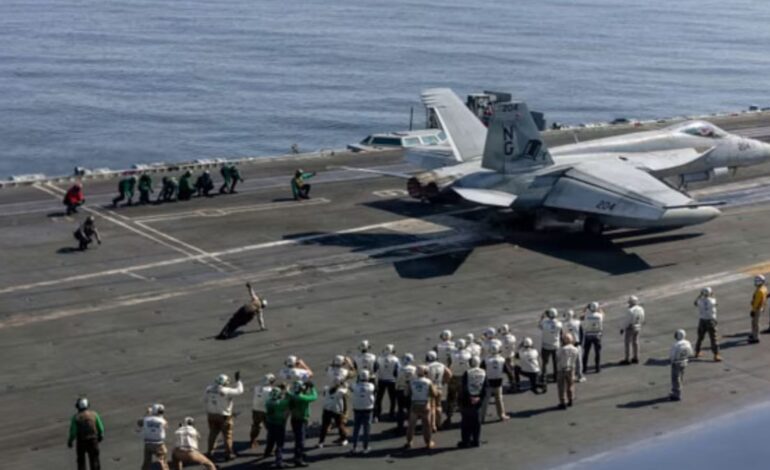

The United States is preparing to significantly expand its military presence in the Middle East as tensions with Iran remain elevated. Washington is reportedly weighing plans to deploy a second aircraft carrier strike group to the region, a move widely interpreted by defense analysts as a powerful show of force even as diplomatic talks with Tehran continue.
The potential deployment comes amid ongoing negotiations over Iran’s nuclear programme and follows renewed warnings from US President Donald Trump that Iran could face severe consequences if a new agreement is not reached. Together, the diplomatic and military signals highlight Washington’s continuing strategy of combining pressure with negotiation.
This development has drawn close attention from policymakers, investors and security experts worldwide, raising key questions about whether the United States is preparing for deterrence, leverage in talks or a possible escalation scenario.
Second Carrier Could Join Expanding US Naval Presence
According to officials familiar with internal planning discussions, the United States is considering sending another carrier strike group to the Middle East. Among the vessels reportedly under review is the USS Gerald R. Ford, the world’s largest and most advanced aircraft carrier.
The region already hosts the USS Abraham Lincoln, which was recently repositioned from the Indo-Pacific to the Gulf in response to rising regional tensions.
Why This Matters
Deploying two carrier strike groups in the same theatre is a significant military signal. While it does not automatically indicate imminent conflict, it typically reflects preparations for:
-
Sustained air and naval operations
-
Enhanced regional deterrence
-
Increased operational flexibility
-
Rapid response capability
Military experts stress that such moves are often intended to shape strategic calculations rather than trigger immediate confrontation.
Trump Maintains “Pressure Plus Diplomacy” Strategy
US President Donald Trump has continued to pursue a dual-track approach toward Iran. While expressing openness to negotiations, he has also issued strong warnings aimed at increasing pressure on Tehran.
In recent remarks, Trump said Iran could face a “very traumatic” outcome if it fails to reach a new nuclear agreement with Washington. Speaking from the White House, he emphasised the need for what he described as a fair and strong deal that addresses long-standing concerns over Iran’s nuclear activities.
Key Signals From Washington
-
Diplomacy remains officially preferred
-
Military options are being kept visible
-
Pressure is intended to push compromise
-
Negotiations have not been abandoned
Analysts say this approach is designed to strengthen the US negotiating position while reassuring regional allies.
Why Two Aircraft Carriers Are a Major Signal
An aircraft carrier strike group represents one of the most powerful military formations in the world. Each group brings substantial combat and surveillance capabilities.
A Typical US Carrier Strike Group Includes:
-
Fighter and electronic warfare aircraft
-
Guided-missile destroyers and cruisers
-
Attack submarines
-
Intelligence and surveillance systems
-
Logistics and support vessels
With two carriers operating in the same region, the United States would dramatically expand its air power and maritime reach.
Defense Analysts Say Such Postures Usually Signal:
-
Strong deterrence against adversaries
-
Preparation for sustained operations
-
Reinforcement of diplomatic leverage
-
Protection of key shipping routes
However, officials caution that military planning does not necessarily mean an attack is imminent.
Regional Context Driving the US Move
The potential deployment comes amid a complex geopolitical backdrop involving Iran and the wider Middle East.
Key Drivers of Tension Include:
-
Disputes over Iran’s uranium enrichment
-
Concerns from US allies, including Israel
-
Continued US sanctions on Tehran
-
Periodic regional security incidents
-
Domestic economic pressures inside Iran
Washington has gradually increased its military readiness across the region in recent months, including repositioning naval assets and strengthening defensive systems at key bases.
Taken together, the carrier deployment appears to be part of a broader strategic posture rather than an isolated move.
Diplomatic Track Remains Open
Despite the visible military signalling, US officials continue to emphasise that diplomacy remains the preferred path forward.
Indirect talks between American and Iranian officials have resumed after a prolonged period of heightened tensions. While no breakthrough has been announced, both sides have kept communication channels open.
Trump himself has indicated he wants a deal but insists it must be stronger and more comprehensive than previous agreements.
Analysts Describe the Current Strategy As:
-
Negotiation backed by pressure
-
Deterrence paired with diplomacy
-
Strategic ambiguity toward Iran
This “pressure plus talks” framework has been a recurring feature of US policy toward Tehran.
How Iran Is Likely Interpreting the Buildup
From Tehran’s perspective, the potential arrival of another US carrier will almost certainly be viewed as a serious escalation signal.
Historically, Iran has responded to heightened US military pressure in several ways.
Typical Iranian Responses Include:
-
Strong diplomatic messaging
-
Military capability demonstrations
-
Warnings against foreign intervention
-
Continued nuclear programme activity
At the same time, Iran faces significant economic strain due to sanctions, which could influence its willingness to remain engaged in negotiations.
The coming weeks may reveal whether Tehran interprets the US posture primarily as deterrence or as preparation for possible confrontation.
Oil Markets on Alert
Global energy markets are closely watching developments because US-Iran tensions have historically had a direct impact on crude prices.
The Middle East remains central to global oil supply, and any perceived risk to shipping routes or production can quickly influence market sentiment.
Traders Typically React To:
-
Military deployments in the Gulf
-
Security risks near the Strait of Hormuz
-
Sanctions changes affecting Iranian exports
-
Signals from nuclear negotiations
Even without actual conflict, heightened geopolitical risk can push oil prices higher due to uncertainty premiums.
Gulf Countries Monitoring Closely
For countries across the Gulf Cooperation Council (GCC), the situation carries significant strategic importance.
Because of their geographic proximity and economic exposure, Gulf states closely track every shift in US-Iran dynamics.
Key Regional Concerns Include:
-
Maritime security
-
Energy export stability
-
Regional defence posture
-
Investment confidence
-
Shipping lane safety
The UAE, Saudi Arabia and other Gulf economies have built resilience in recent years, but heightened tensions can still influence market sentiment and policy planning.
Investor and Market Implications
Beyond energy markets, the situation is also relevant for global investors and financial markets.
Potential Market Effects:
Equities:
Heightened geopolitical risk can increase volatility, particularly in energy-sensitive sectors.
Currencies:
Safe-haven flows may strengthen the US dollar during periods of tension.
Shipping and Trade:
Insurance costs and freight rates can rise if regional risks increase.
Regional Investments:
Foreign investment sentiment in the Middle East can be influenced by perceived security stability.
For businesses operating in or connected to the region, monitoring US-Iran developments remains essential.
Possible Scenarios Ahead
Analysts broadly outline three potential paths for the situation in the coming weeks and months.
Scenario One: Diplomatic Progress
If negotiations gain traction, the military buildup may remain largely symbolic.
Possible outcomes:
-
Reduced regional tensions
-
Stabilising oil markets
-
Partial sanctions relief
-
Improved investor confidence
However, most experts caution that a rapid breakthrough remains uncertain.
Scenario Two: Prolonged Standoff (Most Likely Near Term)
Many analysts believe the most probable short-term outcome is continued pressure combined with slow-moving diplomacy.
Implications:
-
Persistent but managed tensions
-
Periodic market volatility
-
Ongoing military signalling
-
Continued indirect talks
This scenario allows both sides to maintain leverage while avoiding escalation.
Scenario Three: Escalation Risk
If diplomacy collapses completely, the presence of multiple carrier groups would give Washington rapid strike capability.
Potential triggers could include:
-
Breakdown in negotiations
-
Significant nuclear escalation
-
Regional military incidents
-
New sanctions confrontations
For now, officials emphasise that no final deployment decision has been publicly confirmed.
Why This Story Matters for the Middle East
For readers in the UAE and across the GCC, the evolving US-Iran dynamic is more than distant geopolitics. It directly affects the region’s economic and security environment.
Key Areas of Impact:
-
Regional stability
-
Energy markets
-
Shipping routes
-
Defence planning
-
Investment confidence
Even signals of military movement can ripple quickly through financial markets and policy calculations across the Gulf.
Strategic Outlook
The United States appears to be carefully calibrating its posture — applying pressure while keeping diplomatic channels open. Whether this strategy succeeds will depend on several factors:
-
Iran’s negotiating flexibility
-
US domestic political considerations
-
Israeli security concerns
-
Regional mediation efforts
-
Global energy market dynamics
The coming weeks are likely to be critical in determining whether tensions ease or intensify.
Conclusion
The United States’ consideration of deploying a second aircraft carrier near Iran marks a significant moment in the evolving nuclear standoff. While Washington continues to emphasise diplomacy, the potential military buildup underscores a strategy that blends negotiation with visible deterrence.
For now, the move appears designed to strengthen US leverage rather than signal imminent conflict. However, in a region as sensitive as the Middle East, even precautionary deployments can carry major geopolitical and market implications.





1 Comment
[…] International Fleet Review 2026 is set to be among the biggest naval assemblies ever hosted by India. Traditionally, the fleet review serves as both a ceremonial […]
Comments are closed.