UAE Test Launches First Home Built Hybrid Rocket
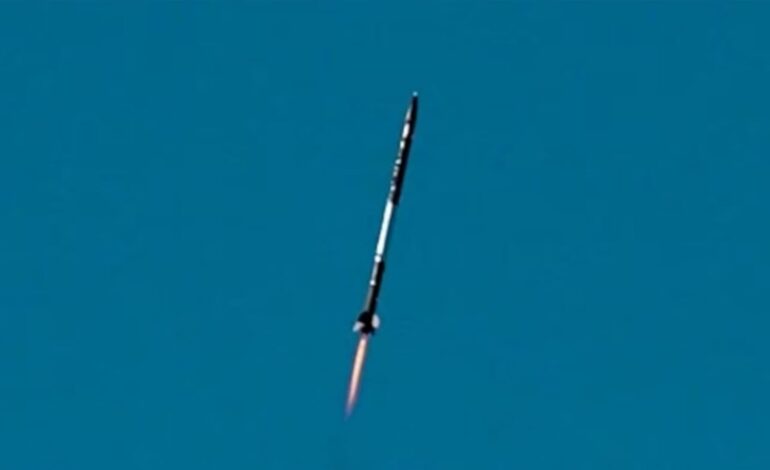

The United Arab Emirates has taken a significant step forward in its ambitious space journey after successfully test-launching its first fully UAE-built hybrid rocket. The landmark achievement demonstrates the country’s rapidly growing ability to design, manufacture and operate advanced aerospace systems using local expertise and infrastructure.
Conducted in Abu Dhabi, the successful mission represents more than just a technical win. It signals the UAE’s transition from being primarily a participant in international space projects to becoming an emerging leader in space manufacturing and propulsion innovation.
Officials and researchers say the breakthrough strengthens the country’s long-term goal of building sovereign national launch capability, positioning the UAE more competitively in the global space technology race.
Historic Rocket Test Flight Over Abu Dhabi
The sounding rocket, developed by Abu Dhabi’s Technology Innovation Institute (TII), lifted off from a remote island launch site at 12:21 pm on Friday. During the test, the rocket climbed to approximately 3 kilometres above the desertbefore completing its planned flight trajectory.
After reaching peak altitude, the rocket’s parachute recovery system deployed successfully, allowing it to descend safely and be retrieved by the mission team.
The successful end-to-end mission validated:
-
Structural integrity
-
Propulsion system performance
-
Flight stability and control
-
Recovery and parachute systems
This comprehensive validation marks an important technical milestone, confirming the UAE’s readiness to develop and operate indigenous launch technologies.
What Makes the UAE Hybrid Rocket Unique
While sounding rocket launches are not uncommon globally, this mission stands out because the vehicle was fully designed, built and operated within the UAE.
Key technical specifications include:
-
Approximate weight: 13 kilograms
-
Propulsion type: Hybrid rocket engine
-
Flight profile: Vertical sounding rocket
-
Development timeline: 2.5 years
-
Integration: 100% local engineering and testing
The successful demonstration highlights the growing maturity of the UAE’s aerospace research ecosystem.
Understanding Hybrid Rocket Technology
Hybrid rockets use a combination of solid fuel and a liquid or gaseous oxidiser, offering a middle ground between traditional solid and liquid propulsion systems.
Advantages of hybrid propulsion include:
-
Improved safety compared with liquid rockets
-
Simpler design than fully liquid systems
-
Better throttle control than solid rockets
-
Lower operational complexity
-
Cost-effective development pathway
For emerging space nations, hybrid propulsion is often considered a strategic stepping stone toward more powerful orbital launch vehicles.
By mastering this technology domestically, the UAE has taken a crucial step toward independent rocket engine capability.
Why Sounding Rockets Are Critically Important
The tested vehicle is classified as a sounding rocket, also known as a research rocket. Unlike orbital launch vehicles that place satellites into space, sounding rockets travel into the upper atmosphere and then return to Earth.
Although smaller in scale, they play a vital role in building space expertise.
Sounding rockets are used for:
-
Testing new propulsion systems
-
Validating flight control technologies
-
Conducting atmospheric and microgravity research
-
Training aerospace engineers
-
Developing launch operations experience
Experts widely agree that mastering sounding rockets is often the first practical step toward full orbital launch capability.
The UAE’s successful test therefore represents foundational progress rather than an isolated experiment.
A Turning Point for the UAE’s Innovation Ecosystem
Leadership at the Technology Innovation Institute described the launch as a defining moment for the nation’s scientific and engineering capabilities.
The mission proves that UAE-based teams can move beyond theoretical research and deliver real-world, high-stakes aerospace systems.
Every phase of the programme was handled locally, including:
-
Propulsion design and development
-
Systems engineering and integration
-
Launch operations
-
Flight monitoring and telemetry
-
Recovery and post-flight analysis
This full-cycle capability is considered essential for any country aiming to build long-term space independence.
Building Sovereign Space Capability
One of the most strategically significant aspects of the programme is the UAE’s progress toward sovereign propulsion technology.
Historically, rocket engines and propulsion systems have been among the most tightly controlled aerospace technologies worldwide. Many countries have depended heavily on foreign suppliers for these critical components.
The new hybrid rocket programme demonstrates that the UAE now possesses the technical foundation to:
-
Design rocket propulsion systems locally
-
Manufacture motors domestically
-
Conduct full flight validation
-
Support development of future launch vehicles
This reduces external dependence and strengthens the country’s technological resilience and national security posture.
Two and a Half Years of Intensive Development
The successful launch was the result of an extensive two-and-a-half-year research and development programme.
According to the Technology Innovation Institute, the project underwent rigorous aerospace engineering processes before receiving flight clearance.
The development phase included:
-
Advanced computational simulations
-
Ground-based propulsion testing
-
Structural stress validation
-
Integrated system trials
-
Flight readiness reviews
Such methodical preparation reflects the growing sophistication of the UAE’s research infrastructure and its commitment to international aerospace standards.
Part of the UAE’s Expanding Space Vision
The hybrid rocket milestone fits into a broader national strategy that has been steadily unfolding over the past decade.
The UAE has already achieved global recognition through several high-profile space initiatives.
Major milestones in the UAE space programme include:
-
Advanced satellite development
-
The Hope Mars Mission
-
Emirati astronaut missions
-
Lunar exploration plans
-
Investments in advanced propulsion research
The successful sounding rocket launch indicates the country is now moving deeper into launch vehicle technology, one of the most complex and strategically valuable areas of space engineering.
Why Independent Launch Capability Matters
For spacefaring nations, possessing domestic launch capability is considered a game-changing strategic asset.
Benefits of sovereign launch capability include:
-
Ability to deploy satellites independently
-
Reduced reliance on foreign launch providers
-
Lower long-term mission costs
-
Enhanced national security resilience
-
Faster mission turnaround
-
Growth of domestic commercial space sector
While the UAE is still in the early stages compared with established space powers, this successful test represents a foundational building block toward that goal.
Boost for the UAE’s Advanced Technology Economy
The impact of the hybrid rocket programme extends beyond space exploration. Developing rocket systems requires expertise across multiple high-value technology domains.
Key sectors benefiting from aerospace development:
-
Materials science
-
Artificial intelligence
-
Advanced manufacturing
-
Control systems engineering
-
Computational modelling
-
Sensor technologies
Historically, investment in space programmes has generated significant spillover innovation across national economies. The UAE is positioning itself to capture similar benefits as it deepens its aerospace capabilities.
The Global Context: A New Space Race
The UAE’s progress comes amid intensifying global competition in the rapidly expanding space economy. Many mid-sized nations are now investing heavily in sovereign space infrastructure.
The global space sector is being driven by rising demand for:
-
Communications satellites
-
Earth observation systems
-
Climate monitoring tools
-
Navigation and positioning services
-
Deep space exploration missions
Analysts estimate the space economy could exceed $1 trillion in value over the coming decades. By building local launch expertise now, the UAE is positioning itself to secure a meaningful share of this high-growth industry.
Challenges on the Road to Orbital Launch
Despite the successful test, experts caution that developing full-scale orbital launch capability remains a complex, multi-year journey.
Major technical and operational challenges ahead include:
-
Scaling propulsion power for orbital missions
-
Developing larger launch vehicles
-
Building dedicated launch infrastructure
-
Meeting stringent international safety standards
-
Managing high research and development costs
-
Competing with established global launch providers
However, the successful hybrid rocket demonstration shows the UAE is methodically building the technical foundation required for future breakthroughs.
What Comes Next for the UAE Space Programme
Industry observers expect the next phase of development to focus on:
-
Higher-altitude sounding rockets
-
More powerful hybrid engines
-
Expanded propulsion research
-
Advanced guidance and navigation systems
-
Potential small satellite launch concepts
Each incremental step will bring the UAE closer to achieving end-to-end launch capability.
Regional Impact and Strategic Significance
The achievement also has broader implications for the Middle East’s technology landscape. The UAE is positioning itself as a regional hub for advanced aerospace innovation, potentially attracting:
-
International research partnerships
-
Private space companies
-
Venture capital investment
-
High-skilled engineering talent
As the country continues investing in science and technology, its space programme could become a major pillar of economic diversification beyond oil.
Conclusion: UAE Moves Closer to Space Technology Leadership
The successful test launch of the UAE’s first fully homegrown hybrid rocket marks a historic milestone in the nation’s space journey. By proving it can design, build and operate advanced propulsion systems locally, the country has taken a decisive step toward sovereign launch capability.
While significant work remains before the UAE achieves full orbital independence, the momentum is unmistakable. The country is no longer simply participating in global space missions — it is increasingly engineering the future of space technology from within its own borders.
For the global aerospace community and the region’s fast-evolving innovation ecosystem, the UAE’s progress is a development worth watching closely.