
UAE, Indonesia, Bangladesh Join India Naval Review
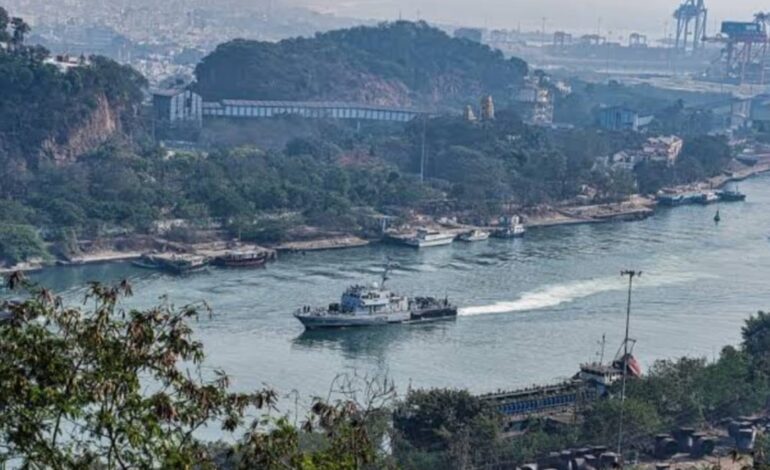

A major demonstration of maritime cooperation and naval diplomacy is unfolding in India as warships from the United Arab Emirates, Indonesia and Bangladesh arrive in Visakhapatnam ahead of the International Fleet Review (IFR) 2026 and Exercise Milan. The multinational presence highlights strengthening regional defence ties and underscores the growing importance of collaborative maritime security across the Indo-Pacific.
As preparations intensify, the arrival of these foreign naval vessels signals robust bilateral relationships and reinforces India’s expanding role as a key convenor of large-scale international naval engagements. Moreover, the participation of Gulf and Southeast Asian navies reflects the widening geographic scope of maritime cooperation in the region.
Foreign Warships Reach Visakhapatnam
According to official updates, the Indian Navy has formally welcomed multiple foreign warships to the eastern port city of Visakhapatnam, where the twin naval events will be hosted. The arrivals mark the beginning of what is expected to be one of the largest multinational naval gatherings in recent years.
Among the notable visiting vessels are:
-
KRI Bung Tomo-357, an Indonesian Navy frigate
-
Al Emarat, a UAE Navy corvette
-
BNS Somudra Avijan, a Bangladesh Navy frigate
Together, these deployments underscore deepening maritime partnerships and professional naval cooperation among the participating countries.
In a social media message, India’s Eastern Naval Command specifically welcomed the UAE vessel, noting that its arrival “underscores the strength of our enduring bilateral partnership.” Consequently, the event is being viewed not merely as a ceremonial gathering but as a reflection of evolving strategic alignment.
IFR 2026: One of India’s Largest Naval Showcases
The International Fleet Review 2026 is set to be among the biggest naval assemblies ever hosted by India. Traditionally, the fleet review serves as both a ceremonial display of maritime capability and a strategic platform for defence diplomacy.
The 2026 edition is expected to feature:
-
71 total ships
-
19 foreign warships
-
Multiple Indian Navy vessels
-
Indian Coast Guard platforms
-
Research and support ships
The ceremonial highlight will occur when India’s President reviews the assembled fleet at sea on February 18, 2026.
However, the IFR is far more than a symbolic naval parade. Instead, it plays a crucial role in:
-
Strengthening maritime cooperation
-
Enhancing interoperability between navies
-
Building diplomatic goodwill
-
Promoting regional maritime stability
As global maritime competition intensifies, such multilateral engagements are becoming increasingly significant.
Exercise Milan 2026 Expands Global Participation
Running parallel to the fleet review is Exercise Milan 2026, India’s flagship multilateral naval exercise. What began modestly in 1995 with only four participating countries has now evolved into a major international maritime exercise.
This year’s edition involves representation from around 65 navies worldwide, reflecting Milan’s growing global relevance and India’s expanding maritime outreach.
Exercise Milan focuses on:
-
Professional naval exchanges
-
Joint maritime drills
-
Security cooperation
-
Humanitarian assistance coordination
-
Operational interoperability
Because modern maritime threats are increasingly transnational, exercises like Milan provide a vital platform for navies to build trust and operational familiarity.
More Countries Join the Naval Gathering
The UAE, Indonesia and Bangladesh are part of a broader wave of international participation. Earlier, warships from Thailand, Australia and Sri Lanka also reached Visakhapatnam, further building momentum for the event.
Altogether, the activities surrounding IFR and Milan are expected to bring together representatives from more than 65 nations. Therefore, the gathering represents one of the most diverse maritime assemblies in the Indo-Pacific region.
This wide participation highlights India’s success in using naval diplomacy to deepen strategic partnerships across multiple regions, including the Gulf, Southeast Asia and the wider Indo-Pacific.
INS Vikrant Emerges as a Key Attraction
Among the major highlights of IFR 2026 is the presence of INS Vikrant, India’s indigenously built aircraft carrier. The carrier’s participation carries both symbolic and strategic significance.
First, it showcases India’s growing indigenous shipbuilding capability. Second, it demonstrates New Delhi’s ambition to project credible maritime power in the Indo-Pacific.
For visiting delegations, Vikrant offers a tangible example of India’s push toward self-reliance in defence manufacturing, a policy priority in recent years.
Beyond Warships: International City Parade and Cultural Diplomacy
Importantly, the naval events extend beyond military exercises. India is also emphasising people-to-people engagement through cultural programming designed to complement the strategic dimension.
One of the major public-facing events will be the International City Parade along Visakhapatnam’s Beach Road.
The parade will feature:
-
Around 45 marching contingents
-
Performances by 7–8 foreign military bands
-
Multinational cultural showcases
These activities aim to highlight the softer side of naval diplomacy while fostering goodwill among participating nations.
Additionally, the Indian Navy has inaugurated a dedicated Milan Village, an experience zone where delegates from over 70 countries can interact, network and exchange ideas in an informal setting.
Strategic Significance for the UAE
For the United Arab Emirates, participation in IFR 2026 carries considerable strategic weight. The deployment of the corvette Al Emarat reflects Abu Dhabi’s expanding naval diplomacy footprint and its growing engagement in Indo-Pacific security affairs.
The UAE’s involvement signals:
-
Deepening India-UAE defence cooperation
-
Expansion of UAE blue-water naval operations
-
Greater Gulf presence in Indo-Pacific security
-
Commitment to multilateral maritime partnerships
In recent years, the UAE has steadily increased its participation in international naval exercises, aligning with its broader strategy of becoming a more active maritime security stakeholder.
Consequently, its presence at IFR and Milan reinforces the strengthening defence relationship between Abu Dhabi and New Delhi.
Why Maritime Cooperation Matters More Than Ever
Global maritime routes remain the backbone of international trade and energy flows. Approximately 90 percent of world trade by volume moves by sea, making maritime security a top priority for major economies.
At the same time, the Indo-Pacific region has become increasingly contested, with multiple security challenges emerging.
Key maritime threats include:
-
Piracy and sea-lane disruptions
-
Illegal trafficking and smuggling
-
Regional territorial tensions
-
Maritime terrorism risks
-
Humanitarian disaster response needs
-
Protection of energy shipping routes
Because no single navy can address these challenges alone, multinational exercises such as Milan have become essential for building coordinated responses.
India’s Expanding Maritime Diplomacy
India has been steadily positioning itself as a central maritime security partner in the Indo-Pacific. Hosting large-scale events like IFR and Exercise Milan allows New Delhi to combine hard power signalling with diplomatic outreach.
Through such initiatives, India aims to:
-
Showcase naval capabilities
-
Strengthen defence partnerships
-
Promote a rules-based maritime order
-
Enhance strategic influence
-
Build interoperability with friendly navies
The scale of participation in IFR 2026 suggests that this strategy is yielding results.
Furthermore, India’s eastern seaboard location gives it a natural advantage in convening Indo-Pacific maritime cooperation initiatives.
Operational Phase of Exercise Milan
Following the ceremonial components, Exercise Milan will transition into more advanced operational drills in the Bay of Bengal. These exercises are designed to improve real-world coordination among participating navies.
Typical Milan sea-phase activities include:
-
Anti-submarine warfare exercises
-
Air defence drills
-
Maritime domain awareness operations
-
Search and rescue missions
-
Communication interoperability tests
-
Visit, board, search and seizure (VBSS) drills
Such exercises are particularly valuable because participating navies often operate different platforms, doctrines and communication systems. Therefore, Milan provides a controlled environment to build practical interoperability.
Broader Indo-Pacific Implications
The growing scale of IFR and Milan reflects broader geopolitical trends in the Indo-Pacific. As sea lanes become more strategically contested, countries are increasingly investing in partnerships that enhance maritime stability.
For middle powers like the UAE and Indonesia, participation offers an opportunity to:
-
Demonstrate naval professionalism
-
Build operational familiarity
-
Strengthen defence diplomacy
-
Expand strategic reach
Meanwhile, for India, the events reinforce its image as a net security provider in the region.
What Happens Next
In the coming days, the focus will shift from arrivals and ceremonial events to the operational phase of Exercise Milan. Observers will be watching closely for:
-
Depth of tactical cooperation
-
Level of interoperability achieved
-
New bilateral defence engagements
-
Announcements of future exercises
Additionally, defence analysts will assess how effectively India leverages the gathering to deepen long-term maritime partnerships.
Conclusion
The arrival of warships from the UAE, Indonesia and Bangladesh for the International Fleet Review 2026 highlights the growing importance of multinational maritime cooperation in today’s complex security environment.
As global sea lanes become more economically vital and strategically contested, exercises like IFR and Milan play a crucial role in building trust, interoperability and collective preparedness among friendly navies.
For the UAE in particular, participation reinforces its expanding defence diplomacy footprint and its commitment to collaborative maritime security in the wider Indo-Pacific.
With dozens of nations gathering in Visakhapatnam, IFR 2026 is shaping up to be far more than a naval spectacle. Instead, it stands as a powerful symbol of international partnership, strategic coordination and the shared commitment to keeping the world’s oceans secure.




1 Comment
[…] Bashi Channel holds major strategic importance in the Indo-Pacific security architecture. This narrow waterway separates the Philippines from Taiwan by just over 100 […]
Comments are closed.