Philippines, US, Japan Conduct Joint Drill Near Taiwan Waters
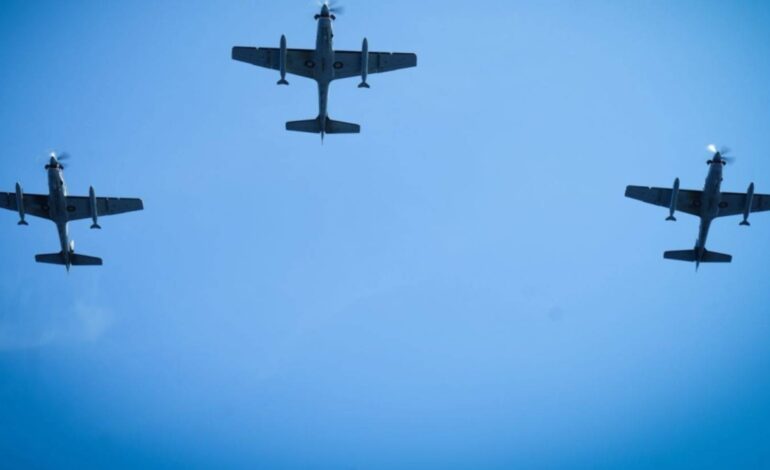

The Philippines, the United States and Japan have carried out a joint military air exercise over the Bashi Channel, underscoring growing security cooperation among the three allies in a strategically sensitive region near Taiwan. The move highlights the rising geopolitical focus on this narrow waterway, which sits between the Philippines and Taiwan and serves as a critical maritime corridor in the western Pacific.
While officials from the participating countries described the exercise as routine and defensive, China reacted sharply, reflecting the region’s heightened tensions and the increasingly complex security environment across the Indo-Pacific.
What Happened in the Latest Drill
Aircraft from the Philippines, the United States and Japan conducted coordinated patrols over the Philippines’ northernmost Batanes islands as part of joint military activities. According to the Philippine military, the exercise was designed to demonstrate the three countries’ ability to operate seamlessly together in complex maritime environments.
Officials confirmed that the air operations were carried out within Philippine airspace north of Luzon. Meanwhile, participating naval vessels operated west of the Batanes island chain, maintaining a coordinated but geographically distributed posture.
The manoeuvres were conducted under the Multilateral Maritime Cooperative Activities (MMCA) framework, which has increasingly become a cornerstone of defence collaboration among the three nations. The framework focuses on interoperability, maritime awareness and joint readiness in the Indo-Pacific.
First Expansion Beyond the South China Sea
One of the most notable aspects of the latest exercise is its geographic expansion. This marks the first time trilateral operations among the Philippines, the US and Japan have moved beyond the South China Sea into the Bashi Channel area.
Previously, most joint patrols and exercises were concentrated in disputed waters of the South China Sea. The shift northward signals a widening scope of military cooperation and reflects growing concern about security dynamics near Taiwan.
Military officials indicated that the expanded drill area extended to the northern tip of Luzon, including Mavulis Island, where the Philippines maintains small naval and marine detachments. The move suggests increasing attention to northern Philippine waters in regional defence planning.
Why the Bashi Channel Matters
The Bashi Channel holds major strategic importance in the Indo-Pacific security architecture. This narrow waterway separates the Philippines from Taiwan by just over 100 kilometres, making it a vital maritime passage.
Key Strategic Factors
-
Major shipping route linking the Pacific Ocean and the South China Sea
-
Potential military transit corridor for naval and air forces
-
Close proximity to the Taiwan flashpoint
-
Critical node in the broader Indo-Pacific security network
Because of its location, the Bashi Channel is closely monitored by regional militaries and global powers. Control and access to this corridor could play a significant role in any future regional contingency, particularly involving Taiwan.
China’s Strong Reaction
China responded forcefully to the joint drills, accusing the Philippines of inviting “countries outside the region” to participate in activities that Beijing claims undermine regional stability.
A spokesperson for the People’s Liberation Army (PLA) Southern Theatre Command said China conducted its own routine patrols in the South China Sea around the same time. Beijing’s reaction underscores its sensitivity to expanding military cooperation among US allies near Taiwan and contested maritime zones.
China has consistently opposed what it views as external military presence in its strategic periphery, especially in areas linked to the Taiwan Strait and South China Sea disputes.
Broader Regional Security Context
The exercise comes at a time of rising security tensions across the Indo-Pacific. Several overlapping factors are shaping the current strategic environment:
-
Intensifying South China Sea disputes
-
Persistent concerns over Taiwan Strait stability
-
Expansion of US alliance networks
-
China’s rapidly growing military capabilities
-
Regional defence modernisation efforts
The Philippines and China have experienced repeated maritime confrontations in disputed waters in recent years, adding further significance to the latest trilateral drill.
For Washington and its allies, the exercises are part of a broader strategy to reinforce deterrence and maintain freedom of navigation. For Beijing, they represent encirclement and strategic pressure.
Japan’s Increasing Security Role
Japan’s participation reflects its gradually expanding defence footprint in the region. Tokyo has been deepening military ties with both Manila and Washington as part of its broader Indo-Pacific strategy.
Recent Japanese Security Moves
-
Signing new security agreements with the Philippines
-
Planning deployment of defensive missile systems on remote islands
-
Increasing frequency of joint exercises with US allies
-
Expanding defence cooperation under its evolving security doctrine
These developments signal Japan’s shift from its traditionally restrained post-war military posture toward a more proactive regional security role. Tokyo views stability in the Taiwan-adjacent waters as directly linked to its own national security.
Philippines Preparing for Taiwan Contingencies
Philippine leadership has openly acknowledged that the country could be affected by any conflict involving Taiwan. President Ferdinand Marcos Jr. previously warned that the Philippines could be drawn “kicking and screaming” into a regional crisis.
One major concern is the large number of Filipino workers based in Taiwan, whose safety could become a priority in any contingency. This reality has made northern Philippine waters, particularly near the Bashi Channel, increasingly important in Manila’s defence planning.
The latest joint drill reflects this growing awareness and preparedness effort.
What the Drill Included
The multiday exercise featured a range of coordinated air and naval activities aimed at improving interoperability among the three militaries.
Key Components of the Exercise
-
Joint air patrols
-
Maritime coordination operations
-
Tactical manoeuvres
-
Live-fire gunnery exercises
-
Command and control integration
Officials emphasised that the activities were defensive in nature and focused on readiness, communication and cooperative capability building.
Implications for Regional Security
Security analysts say the drill highlights several important trends shaping the Indo-Pacific.
First, US-allied military cooperation is becoming more institutionalised and regularised.
Second, the Philippines is taking a more forward and visible role in regional security partnerships.
Third, strategic competition around Taiwan and adjacent waterways is steadily intensifying.
Although the exercise does not indicate imminent conflict, it reinforces the pattern of increased military activity and signalling across the region. Such moves can strengthen deterrence but also risk raising tensions if misinterpreted.
Market and Geopolitical Watch Points
Investors and policymakers worldwide are closely monitoring Indo-Pacific security developments due to their potential economic impact.
Key Areas of Concern
-
Global shipping lanes
-
Energy transport routes
-
Semiconductor supply chains
-
Regional defence spending
-
Geopolitical risk premiums
Any escalation near the Taiwan-adjacent region could disrupt major trade flows and affect global markets, particularly in technology and energy sectors.
Outlook: More Trilateral Drills Expected
The Philippines, the United States and Japan are widely expected to continue expanding their joint military activities as defence cooperation deepens.
Future Trends to Watch
-
More frequent trilateral exercises
-
Expansion into wider operational zones
-
Enhanced interoperability programmes
-
Greater naval and air integration
-
Continued diplomatic and military pushback from China
The trajectory suggests that the Bashi Channel and surrounding waters will remain a focal point of strategic attention in the coming years.
The joint air drill over the Bashi Channel marks another significant step in deepening security ties among the Philippines, the United States and Japan. While officially framed as a routine interoperability exercise, the operation carries substantial strategic weight given the waterway’s proximity to Taiwan and the broader context of Indo-Pacific competition.
As geopolitical rivalry intensifies in the region, coordinated military activities like this are likely to become more frequent. For policymakers, investors and regional stakeholders, the Bashi Channel is emerging as a critical flashpoint where diplomacy, deterrence and military signalling increasingly intersect.
The evolving security dynamics in this corridor will remain a key development to watch in the Indo-Pacific geopolitical landscape.