
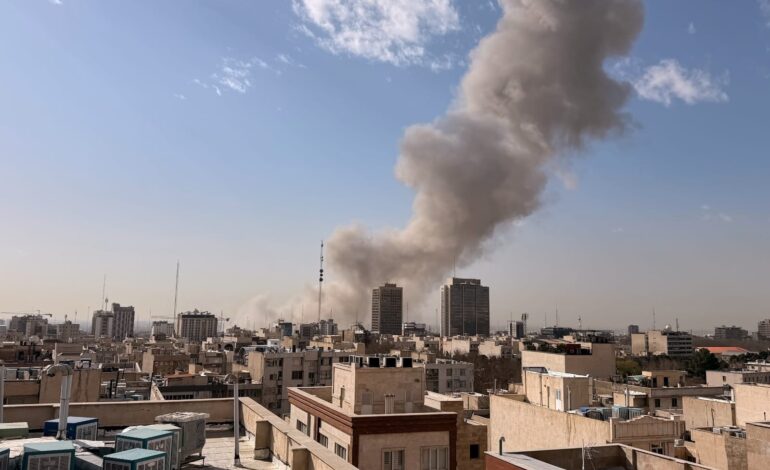

Middle East tensions have sharply escalated after Israel confirmed it carried out a pre-emptive military strike on Iran, prompting nationwide emergency measures and raising fears of a wider regional conflict. The announcement has sent shockwaves through global diplomatic circles and energy markets, with governments closely monitoring the rapidly developing situation.
Israeli Defence Minister Israel Katz said the operation was intended to neutralise threats against Israel’s security. The strike comes at a highly sensitive moment in regional geopolitics, where Israel-Iran tensions have been steadily rising amid disputes over Tehran’s nuclear programme and expanding regional influence.
Security analysts warn that the latest developments could mark a dangerous turning point in the long-running shadow conflict between the two regional rivals.
What Happened: Timeline of the Israeli Strike
Israel launched the strike early Saturday, with explosions reported in Tehran, Iran’s capital. Within minutes of the reports, Israeli authorities activated nationwide alerts and emergency protocols in anticipation of possible retaliation from Iran or its allied groups.
Key confirmed developments include:
-
Israel declared a nationwide state of emergency
-
Air-raid sirens sounded across parts of Israel
-
Residents were instructed to remain near protected areas
-
Iranian state media acknowledged explosions in Tehran
-
Israeli security forces moved to heightened readiness
Officials described the alerts as proactive measures designed to prepare the public for the possibility of incoming missiles or drone attacks.
The speed and scale of Israel’s domestic response suggest officials view the risk of retaliation as significant and potentially imminent.
Israel’s Justification for the Pre-Emptive Strike
Defence Minister Israel Katz described the operation as a “pre-emptive attack” aimed at removing what Israel considers immediate security threats. Israeli leaders have repeatedly warned in recent months that they would not hesitate to act militarily if Iran’s nuclear or missile programmes crossed certain red lines.
From Israel’s strategic perspective, the doctrine of pre-emption has long been part of its national security posture. Officials argue that waiting for a direct attack from adversaries like Iran could expose the country to unacceptable risks.
Security analysts note that the language used by Israeli officials is carefully calibrated. By framing the strike as preventive rather than retaliatory, Israel appears to be signalling that it believes a threat was imminent.
However, such claims are often difficult to independently verify in real time, and Iran has historically rejected Israel’s allegations regarding its military intentions.
Situation in Tehran: Damage and Uncertainty
Witnesses and Iranian media reported a major blast in central Tehran following Israel’s announcement. Thick smoke was seen rising from parts of the capital, although Iranian authorities initially released limited information about the scale of damage or possible casualties.
Early reports from Iranian state outlets acknowledged the explosions but stopped short of confirming the specific target. This information gap has contributed to uncertainty about the strike’s true impact.
Key unknowns include:
-
The precise facility or facilities targeted
-
Whether military or nuclear infrastructure was hit
-
The extent of physical damage
-
Possible casualties
-
Iran’s immediate military response
Analysts caution that in the early hours of such incidents, both sides often tightly control information, making independent verification difficult.
Heightened Alert Across Israel
Following the strike, Israel moved quickly to prepare for potential retaliation. Air-raid sirens were heard in multiple locations, and mobile emergency alerts instructed civilians to stay close to shelters and protected spaces.
Israel’s Home Front Command issued guidance urging residents to remain vigilant, signalling that authorities are bracing for a rapid escalation scenario.
Officials warned that Iran could respond through multiple channels, including:
-
Direct missile launches from Iranian territory
-
Long-range drone attacks
-
Cyber operations
-
Activation of regional proxy groups
-
Maritime disruptions in strategic waterways
The broad range of potential threats highlights the complex nature of the Israel-Iran confrontation, which extends far beyond conventional battlefield dynamics.
Why Regional Tensions Were Already High
The strike did not occur in isolation. Israel and Iran have been locked in an intensifying shadow conflict for years, involving covert operations, cyberattacks, maritime incidents, and proxy confrontations across the Middle East.
Tensions have been particularly elevated in recent months due to concerns over Iran’s nuclear programme.
Israel and its allies have repeatedly expressed alarm about:
-
Iran’s uranium enrichment levels
-
Expansion of ballistic missile capabilities
-
Growth of regional proxy networks
-
Military entrenchment in Syria and elsewhere
-
Increasing drone capabilities
Tehran, for its part, has consistently denied seeking nuclear weapons and maintains that its nuclear programme is for peaceful purposes. Iranian officials have also warned that any direct military attack on Iranian soil would trigger a firm response.
This backdrop makes the latest Israeli strike especially sensitive and potentially destabilising.
Risk of Wider Middle East Escalation
Security experts warn the pre-emptive strike significantly raises the risk of a broader regional confrontation. While both sides may wish to avoid full-scale war, the dynamics of retaliation and deterrence can quickly spiral.
Potential flashpoints include:
-
Direct Iran-Israel military exchanges
-
Proxy group attacks across Lebanon, Syria, Iraq, or Yemen
-
Disruptions to shipping in the Gulf or Red Sea
-
Cyber warfare escalation
-
Increased US military involvement if the conflict widens
The involvement of proxy actors is particularly concerning. Iran maintains ties with several armed groups across the region, and any coordinated response could expand the geographic scope of the crisis.
Global Energy Markets on Edge
One of the most immediate global concerns is the potential impact on oil and gas markets. The Middle East remains central to global energy supply, and any Israel-Iran escalation historically triggers market volatility.
Energy traders are closely watching for:
-
Threats to Gulf shipping lanes
-
Disruptions near the Strait of Hormuz
-
Attacks on energy infrastructure
-
Insurance cost spikes for tankers
-
Strategic reserve considerations by major economies
Even limited military exchanges between Israel and Iran can create significant price swings due to fears of supply disruption.
International Reaction to Watch
World powers are expected to monitor developments closely, with diplomatic pressure likely to intensify if tensions continue to rise.
Historically, similar flare-ups have prompted:
-
United Nations emergency consultations
-
Calls for restraint from major powers
-
Regional diplomatic outreach
-
Airspace and maritime security alerts
-
Market and currency volatility
However, immediate official international responses are still emerging as governments assess the scale and intent of the Israeli operation.
Countries in the Gulf, Europe, and Asia are particularly sensitive to any escalation that could threaten energy flows or regional stability.
Why This Moment Is Especially Dangerous
Analysts say several factors make the current Israel-Iran confrontation particularly volatile.
First, the strike appears to have occurred directly on Iranian soil rather than through proxy channels. Direct state-to-state military action carries higher escalation risks.
Second, both countries possess increasingly sophisticated missile and drone capabilities, shortening response times and raising the risk of rapid retaliation cycles.
Third, regional tensions were already elevated due to ongoing conflicts and geopolitical rivalries, reducing the buffer for crisis management.
Fourth, domestic political pressures in both Israel and Iran could make de-escalation politically sensitive.
Fifth, the global strategic environment is already strained, meaning major powers may have limited bandwidth to manage another fast-moving crisis.
Together, these factors create a highly combustible situation.
What Happens Next: Key Indicators
The coming hours and days will be critical in determining whether the situation stabilises or escalates further.
Key indicators to watch include:
-
Whether Iran launches direct retaliation
-
Official statements from Iranian leadership
-
Military movements in the Gulf region
-
Activity levels among Iran-aligned groups
-
Changes in Israel’s nationwide alert posture
-
Oil and financial market reactions
-
Emergency diplomatic engagements
Much will depend on Iran’s response calculus — whether it opts for immediate retaliation, delayed asymmetric pressure, or strategic restraint.
Possible Scenarios Ahead
Security experts outline several possible pathways:
1. Controlled Retaliation Scenario
Iran responds in a limited, calibrated manner to avoid full-scale war. This could include symbolic strikes or proxy actions.
2. Escalation Spiral
Tit-for-tat attacks expand, drawing in regional actors and potentially the United States.
3. Shadow Conflict Continues
Both sides step back publicly but continue covert operations.
4. Diplomatic Containment
International pressure leads to rapid de-escalation and backchannel diplomacy.
At present, the trajectory remains highly uncertain.
Outlook: A Region on High Alert
Israel’s confirmation of a pre-emptive strike on Iran has injected fresh uncertainty into an already tense geopolitical landscape. With emergency measures activated and the threat of retaliation looming, the Middle East is entering a period of heightened risk.
While Israel has framed the operation as defensive, Iran’s response or lack of one will be the decisive factor in determining whether the crisis remains contained.
Global markets, regional governments, and security analysts are now watching closely for the next move.
If restraint prevails, diplomatic channels may still have room to operate. But if retaliation triggers a wider cycle of escalation, the region could face one of its most serious security crises in years.
For now, the situation remains fluid, volatile, and highly sensitive with the coming days likely to shape the next phase of the Israel-Iran confrontation.





1 Comment
[…] latest US–Israel strikes on Iran have pushed Middle East tensions into a highly sensitive and potentially dangerous phase. […]
Comments are closed.