
Mobile Phone Alerts Warn of Potential Missile Threat in Abu Dhabi
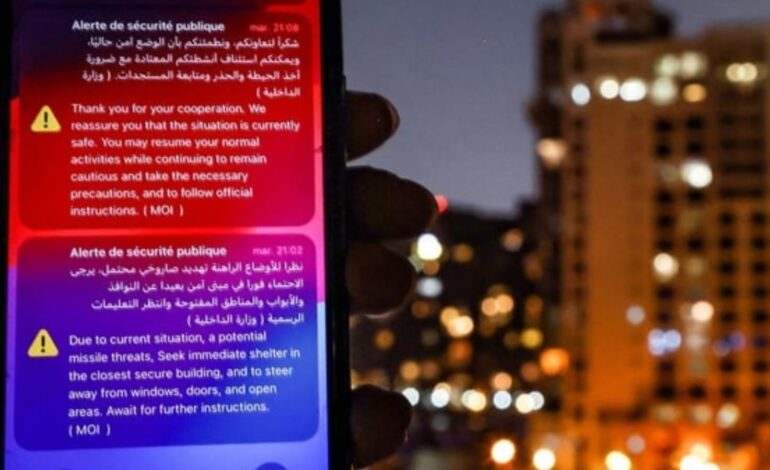

Residents in Abu Dhabi were urged to seek shelter after emergency mobile alerts warned of a potential missile threat on Sunday morning. The warning came as air defence systems responded to suspected inbound projectiles amid rising regional tensions across the Middle East.
Authorities in the United Arab Emirates issued the alert shortly after several interceptions were reported in the skies over the capital. Officials confirmed that the warnings formed part of the country’s emergency response system designed to protect residents during potential security threats.
The alerts arrived as regional tensions continue to escalate due to the ongoing conflict involving Iran, Israel and the United States, which has triggered missile and drone activity across parts of the Gulf.
Authorities stressed that public safety remains the highest priority and urged residents to follow official safety guidance during emergency alerts.
Emergency Alerts Sent to Residents Across Abu Dhabi
The emergency warning was sent to mobile phones across Abu Dhabi at approximately 10:10 a.m., instructing residents to move to safe indoor locations immediately.
Officials said the alert formed part of the UAE’s nationwide emergency notification system, which sends real-time warnings directly to mobile devices during potential security incidents.
The notification advised residents to remain indoors, stay away from windows and avoid unnecessary travel until authorities confirmed the situation was safe.
Residents reported receiving the alert simultaneously across multiple districts in the city, indicating the system’s wide coverage.
Shortly after the warning, several residents reported hearing loud booms in the sky. Experts believe these sounds were caused by air defence systems intercepting incoming threats at high altitude.
Authorities later reassured the public that such alerts are issued as a precautionary measure to ensure that people can take immediate protective action.
Second Alert Issued Within Two Hours
Sunday’s warning marked the second time in less than two hours that residents in Abu Dhabi received instructions to seek shelter.
Earlier in the morning, air defence systems had already intercepted aerial threats approaching the capital.
Officials said both incidents involved potential inbound missile threats detected by defence monitoring systems.
When such threats are identified, emergency authorities activate public alert systems to warn residents and provide safety instructions.
Authorities explained that rapid communication is critical during situations involving possible missile or drone attacks.
By informing the public quickly, officials aim to reduce risks and ensure that residents move to protected areas if necessary.
Despite the tense situation, authorities confirmed that the interceptions successfully neutralised the threats before they reached populated areas.
UAE Air Defence Systems Respond to Threats
The UAE maintains advanced air defence capabilities designed to detect, track and intercept incoming missiles, drones and other aerial threats.
These systems operate through a combination of radar surveillance, early warning sensors and interceptor missile technology.
When defence systems detect a potential threat, operators analyse its trajectory and deploy interceptors if necessary.
This process allows authorities to destroy or disable incoming projectiles before they reach critical infrastructure or populated areas.
The loud booms heard across Abu Dhabi likely resulted from interceptor missiles striking incoming threats or destroying them at high altitude.
Air defence interceptions can sometimes produce bright flashes and shockwaves that are audible from the ground.
Authorities confirmed that defence units remained on high alert and continued monitoring the airspace throughout the incident.
Role of Emergency Alert Systems in Public Safety
The UAE’s mobile emergency alert system plays an important role in protecting residents during crises.
The system sends warnings directly to mobile phones, ensuring that people receive critical information immediately.
These alerts can include safety instructions, evacuation notices or shelter warnings depending on the nature of the emergency.
Many countries use similar systems to warn residents about natural disasters, severe weather, earthquakes or security threats.
In the UAE, the system helps authorities communicate with millions of residents in real time.
Officials say the alert system allows emergency services to reach the public quickly without relying solely on traditional media.
Rapid communication can significantly reduce risks by helping people take protective actions immediately.
Residents Urged to Remain Calm
Authorities urged residents to remain calm and follow official safety instructions during the alerts.
People were advised to stay indoors and avoid unnecessary movement while defence operations were underway.
Officials also encouraged residents to monitor official government channels for updates.
Sharing unverified information on social media can create confusion and unnecessary panic during emergency situations.
Government agencies emphasised that emergency services remain prepared to respond to any developments.
Police, civil defence teams and emergency medical services were placed on standby as a precaution.
Officials stressed that preparedness and cooperation between authorities and the public are essential during security incidents.
Regional Tensions Continue to Affect Gulf Security
The alerts in Abu Dhabi occurred amid rising tensions across the Middle East.
Missile and drone activity has increased as the conflict involving Iran, Israel and the United States continues to intensify.
Several Gulf countries have reported missile interceptions and drone attacks targeting strategic locations.
Regional governments have therefore strengthened defence readiness and security monitoring.
Military analysts say that Gulf states are closely coordinating with allies to maintain strong air defence capabilities.
The Gulf region’s strategic importance, particularly its role in global energy markets, makes security a major priority for governments.
Authorities across the region continue to monitor developments closely and prepare for potential threats.
Importance of Preparedness During Security Threats
Preparedness plays a critical role in protecting civilians during periods of heightened security risk.
Governments across the Gulf have invested heavily in defence systems and emergency response infrastructure.
These measures include advanced radar networks, missile defence systems and rapid emergency communication platforms.
Authorities also conduct regular drills and training exercises to prepare for potential emergencies.
Public awareness campaigns encourage residents to follow safety guidance during alerts.
Experts say that well-prepared emergency systems help minimise risks and improve response times during crises.
The incident in Abu Dhabi demonstrates how early warnings and interception systems can work together to prevent potential harm.
Government Reaffirms Commitment to Public Safety
Officials in the UAE emphasised that protecting citizens, residents and visitors remains the country’s highest priority.
Security forces, defence units and emergency services continue to coordinate closely to monitor the situation.
Authorities confirmed that defence systems remain fully operational and capable of responding to potential threats.
Officials reassured the public that the country maintains strong security measures to safeguard residents.
They also emphasised that emergency alerts are part of routine safety protocols designed to provide immediate guidance during potential threats.
Residents were encouraged to remain vigilant while continuing daily activities once authorities confirm that it is safe.
The emergency mobile alerts issued in Abu Dhabi highlight the seriousness of the current regional security environment.
By quickly warning residents and activating air defence systems, authorities demonstrated the effectiveness of the UAE’s emergency preparedness measures.
The interceptions of potential missile threats also underline the importance of advanced defence systems in protecting populated areas and critical infrastructure.






1 Comment
[…] approximately 8:50am, the UAE Ministry of Interior issued a follow-up notification confirming that the situation was […]
Comments are closed.