Dubai Civil Defence Unveils High-Tech Firefighting Robot
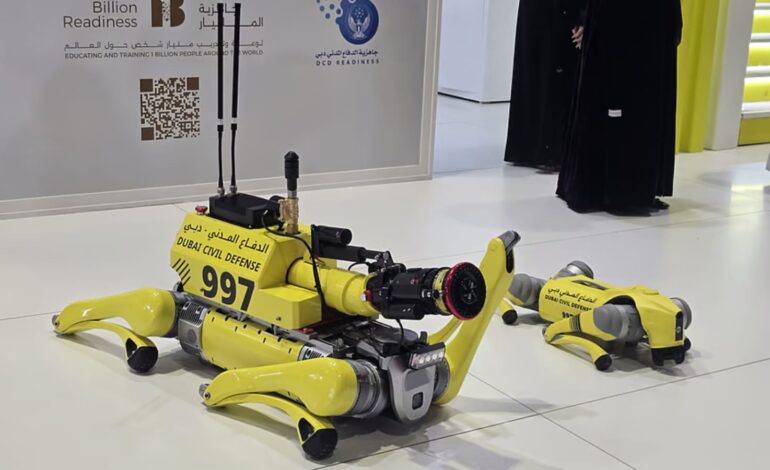

The Dubai Civil Defence has taken a major leap forward in emergency response innovation by unveiling a high-tech robotic firefighting system designed to support firefighters during dangerous and complex incidents. The unveiling took place at Intersec 2026, one of the world’s leading exhibitions for safety, security, and fire protection technologies.
The debut highlights Dubai’s commitment to integrating advanced technology into public safety operations, using robotics and intelligent systems to reduce risks to human responders while improving efficiency and effectiveness during high-risk fire scenarios.


Innovation at the Heart of Emergency Response
Firefighting is one of the most hazardous professions, often requiring crews to operate in unstable environments with extreme heat, toxic smoke, and the constant risk of structural collapse. By introducing advanced robotic systems, Dubai Civil Defence is reshaping how emergency teams approach these risks.
The new robotic solution reflects a strategic shift toward technology-enabled safety, where machines take on the most dangerous tasks, allowing firefighters to focus on decision-making, coordination, and life-saving operations.
This approach aligns with Dubai’s broader vision of becoming a global leader in smart city technologies and advanced emergency management.
A New Era in Firefighting Technology
The centrepiece of Dubai Civil Defence’s presentation at Intersec 2026 was the D2W firefighting robot, a powerful and highly durable machine engineered to operate in extreme and hazardous environments.
Designed for High-Risk Scenarios
The D2W robot is specifically built for use in:
-
High-rise buildings
-
Industrial facilities and factories
-
Warehouses and logistics centres
-
Chemical and fuel storage areas
In these settings, direct human access can be extremely dangerous or even impossible. The robot enables firefighting teams to attack blazes from a safe distance while maintaining strong suppression capability.
Exceptional Firefighting Power and Performance
One of the most impressive features of the D2W robot is its ability to deliver high-volume, high-pressure water flow, making it effective even in large-scale fires.
Powerful Water Delivery System
-
Capable of delivering water at up to eight bar pressure
-
Pumps thousands of litres of water per minute
-
Can suppress flames across a wide area from a safe distance
This level of performance allows the robot to support or even replace traditional hose-based firefighting in situations where human crews would face unacceptable risk.
Built to Withstand Extreme Conditions
The robot’s design prioritises durability and reliability in some of the harshest operating conditions.
Fire- and Water-Resistant Battery
The robot is equipped with a specialised battery system that:
-
Resists extreme heat exposure
-
Continues operating in water-logged environments
-
Ensures uninterrupted performance during prolonged incidents
Advanced Self-Cooling System
An integrated cooling mechanism allows the robot to regulate its internal temperature even when exposed to intense heat, preventing system failure and extending operational time.
High Structural Durability
-
Designed to withstand heavy hose pressure
-
Provides strong pulling force to stabilise hoses
-
Maintains traction and control on difficult surfaces
These features make the robot highly reliable in long-duration and high-intensity firefighting operations.
Supporting Firefighters, Not Replacing Them
Dubai Civil Defence has emphasised that robotic systems are designed to support and protect firefighters, not replace them. By taking on the most dangerous frontline tasks, robots significantly reduce the physical risk to human crews.
This enables firefighters to:
-
Operate from safer positions
-
Make better-informed tactical decisions
-
Reduce exposure to smoke, heat, and structural hazards
The result is safer, more controlled, and more efficient emergency response operations.
Training and Reconnaissance: The “First Explorer” Robot
In addition to the D2W robot, Dubai Civil Defence also showcased a smaller robotic unit known as the First Explorer, designed primarily for training and reconnaissance.
Live Video and Real-Time Intelligence
The First Explorer can:
-
Enter hazardous areas before firefighters
-
Transmit live video feeds to command centres
-
Identify fire hotspots, obstacles, and structural risks
This real-time intelligence allows incident commanders to assess conditions accurately before deploying human crews.
Enhancing Training and Preparedness
During training exercises, the robot helps:
-
Simulate real emergency conditions
-
Familiarise firefighters with complex environments
-
Improve tactical planning and coordination
By integrating reconnaissance robotics into training, Dubai Civil Defence is raising preparedness levels while minimising risk during drills.
Leadership Perspective on Robotics and Safety
According to Rashid Thani Al Matroushi, Commander-in-Chief of Dubai Civil Defence, the introduction of advanced robotic firefighting systems reflects leadership’s commitment to placing human safety at the core of civil protection operations.
He highlighted that investing in smart technologies strengthens the ability of response teams to handle emergencies more efficiently, confidently, and safely—particularly as urban environments grow more complex.
Why This Matters for Public Safety
Fire incidents often involve unpredictable and life-threatening conditions. The introduction of robotic systems fundamentally changes how these risks are managed.
Key Public Safety Benefits
✔ Remote water delivery into high-risk zones
✔ Early reconnaissance before human entry
✔ Reduced exposure to extreme heat and toxic smoke
✔ Enhanced operational reach in unstable structures
✔ Safer and more realistic firefighter training
These capabilities allow emergency teams to control incidents faster while significantly reducing the risk of injury or loss of life.
Aligning With Global Emergency Response Trends
Dubai Civil Defence’s adoption of robotics mirrors a global shift in how emergency services prepare for and respond to crises. Around the world, agencies are increasingly deploying:
-
AI-enabled robots
-
Drones for aerial assessment
-
Smart sensors and predictive analytics
-
Simulation and digital training platforms
These technologies are becoming essential tools in managing complex emergencies, from fires and industrial accidents to natural disasters.
Dubai’s Broader Safety Innovation Strategy
The firefighting robots unveiled at Intersec 2026 are part of a wider ecosystem of smart safety technologies already in use across Dubai.
Dubai Civil Defence has been proactive in deploying:
-
Drones for rapid incident assessment
-
Advanced command-and-control systems
-
Smart fire detection and alarm technologies
-
Simulation-based firefighter training tools
Together, these solutions reinforce Dubai’s reputation for operational excellence and forward-thinking public safety governance.
Impact on Future Emergency Operations
The integration of robotic firefighting systems is expected to transform emergency response protocols in Dubai over the coming years.
Potential future applications include:
-
Autonomous firefighting in hazardous industrial zones
-
Expanded use in chemical and fuel-related incidents
-
Integration with AI-driven incident management systems
-
Cross-agency collaboration using shared robotic platforms
As technology advances, these systems will likely become even more intelligent, adaptive, and autonomous.
Intersec 2026: A Global Stage for Safety Innovation
Showcasing the firefighting robots at Intersec 2026 placed Dubai Civil Defence at the forefront of global safety innovation. The event attracts thousands of industry experts, manufacturers, and government agencies, making it an ideal platform to demonstrate cutting-edge solutions.
The debut reinforced Dubai’s role as a global hub for safety, security, and emergency management innovation.
Conclusion: A Safer Future Through Smart Firefighting
The unveiling of high-tech firefighting robots by Dubai Civil Defence marks a significant milestone in the evolution of emergency response. By combining powerful water delivery, robust construction, advanced cooling systems, and real-time reconnaissance capabilities, these robots add a new layer of protection for both firefighters and the public.
As Dubai continues to integrate smart technologies into its emergency services, the use of robotics underscores a clear commitment to protecting lives, property, and critical infrastructure—even in the most challenging and dangerous situations.
This innovation not only enhances operational capability today but also sets a new benchmark for the future of firefighting and public safety worldwide.