Dubai RTA Expands Dedicated Lanes and Plans Trackless Tram

Dubai is fast-tracking its transformation into a global smart mobility hub, with the Roads and Transport Authority (RTA) unveiling ambitious plans to expand dedicated bus and taxi lanes while introducing a next-generation trackless tram system. The initiative forms a core pillar of the emirate’s broader strategy to reduce congestion, enhance public transport reliability, and promote sustainable urban mobility.
With public transport usage already reaching record highs, the latest measures highlight Dubai’s determination to stay ahead in the race toward becoming one of the world’s most advanced smart mobility cities. The combined focus on priority lanes and innovative rail-less tram technology reflects a forward-thinking approach designed to reshape how residents and visitors move across the emirate.
Dubai Expands Dedicated Bus and Taxi Lanes
One of the most significant announcements is the expansion of dedicated bus and taxi corridors across key parts of the city. According to the RTA, six new corridors covering approximately 13 kilometres will be added, increasing the total length of priority lanes to 20 kilometres.
These specially designated lanes are engineered to give public transport vehicles a clear path through congested traffic zones. By separating buses and taxis from mixed traffic, Dubai aims to deliver faster, more predictable journeys for commuters.
Expected performance improvements include:
-
Bus journey times could drop by up to 41%
-
On-time performance may improve by around 42%
-
Public transport ridership could increase by approximately 10%
Transport planners say these improvements could significantly boost confidence in public transport, encouraging more residents to shift away from private car use.
Why Dedicated Public Transport Lanes Matter
While priority lanes may appear to be a simple infrastructure upgrade, their impact on urban mobility can be profound. Cities worldwide have used similar strategies to improve transit efficiency and reduce road congestion.
Key benefits of dedicated bus and taxi lanes:
1. Faster Commutes
Priority corridors minimise delays caused by traffic bottlenecks, enabling buses and taxis to maintain steady speeds during peak hours.
2. Improved Reliability
When vehicles operate on predictable schedules, commuters are more likely to trust and regularly use public transport.
3. Higher Ridership Growth
Faster and more dependable services typically attract new users, helping cities reduce reliance on private cars.
4. Lower Carbon Emissions
Encouraging mass transit usage supports Dubai’s sustainability goals by reducing the number of single-occupancy vehicles on the road.
5. Better Road Efficiency
Moving more passengers in fewer vehicles improves overall network efficiency.
Dubai’s latest expansion reinforces its long-term policy of prioritising high-capacity, sustainable mobility solutionsover car-centric urban growth.
Trackless Tram: Dubai’s Next Big Transport Innovation
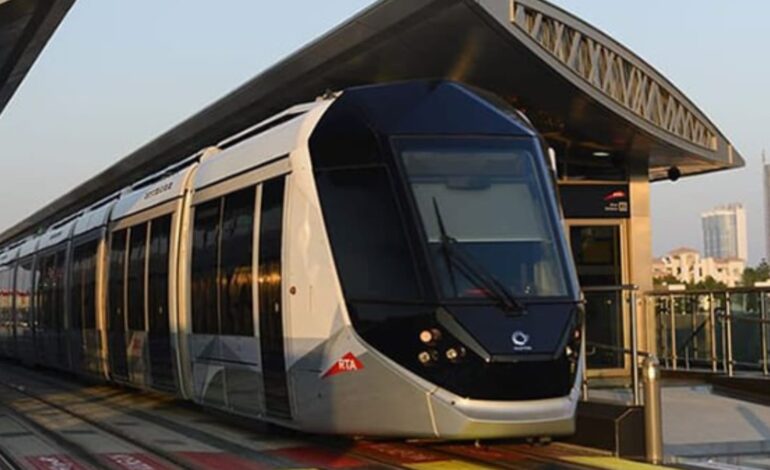
Alongside the lane expansion, Dubai is preparing to roll out a futuristic trackless tram system across eight strategic locations. This next-generation transit solution represents one of the most innovative elements of the emirate’s smart mobility roadmap.
Unlike conventional trams that require steel tracks embedded in the road, the new system operates using virtual track technology. Cameras and sensors detect road markings, allowing the vehicle to follow a predefined path without physical rails.
Core features of Dubai’s planned trackless tram:
-
Fully electric and environmentally friendly
-
Autonomous navigation supported by AI
-
Optical guidance using advanced cameras
-
LiDAR-based obstacle detection
-
Faster and cheaper deployment than rail trams
-
Flexible routing across existing road networks
Officials believe this technology offers the capacity advantages of light rail with the flexibility and cost efficiency of buses.
Capacity and Performance: A Hybrid Between Bus and Light Rail
The trackless tram is designed to bridge the gap between traditional buses and full rail systems. Each unit will consist of three connected carriages, forming a high-capacity articulated vehicle.
Proposed technical specifications:
-
Capacity: up to 300 passengers
-
Top speed: 70 km/h
-
Operational speed: 25–60 km/h
-
Range: approximately 100 km per charge
-
Propulsion: fully electric
This configuration makes the system significantly more efficient than standard buses while avoiding the heavy infrastructure costs associated with conventional tram networks.
For fast-growing urban corridors, the trackless tram could become a game-changing middle-capacity solution.
Why Dubai Is Investing Heavily in Public Transport
Dubai’s aggressive mobility investments are being driven by rapid population growth and rising vehicle ownership. Authorities have identified traffic congestion as one of the emirate’s most pressing urban challenges.
Recent data shows vehicle numbers in Dubai have increased by around 10% over the past two years, outpacing many global cities. Without intervention, congestion levels could continue to rise.
To address this, the RTA is implementing a multi-layered congestion management strategy.
Key pillars of Dubai’s mobility strategy:
-
Expansion of dedicated public transport lanes
-
Smart traffic management systems
-
Dynamic tolling and parking policies
-
Promotion of remote and flexible work
-
Growth of mass transit networks
-
Adoption of AI-driven mobility solutions
The new bus lanes and trackless tram form a central component of this broader plan.
Public Transport Usage Hits Record Levels
The timing of the announcement reflects strong momentum in Dubai’s public transport sector. In 2025, the emirate recorded approximately 802 million riders across its integrated mobility network.
This includes:
-
Dubai Metro
-
Public buses
-
Taxis
-
Marine transport
-
Shared mobility services
The figure represents a 7.4% increase compared with 2024, with average daily ridership exceeding 2.2 million passengers.
Officials say this sustained growth confirms that investments in integrated, technology-driven mobility are already reshaping travel behaviour in Dubai.
Long-Term Vision: Making Public Transport the First Choice
Senior RTA leadership has reiterated a clear strategic objective: to make public transport the preferred mode of travelacross Dubai.
The authority’s long-term mobility vision focuses on building a system that is:
-
Flexible
-
Sustainable
-
Efficient
-
Technology-driven
-
Seamlessly integrated
By improving speed, reliability and comfort, Dubai aims to gradually shift commuter preferences away from private vehicles.
This strategy aligns closely with the emirate’s wider smart city and net-zero ambitions.
Trackless Tram vs Traditional Tram: Key Differences
Dubai’s planned system represents a new category of urban transit often referred to as Autonomous Rail Rapid Transit (ART).
Traditional tram systems typically require:
-
Fixed steel tracks
-
Major civil construction
-
Utility relocation works
-
Higher capital investment
-
Long construction timelines
In contrast, the trackless tram offers:
-
Virtual track guidance
-
Minimal road modification
-
Faster rollout
-
Lower upfront costs
-
Greater route flexibility
-
Easier future expansion
For rapidly expanding cities like Dubai, this hybrid approach allows authorities to scale transit capacity quicklywithout years of disruptive construction.
Seamless Integration with Dubai’s Existing Transport Network
A critical strength of Dubai’s mobility strategy is its focus on multi-modal integration. The new initiatives are designed to complement the emirate’s already sophisticated transport ecosystem.
Existing network components include:
-
Dubai Metro
-
Dubai Tram
-
Public bus system
-
Marine transport services
-
Taxi network
-
Shared mobility platforms
Officials emphasise that the goal is to enable smooth door-to-door journeys using unified ticketing, real-time data and smart journey planning tools.
The trackless tram could act as a feeder and connector service, linking high-density corridors to major metro and tram stations.
What Residents and Commuters Can Expect
For everyday commuters, the impact of these projects could become increasingly visible over the coming years.
Expected benefits include:
-
Shorter and more predictable bus journeys
-
Faster taxi movement in congested areas
-
New high-capacity transit options
-
Reduced road congestion
-
More environmentally friendly travel choices
-
Improved public transport reliability
As service quality improves, public transport may become increasingly competitive with private car ownership, particularly for daily commuting.
Environmental and Sustainability Benefits
Dubai’s mobility upgrades also support the emirate’s broader environmental goals. Transport is a major contributor to urban emissions, and shifting more people toward shared, electric transit can significantly reduce the city’s carbon footprint.
Sustainability advantages of the new initiatives:
-
Fully electric trackless tram reduces emissions
-
Higher public transport ridership lowers vehicle numbers
-
Dedicated lanes improve fuel efficiency
-
Reduced congestion cuts idle emissions
-
Supports UAE net-zero ambitions
By combining electrification with smarter traffic management, Dubai is positioning itself as a leader in sustainable urban mobility.
The Bigger Picture: Dubai’s Future Mobility Ecosystem
The latest announcement is part of a much larger transformation already underway. Dubai is actively investing in multiple future-ready transport technologies.
Emerging mobility initiatives under exploration:
-
Flying taxis and air mobility
-
Autonomous vehicles
-
AI-driven traffic control
-
Smart parking systems
-
Integrated mobility platforms
-
Mobility-as-a-Service (MaaS) solutions
The dedicated bus lanes and trackless tram are near-term, high-impact steps that pave the way for this broader ecosystem.
Challenges to Watch
While the outlook is highly positive, successful implementation will depend on several factors:
-
Public adoption rates
-
Effective enforcement of dedicated lanes
-
Integration with existing infrastructure
-
Technology reliability of the trackless tram
-
Continuous network expansion
However, Dubai’s strong track record in delivering large-scale transport projects suggests the emirate is well positioned to overcome these challenges.
Conclusion: A Major Leap Toward Smart Urban Mobility
Dubai’s decision to expand dedicated bus and taxi lanes while advancing plans for a futuristic trackless tram marks another bold milestone in the emirate’s smart mobility journey.
With public transport demand rising and congestion pressures mounting, the RTA is clearly prioritising faster, cleaner and more efficient urban movement. The combination of priority corridors and rail-less tram technology demonstrates a pragmatic yet innovative approach to modern transport planning.
If successfully implemented, these initiatives could significantly reshape commuting patterns, reduce reliance on private vehicles and strengthen Dubai’s reputation as a global leader in next-generation mobility.
As the city continues investing in AI-driven transport, autonomous systems and sustainable infrastructure, Dubai is not just responding to today’s congestion challenges — it is actively building the future of urban mobility.