Egypt Restores Colossal Pharaoh Statues After 3,200 Years
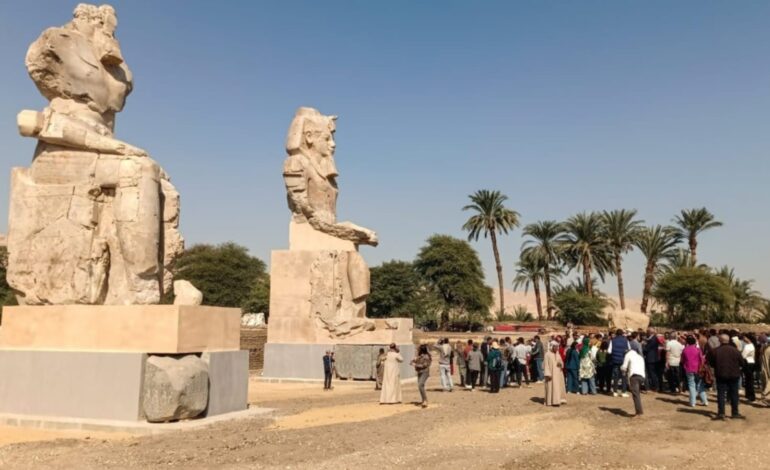

Egypt has completed the restoration of two colossal pharaoh statues toppled by a devastating earthquake more than 3,200 years ago. The achievement marks a major milestone in archaeological conservation and underlines Egypt’s long-term commitment to preserving its ancient heritage.
The statues once stood in the ancient city of Tanis in the Nile Delta. Scholars believe they represent Ramses II and his son Merneptah, two of ancient Egypt’s most powerful rulers. After centuries buried beneath rubble and sand, conservators have reconstructed the monuments using advanced techniques, allowing them to stand once again in their original grandeur.
Beyond restoring monumental artworks, the project offers fresh insight into Egypt’s history, engineering skill and cultural resilience.
Historical Significance of the Colossal Statues
The statues date to the Nineteenth Dynasty during the reign of Ramses II, one of Egypt’s most influential pharaohs. He ruled for more than 60 years and commissioned iconic monuments such as Abu Simbel and the Ramesseum.
After his death, his son Merneptah continued this legacy of monumental architecture and military strength. Together, the statues symbolised royal authority, divine protection and political stability.
Originally placed at a major temple complex in Tanis, the statues aimed to impress visitors and reinforce royal power. Each figure stood several metres tall and was carved from massive granite blocks, showcasing remarkable craftsmanship and engineering precision.
The Earthquake That Changed History
Around 1200 BC, a powerful earthquake struck the eastern Mediterranean. As a result, buildings and monuments across Egypt’s Nile Delta collapsed.
At Tanis, the colossal statues fell and shattered into hundreds of fragments. Over time, the city declined, and layers of debris buried the remains. For centuries, the fallen monuments remained hidden, known only through ancient records and scattered archaeological finds.
Ironically, this natural disaster also preserved history. The burial shielded many fragments from erosion and human interference.
Rediscovery and Archaeological Research
During the twentieth century, archaeologists uncovered fragments of the statues. However, the scale of damage made restoration extremely challenging.
Over decades, Egyptian and international experts documented each fragment. They analysed inscriptions, carving styles and structural features. Meanwhile, advanced imaging and mapping technologies helped researchers understand how the statues once stood.
More recently, specialists in archaeology, engineering, stone conservation and digital modelling joined forces. Their shared goal focused on restoring the statues accurately while ensuring long-term stability.
—
## The Restoration Process
Restoring statues of this scale required precision and restraint. First, conservators cleaned and stabilised every fragment to prevent further damage.
Next, experts used 3D scanning and digital reconstruction to model the statues’ original form. This virtual blueprint guided the physical reassembly and ensured accurate placement.
When original pieces were missing or too fragile, the team added minimal modern supports. They concealed these reinforcements carefully to preserve the statues’ appearance. Importantly, they documented all additions to maintain scientific transparency.
Finally, teams re-erected the statues at the site, allowing visitors to view them as ancient audiences once did.
Why This Restoration Matters
Preserving Cultural Identity
Ancient monuments form the backbone of Egypt’s national identity. By restoring these statues, Egypt strengthens its connection to its ancient civilisation.
Moreover, these monuments reflect leadership, belief systems and artistic achievement. Preserving them allows future generations to engage directly with the past.
Advancing Archaeological Science
The project highlights how modern technology enhances heritage preservation. Digital reconstruction and structural analysis now allow safer and more accurate restorations.
As a result, the project sets a new benchmark for conservation efforts in Egypt and beyond.
Boosting Cultural Tourism
Tourism plays a vital role in Egypt’s economy. Restored monuments increase the appeal of archaeological sites and offer visitors new experiences.
Consequently, the revived statues at Tanis are expected to attract tourists, scholars and historians, supporting local development and cultural exchange.
Egypt’s Broader Heritage Preservation Efforts
The Tanis restoration forms part of a wider national strategy. In recent years, Egypt has restored temples, tombs and historic sites nationwide.
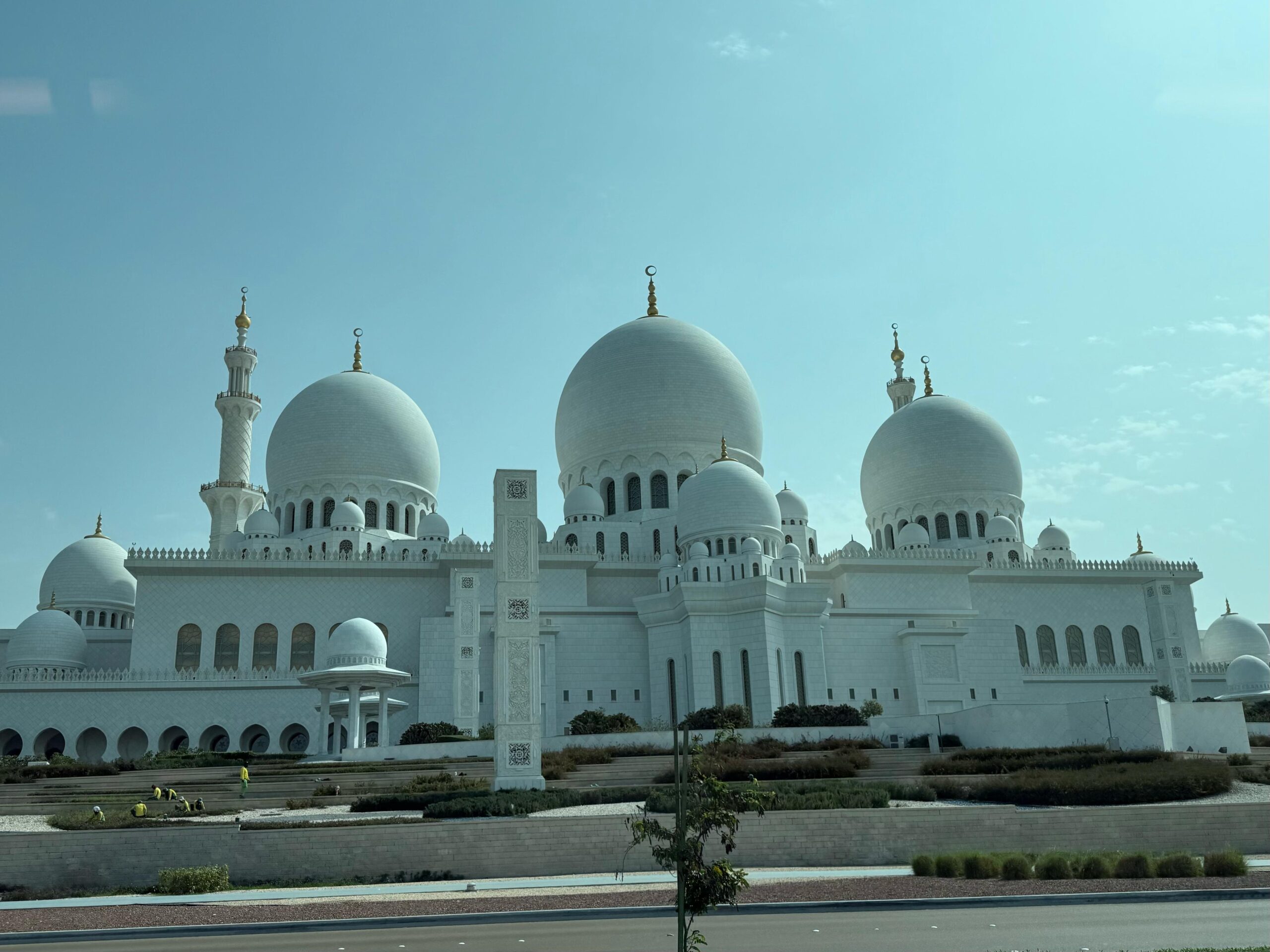
Notable projects include conservation work in Luxor, the reopening of historic mosques and the development of the Grand Egyptian Museum near the Giza pyramids.
Together, these initiatives balance preservation with public access while safeguarding Egypt’s cultural legacy.
Challenges Faced During the Project
Restoring colossal statues presents significant challenges. Engineers had to account for stone weight, environmental exposure and long-term stability.
In addition, conservation teams worked carefully to avoid excessive reconstruction. Ethical standards required them to preserve original materials wherever possible and ensure modern additions remained reversible.
Despite these challenges, the project succeeded through careful planning and collaboration.
What the Restoration Reveals About Ancient Egypt
The statues showcase the advanced engineering skills of ancient Egyptian builders. Transporting and carving massive granite blocks required sophisticated tools and organisation.
Furthermore, inscriptions and stylistic details reveal insights into royal propaganda, religious beliefs and artistic traditions of the Nineteenth Dynasty.
By studying the statues in their restored form, historians now better understand their cultural and architectural context.
Global Importance of the Project
Egypt’s heritage belongs to humanity as a whole. Ancient Egyptian civilisation has influenced global art, architecture and culture for millennia.
This restoration highlights the shared responsibility to protect cultural heritage. It also demonstrates the value of international cooperation in conservation.
At the same time, such projects raise awareness of modern threats to ancient sites, including climate change and urban expansion.
Future Prospects for Tanis
With the statues restored, Tanis is likely to gain renewed attention. Further excavations may uncover additional artefacts and structures.
Authorities also plan to improve visitor facilities while protecting the site. Educational programmes and guided tours could help share the statues’ story with a wider audience.
Conclusion
The restoration of Egypt’s colossal pharaoh statues more than 3,200 years after their destruction stands as a powerful achievement. Through research, modern technology and dedication, monuments once lost to time now stand again.
Ultimately, the project strengthens Egypt’s cultural legacy, advances archaeological science and enriches global heritage. As the statues rise once more, they symbolise resilience, continuity and the enduring power of history.