Emirates Group CFO Michael Doersam to Step Down in June
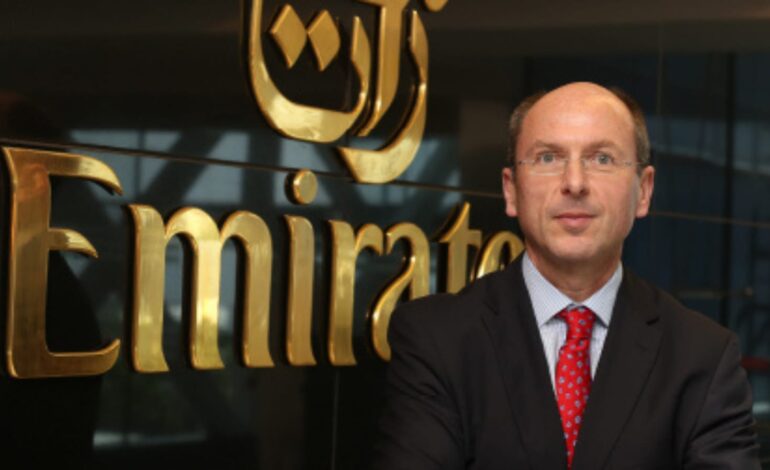

Leadership changes are underway at one of the world’s largest aviation groups after the Emirates Group confirmed that Chief Financial Officer Michael Doersam will step down from his role later this year. The announcement comes at a time when the Dubai-based airline is experiencing strong post-pandemic growth and accelerating its global hiring and expansion strategy.
The planned departure has drawn significant attention across the aviation and finance sectors. Executive transitions at Emirates are closely watched by industry observers because of the airline’s outsized influence on global air travel and its central role in Dubai’s economic ecosystem.
Although the company has emphasised continuity, analysts say the upcoming CFO succession could offer important signals about the Emirates Group’s next strategic phase.
Planned Departure Set for June 2026
Emirates confirmed that Michael Doersam intends to leave his position at the end of June 2026, citing family reasons for his decision. The Group stated that a successor will be announced in due course and stressed that its long-term strategy and financial discipline remain firmly in place.
Importantly, the airline framed the move as an orderly and planned transition rather than an abrupt leadership change. Nevertheless, the departure marks the conclusion of nearly two decades of service at one of the world’s most influential airline groups.
From a market perspective, such senior-level exits are often scrutinised for clues about future corporate direction. However, Emirates has sought to reassure stakeholders that operations, investment plans and growth momentum will continue uninterrupted.
Nearly Two Decades of Service at Emirates
Michael Doersam joined the Emirates Group in 2006, beginning what would become a long and steadily advancing career within the organisation. Initially appointed as Vice President for Outstation Finance and Risk Management, he was responsible for overseeing financial operations across the airline’s global network, which spans more than 80 countries.
Over time, his responsibilities expanded significantly as he moved through the ranks.
Key milestones in his Emirates career include:
-
2006: Vice President, Outstation Finance and Risk Management
-
2008: Senior Vice President, Group Finance
-
2021: Group Chief Financial Officer
-
2024: Chief Financial and Group Services Officer
Throughout these roles, Doersam played an increasingly central part in shaping the Group’s financial strategy and governance framework.
By the time he assumed the top finance role, he was overseeing a wide portfolio that extended beyond traditional accounting functions.
Scope of Responsibilities in the CFO Role
In his most recent position, Doersam supervised several mission-critical functions that underpin Emirates’ global operations. The CFO role at a major airline is particularly influential because aviation is a capital-intensive, margin-sensitive industry.
His responsibilities included oversight of:
-
Financial strategy and planning
-
Treasury and liquidity management
-
Financial reporting and compliance
-
Global financial services
-
Insurance and risk management
-
Group services integration
Because Emirates operates one of the world’s largest long-haul fleets, effective financial stewardship is essential for managing aircraft financing, fuel exposure, currency risks and infrastructure investments.
Industry observers widely credit Doersam with helping the airline maintain financial discipline during a period of extreme volatility.
Steering Through the Pandemic Recovery
Perhaps the most defining chapter of Doersam’s tenure came during the aviation sector’s unprecedented disruption caused by COVID-19. Like most global carriers, Emirates faced severe revenue pressure as international travel ground to a near halt in 2020.
However, the airline moved aggressively to stabilise its balance sheet, manage liquidity and position itself for recovery.
During the pandemic and recovery phase, Emirates focused on:
-
Cost control and cash preservation
-
Strategic capacity management
-
Gradual network restoration
-
Strengthening cargo operations
-
Maintaining investor confidence
As travel demand rebounded, Emirates was among the faster global carriers to restore long-haul capacity. Consequently, the airline entered the post-pandemic period in a relatively strong financial position.
Many analysts believe the finance team’s discipline during this period helped Emirates capitalise quickly on the travel rebound of 2023–2025.
Why the Leadership Change Matters
Executive changes at Emirates carry significant weight in global aviation circles. The airline is widely regarded as the world’s largest international carrier by seat capacity, and its financial decisions often influence broader industry trends.
The Chief Financial Officer role is particularly strategic because it sits at the intersection of growth planning and risk management.
The CFO’s influence typically covers:
-
Capital allocation decisions
-
Fleet financing strategy
-
Cost optimisation initiatives
-
Investment planning
-
Risk oversight
-
Financial resilience
Given Emirates’ current expansion cycle, the timing of the leadership transition has naturally drawn attention.
While the company has emphasised continuity, analysts will be watching closely for any shifts in financial priorities once a successor is named.
Emirates’ Post-Pandemic Growth Momentum
Importantly, Doersam’s planned departure comes during a period of strong operational momentum for the Emirates Group. The airline has benefited from robust global travel demand, particularly on long-haul routes connecting Europe, Asia, Africa and the Middle East.
According to the Group’s latest figures, Emirates reported approximately 124,000 employees at the end of the 2024–25 financial year. Moreover, the company has announced plans to recruit around 20,000 additional operational staff.
Key hiring areas include:
-
Pilots
-
Cabin crew
-
Aircraft engineers
-
Airport services staff
-
Technical specialists
This large-scale recruitment drive reflects confidence in sustained travel demand and signals that Emirates is firmly in expansion mode.
Fleet Investment and Network Expansion
Alongside hiring, Emirates continues to invest heavily in fleet modernisation and network growth. The airline has been progressively restoring capacity while also preparing for the arrival of new-generation aircraft.
Strategic priorities currently include:
-
Fleet upgrades and cabin retrofits
-
Expansion of high-demand long-haul routes
-
Digital transformation initiatives
-
Operational efficiency improvements
-
Sustainability investments
Because aircraft acquisition and financing represent some of the largest capital commitments in aviation, the incoming CFO will inherit a highly consequential portfolio.
What Analysts Will Watch Next
With Doersam’s departure confirmed, attention is now shifting to the succession process. The Emirates Group has indicated that a replacement will be named in due course, but industry observers are already speculating about the possible direction.
Key questions include:
-
Will Emirates promote an internal finance veteran?
-
Could the Group recruit an external global executive?
-
Might the move trigger a broader leadership reshuffle?
-
Will digital finance expertise become a priority?
The choice of successor could provide insight into Emirates’ next strategic focus, particularly in areas such as cost optimisation, digital transformation and global expansion.
Historically, Emirates has often preferred internal promotions for senior roles, which helps preserve institutional continuity. However, the evolving financial landscape in aviation could also favour candidates with strong international capital markets experience.
Broader Industry Context
The leadership transition comes at a time when the global aviation industry is undergoing structural change. Airlines worldwide are balancing strong travel demand with rising costs, supply chain pressures and sustainability requirements.
Key industry trends shaping airline finance strategies include:
-
Higher interest rate environment
-
Aircraft delivery delays
-
Fuel price volatility
-
Sustainability investment pressures
-
Digital transformation of finance functions
Therefore, the next Emirates CFO will need to navigate an increasingly complex financial landscape while supporting the airline’s growth ambitions.
Strategic Importance for Dubai
Beyond the airline itself, leadership changes at Emirates carry broader economic significance for Dubai. The Emirates Group remains one of the emirate’s most important economic engines, supporting tourism, trade and global connectivity.
As a result, financial stability and strategic clarity at Emirates are closely watched by policymakers and investors alike.
The airline’s continued expansion supports Dubai’s wider positioning as a global aviation and logistics hub. Consequently, maintaining strong financial leadership will remain a top priority for the Group.
Looking Ahead
In the months leading up to June 2026, the focus will remain on ensuring a smooth leadership transition. Emirates has emphasised that its strategic direction remains unchanged, and there is no indication of disruption to its growth plans.
Nevertheless, the appointment of a new CFO will be closely analysed across the aviation and financial sectors.
Key areas to monitor include:
-
Any changes in capital allocation strategy
-
Approach to fleet financing
-
Digital finance transformation plans
-
Cost management initiatives
-
Sustainability funding priorities
Because Emirates is entering a new phase of expansion, the incoming finance chief will play a critical role in shaping the Group’s next chapter.
Conclusion
Michael Doersam’s planned departure in June 2026 closes an important chapter in the Emirates Group’s finance leadership. After nearly two decades with the organisation, he leaves during a period of renewed growth and strong market momentum.
While Emirates has stressed business continuity, the upcoming CFO appointment will be closely watched across global aviation, finance and investment circles.
With the airline expanding capacity, hiring aggressively and investing heavily in its future, the leadership transition arrives at a pivotal moment for the Dubai aviation powerhouse.
Ultimately, the next finance chief will help determine how effectively Emirates navigates the evolving challenges and opportunities of the post-pandemic aviation era.