Greek Airspace Disruption Grounds UAE Flights After Radio Failure

Air travel between the United Arab Emirates and Europe faced major disruption after Greece grounded large sections of its airspace following a critical radio communication failure. The incident forced aviation authorities to halt arrivals, departures and overflights, triggering widespread delays, cancellations and rerouting for UAE and international carriers.
The failure affected air traffic control communications responsible for managing the Athens Flight Information Region (FIR), a vital corridor for flights linking the Middle East with Europe and beyond. As a result, airlines had to rapidly alter flight plans to maintain safety, while passengers experienced uncertainty across multiple airports.
This article explains what happened in Greek airspace, how UAE flights were affected, why the shutdown mattered for global aviation, and what passengers and airlines can expect as operations recover.
What Happened in Greek Airspace
On January 4, 2026, Greek civil aviation authorities suspended most air traffic operations after a sudden breakdown in radio communication systems used by air traffic controllers. The failure disrupted frequencies that allow controllers to communicate with pilots, issue clearances and manage aircraft separation.
The outage affected key control centres, including the Athens and Macedonia Area Control Centers. Controllers could not reliably contact aircraft, making it unsafe to continue normal operations.
As a precaution, authorities immediately took the following steps:
-
Suspended arrivals and departures at major airports nationwide
-
Restricted overflights through Greek airspace
-
Halted departures at Athens International Airport and regional airports
-
Required aircraft already in the air to divert or hold outside Greek-controlled airspace
These measures prioritised safety but brought operations to a near standstill. Thousands of passengers were left stranded as airlines scrambled to respond.
Why Radio Communication Is Critical to Aviation Safety
Modern aviation depends on constant, reliable communication between pilots and air traffic controllers. Controllers use radio links to issue take-off and landing clearances, provide navigation instructions, and ensure safe separation between aircraft.
When communication fails, controllers cannot safely manage airspace. Therefore, aviation safety protocols require authorities to ground flights or divert them until communication systems are restored or backups are fully tested.
In Greece’s case, officials said a technical malfunction in central radio frequency systems caused the outage. Without reliable contact with pilots, continuing operations would have posed unacceptable risks.
How UAE Flights Were Affected
The shutdown of Greek airspace had an immediate impact on flights between the UAE and Europe. The Athens FIR serves as a key transit route for aircraft travelling from the Middle East toward Western and Southern Europe.
As a result, UAE-based airlines faced several operational challenges:
-
Flights that normally cross Greek airspace had to divert via alternative routes
-
Airlines rerouted aircraft through neighbouring countries, including Bulgaria and other regional corridors
-
Passengers experienced delays due to longer flight paths and air traffic congestion elsewhere
Major carriers such as Emirates and Etihad Airways adjusted routes in real time to maintain safety and continuity. While flights continued to operate, longer routings increased flight times and fuel consumption.
Meanwhile, some services faced knock-on delays as aircraft rotations and crew schedules were disrupted.
The Wider Impact on European and Global Flights
Greek airspace connects Europe, Africa and the Middle East. Therefore, a disruption in this region quickly ripples across global aviation networks.
Following the radio failure:
-
European flights transiting Greece faced diversions or delays
-
Long-haul flights from Asia and Africa bound for Western Europe adjusted routes
-
Air traffic congestion increased in neighbouring airspaces
Even after partial restoration, aviation experts warned that recovery would take time. Traffic flow constraints and backlog management can extend disruption well beyond the initial incident.
Passenger Experience: Delays, Reroutes and Airport Congestion
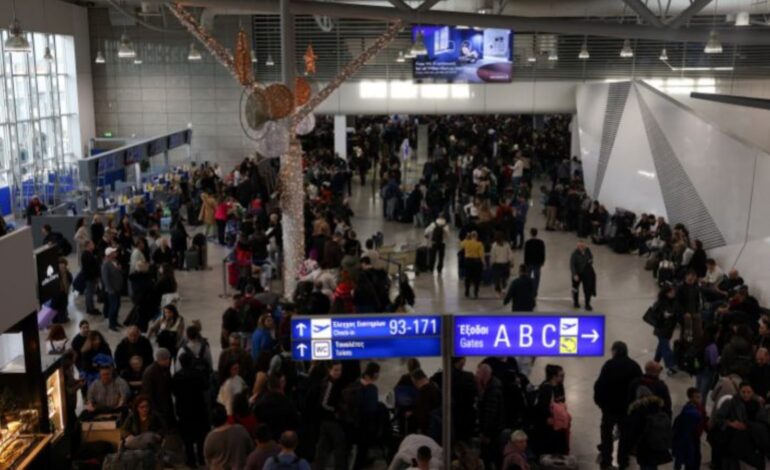
Passengers across Greece and Europe reported significant disruption. Airports experienced crowding as flights were paused or cancelled with little notice.
Common issues included:
-
Long queues at check-in and customer service desks
-
Limited information during the initial outage
-
Flights diverted to neighbouring countries
-
Missed connections and overnight delays
Flight tracking data showed unusually quiet skies over Greece during the peak of the outage. Later in the day, limited operations resumed using backup systems, but capacity remained restricted.
Airlines worked to accommodate passengers through rebooking and schedule adjustments. However, the scale of the disruption made immediate recovery difficult.
Technical Causes and Safety Protocols
Although investigations are ongoing, preliminary findings pointed to a failure in central radio communication infrastructure. Such systems connect air traffic controllers with aircraft across controlled airspace.
Controllers rely on these systems for:
-
Take-off and landing approvals
-
In-flight navigation guidance
-
Conflict resolution between aircraft
-
Managing airspace flow and sequencing
Without dependable radio contact, controllers cannot guarantee safe separation between aircraft. Therefore, standard aviation procedures require grounding or diverting flights until communication integrity is restored.
Authorities said backup systems were activated gradually. However, testing and validation took time, delaying full resumption of services.
Airlines’ Response and Passenger Guidance
Airlines responded by issuing travel advisories and updating passengers through official channels. Most carriers advised travellers to remain flexible and monitor flight status closely.
Passengers were encouraged to:
-
Check flight status before travelling to the airport
-
Allow extra time for connections and transfers
-
Stay updated through airline apps and notifications
-
Contact airlines directly for rebooking or assistance
At the same time, airlines coordinated with aviation authorities to manage reroutes and minimise further disruption.
Gradual Resumption of Flights
Greek aviation authorities confirmed that operations began to resume gradually after backup frequencies and systems were brought online. Departures and arrivals increased slowly, though full capacity remained limited.
However, experts cautioned that restoring normal schedules could take several days. Aircraft positioning, crew availability and airport congestion all influence recovery timelines.
For UAE travellers, this meant some continued delays on Europe-bound routes, even after the immediate crisis passed.
Why This Incident Matters for Global Aviation
The Greek airspace shutdown highlights how dependent global aviation is on resilient communication infrastructure. A single technical failure can disrupt travel across continents.
Aviation analysts emphasised several key lessons:
-
Critical systems require regular upgrades and redundancy
-
Legacy equipment increases the risk of large-scale outages
-
Cross-border coordination remains essential during emergencies
Countries that manage busy transit airspaces play a vital role in global connectivity. Therefore, infrastructure resilience directly affects international travel reliability.
Infrastructure Investment and Future Prevention
Experts stressed the importance of investing in modern air traffic control technology. Digital systems, automated backups and enhanced redundancy can reduce the risk of total shutdowns.
In addition, regular stress testing and contingency planning help authorities respond faster when failures occur. As global air travel continues to grow, the cost of system outages also rises.
Conclusion
The grounding of Greek airspace after a critical radio communication failure disrupted flights across Europe and the Middle East, including services linking the UAE with key destinations. While safety protocols worked as intended, the incident caused widespread delays, rerouting and passenger disruption.
As operations gradually resume, airlines and travellers continue to manage the after-effects. Ultimately, the event underscores the importance of resilient aviation infrastructure and proactive investment in fail-safe systems to protect global connectivity.
For passengers flying between the UAE and Europe, the disruption serves as a reminder that technical failures in one region can affect journeys worldwide.