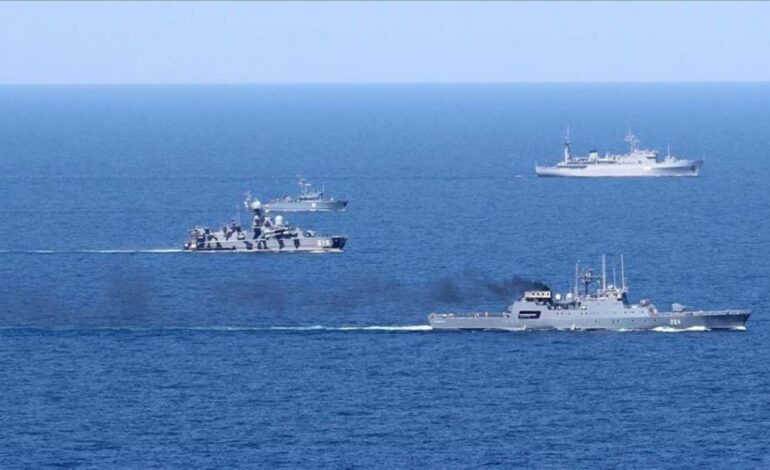

Iran and Russia are preparing to conduct joint naval exercises in the Gulf of Oman, a move that comes at a sensitive moment of heightened tensions with the United States. The planned drills are being closely monitored by global security analysts because they coincide with ongoing nuclear diplomacy and an increased United States military presence in the region.
The manoeuvres highlight deepening military cooperation between Tehran and Moscow while also underscoring the fragile security environment surrounding one of the world’s most strategically important maritime corridors. Although officials describe the exercise as routine maritime coordination, the timing has added significant geopolitical weight.
As multiple powers operate in close proximity across Gulf waters, observers say the coming weeks could be critical for regional stability.
Joint Naval Exercises Officially Announced
Iranian naval authorities have confirmed that the combined drills will take place in the Gulf of Oman and the northern Indian Ocean. The southern Iranian port city of Bandar Abbas will serve as the primary host location for the exercise.
According to Iranian officials, the main objective is to enhance maritime security and strengthen sustainable naval cooperation between the participating forces. In addition, the exercise is expected to improve coordination in areas such as search and rescue and protection of commercial shipping.
Russian naval assets have already begun arriving in the region, signalling that preparations are well advanced. The early deployment of vessels suggests that both countries are treating the exercise as a significant operational event rather than a purely symbolic engagement.
Strategic Timing Raises Geopolitical Attention
The announcement comes during a particularly tense period in the Middle East. The United States has recently increased its naval presence in nearby waters and has warned of potential consequences if nuclear negotiations with Tehran fail.
Because of this backdrop, analysts believe the overlapping military movements reflect a familiar pattern in the region where diplomacy and strategic signalling proceed simultaneously. While such signalling can serve deterrence purposes, it can also increase the risk of misunderstanding between rival forces.
At the same time, indirect talks between Washington and Tehran, mediated by Oman, have shown limited but cautious progress. Consequently, the naval drills add another layer of complexity to an already delicate diplomatic environment.
Potential for Wider Maritime Security Belt Participation
Iranian and Russian sources have indicated that the exercise forms part of the broader Maritime Security Belt framework. In previous years, this format has included participation from China.
Officials noted that Chinese naval units were heading toward the region for related activities. However, it remains unclear whether Beijing will formally join this specific round of drills.
When the trilateral format involving Iran, Russia and China does occur, it typically attracts close attention in Washington. Many United States analysts interpret such cooperation as evidence of growing strategic alignment among the three powers.
Even the possibility of expanded participation is therefore being watched carefully by defence planners.
Activity Near the Strait of Hormuz Adds Sensitivity
The timing of the joint exercise is particularly sensitive because it follows recent Iranian military activity near the Strait of Hormuz. This narrow waterway is one of the most critical energy shipping routes in the world.
Iran recently restricted parts of the strait for several hours during its own naval drills, citing security precautions. Although the restrictions were temporary, they drew significant international attention.
Roughly one fifth of global oil flows through the Strait of Hormuz. As a result, any military movement in nearby waters tends to influence energy market sentiment and maritime risk assessments.
Because the Gulf of Oman connects directly to the strait, the location of the upcoming exercise is strategically significant.
What the Joint Drills Aim to Achieve
Military officials from both countries have outlined a range of operational objectives for the exercise. While the drills carry geopolitical implications, they also serve practical naval training purposes.
Planned focus areas include
-
Maritime security operations
-
Joint tactical coordination
-
Protection of civilian navigation
-
Search and rescue cooperation
-
Strengthening naval interoperability
By conducting these activities together, Iran and Russia aim to improve their ability to operate in coordinated maritime environments.
However, defence experts note that the signalling effect of the exercise may be just as important as the operational training itself.
United States Military Presence in the Background
The joint drills are unfolding alongside a substantial United States military posture in the wider region. Carrier strike groups and other naval assets remain within operational reach of Iranian waters.
Washington has maintained pressure on Tehran over its nuclear programme, while Iran continues to insist on its right to uranium enrichment under international agreements.
This combination of ongoing diplomacy and visible military deployments has created a highly sensitive security environment across Gulf waters. Each side is attempting to balance deterrence with the desire to avoid direct confrontation.
Because of this delicate balance, even routine military exercises are being interpreted through a strategic lens.
Risk of Miscalculation in Crowded Waters
Security analysts have repeatedly warned that simultaneous shows of force by multiple powers can increase the possibility of unintended escalation. The Gulf of Oman and nearby Strait of Hormuz are already heavily trafficked by both commercial shipping and naval vessels.
Former naval experts cited in regional commentary note that while joint drills can serve as deterrence signals, they can also heighten operational risks if communication channels are not carefully maintained.
Historically, periods of heightened United States Iran tension have occasionally produced close encounters at sea. Therefore, the presence of additional naval forces in the same maritime space naturally raises concern among observers.
Maintaining clear rules of engagement and communication protocols will be critical in the coming days.
Why the Gulf of Oman Holds Strategic Importance
The location of the exercise adds to its global significance. The Gulf of Oman serves as a vital maritime gateway connecting the Arabian Sea to the Strait of Hormuz and the Persian Gulf.
Because of this geography, developments in these waters can have far reaching implications.
Key strategic factors include
-
Major global oil shipping routes
-
Heavy commercial maritime traffic
-
Proximity to key regional naval bases
-
Critical energy supply corridors
-
Important international shipping lanes
Even routine naval activity in this area is closely monitored by energy traders, defence planners and maritime insurers.
As geopolitical competition intensifies in the Indo Pacific and Middle East, the Gulf of Oman is likely to remain a focal point of naval attention.
Interaction Between Diplomacy and Military Signalling
One of the most closely watched aspects of the current situation is the parallel track of diplomacy and military activity. On one hand, Iran and the United States continue indirect nuclear negotiations through Omani mediation.
On the other hand, visible military manoeuvres by multiple powers are unfolding in the same timeframe.
Analysts say this dual track approach is not unusual in high stakes geopolitical environments. Countries often seek to maintain negotiating leverage while simultaneously signalling deterrence capability.
However, the overlap does increase complexity. Markets and policymakers must interpret diplomatic signals and military movements together rather than in isolation.
What Observers Will Watch Next
In the coming days, several developments will shape how the situation evolves.
Key indicators include
-
The number and type of participating warships
-
Whether China formally joins the drills
-
Any unusual naval movements in nearby waters
-
Statements from United States Central Command
-
Progress in United States Iran nuclear negotiations
Each of these factors will influence regional risk assessments and global market sentiment.
Energy traders in particular will be watching closely for any signs of disruption near key shipping routes.
Broader Regional and Global Implications
The planned Iran Russia naval exercises reflect the increasingly complex security dynamics shaping the Middle East and the wider maritime domain. As great power competition intensifies, joint military activities are becoming more frequent.
For Iran, the exercise demonstrates its ability to maintain defence partnerships despite international pressure. For Russia, the drills provide an opportunity to project naval presence in a strategically important region.
Meanwhile, the United States and its regional partners will continue to monitor developments closely.
The evolving situation highlights how maritime security, energy flows and geopolitical competition are becoming ever more interconnected.
Conclusion
The upcoming Iran Russia naval drills in the Gulf of Oman underscore the delicate balance currently shaping Middle East security dynamics. Although officially framed as routine maritime cooperation, the timing alongside United States pressure and ongoing nuclear diplomacy gives the exercise added strategic significance.
As multiple naval forces operate in proximity across one of the world’s most vital waterways, the margin for error remains narrow. The coming weeks will therefore be critical in determining whether the region moves toward gradual de escalation or heightened strategic competition.
For now, global markets, defence planners and diplomatic observers will continue watching the Gulf of Oman closely as events unfold.