Iran Appoints Mojtaba Khamenei as New Leader
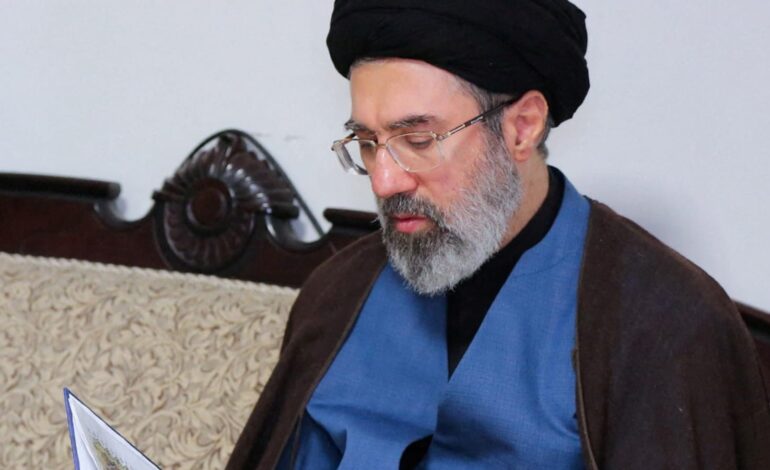

Iran has entered a new political chapter after Mojtaba Khamenei was appointed as the country’s new Supreme Leader following the death of his father, Ali Khamenei. The decision was announced by the Assembly of Experts, the constitutional body responsible for selecting the nation’s highest authority.
The announcement comes at a time of intense regional tension as military strikes carried out by the United States and Israel targeted key sites across Iran during an escalating conflict in the Middle East.
The appointment of Mojtaba Khamenei represents one of the most significant leadership transitions in Iran since the establishment of the Islamic Republic. Political analysts believe the new Supreme Leader will shape Iran’s domestic policies, regional strategy and international relations in the coming years.
The leadership change also raises questions about the direction of Iran’s political system and its role in an increasingly volatile regional environment.
Assembly of Experts Selects Mojtaba Khamenei
Iran’s Assembly of Experts confirmed that Mojtaba Khamenei would assume the position of Supreme Leader after the death of his father.
The Assembly of Experts consists of senior Islamic clerics elected to supervise the Supreme Leader and select a successor when necessary.
Following the death of Ali Khamenei, the assembly convened to determine the country’s next leader.
After consultations among senior clerics and political figures, the body reportedly reached a consensus supporting Mojtaba Khamenei as the new Supreme Leader.
Iranian state media later announced the decision, marking a major moment in the country’s political history.
The Supreme Leader holds the highest authority within Iran’s political system, overseeing the armed forces, judiciary and major policy decisions.
As a result, the selection of a new Supreme Leader has profound implications for the country’s governance and strategic direction.
Who Is Mojtaba Khamenei?
Mojtaba Khamenei is a cleric within Iran’s religious establishment and the second son of former Supreme Leader Ali Khamenei.
Despite maintaining a relatively low public profile for many years, he has long been considered an influential figure behind the scenes.
Political observers believe Mojtaba played an important role in his father’s political network and maintained close ties with several key institutions within the Iranian state.
He studied religious theology in the city of Qom, which serves as one of the most important centres of Shia Islamic scholarship.
Although he does not possess the same level of public recognition as many senior Iranian clerics, analysts say his influence within elite political circles has been significant.
His relationships with powerful security and political institutions have helped strengthen his position within the country’s leadership structure.
Over the years, several analysts speculated that he could eventually succeed his father as Supreme Leader.
The recent appointment confirms those predictions and places him at the centre of Iran’s political future.
Death of Ayatollah Ali Khamenei
Ali Khamenei served as Iran’s Supreme Leader for more than three decades.
He assumed the role in 1989 following the death of Ruhollah Khomeini, the founder of the Islamic Republic.
During his leadership, Khamenei shaped Iran’s political ideology, foreign policy strategy and military posture.
He oversaw the development of Iran’s regional alliances and played a central role in decisions related to the country’s nuclear programme.
His leadership also defined Iran’s complex relationship with Western countries, particularly the United States.
Khamenei remained one of the longest-serving leaders in the modern Middle East.
His death came amid heightened tensions following military strikes conducted by the United States and Israel during the ongoing regional conflict.
The sudden leadership transition therefore arrives at a particularly sensitive moment for the country.
Debate Over Hereditary Succession
Iran’s political system is based on a revolutionary ideology that officially rejects hereditary rule.
The Islamic Republic’s constitution assigns the responsibility of selecting the Supreme Leader to the Assembly of Experts rather than allowing power to pass through family lines.
However, Mojtaba Khamenei’s appointment has sparked debate among political analysts and observers.
Critics argue that the succession resembles a hereditary transfer of power because the new Supreme Leader is the son of the previous leader.
Some analysts suggest the decision could raise questions about the political legitimacy of the process.
Supporters within Iran’s ruling establishment, however, say the appointment reflects the need for stability and continuity during a period of crisis.
They argue that Mojtaba Khamenei possesses strong political connections and institutional support that make him capable of leading the country during turbulent times.
Role of the Islamic Revolutionary Guard Corps
The Islamic Revolutionary Guard Corps (IRGC) is one of the most powerful institutions within Iran’s political and security system.
The organisation plays a major role in military operations, economic projects and national security policy.
Analysts believe the IRGC has supported Mojtaba Khamenei’s rise to leadership.
The organisation’s backing is widely viewed as a crucial factor in consolidating his authority within Iran’s political structure.
Over the years, the IRGC has expanded its influence across multiple sectors of Iranian society, including defence, construction, telecommunications and energy.
Its support could therefore help ensure continuity within Iran’s security institutions during the leadership transition.
Observers believe the relationship between Mojtaba Khamenei and the Revolutionary Guard will shape many of Iran’s strategic decisions in the future.
Impact on Iran’s Domestic Politics
The appointment of Mojtaba Khamenei could reshape Iran’s domestic political landscape.
Many analysts believe his leadership may strengthen conservative factions within the government.
These factions have traditionally supported a strong ideological approach to governance and foreign policy.
His leadership could also consolidate power among institutions closely aligned with the Supreme Leader’s office.
At the same time, some observers expect debates within Iran’s political elite about the future direction of the country.
Reformist groups may push for greater political openness, while conservative factions may prioritise security and ideological continuity.
Public reaction within Iran remains an important factor in determining how the transition unfolds.
Economic challenges, international sanctions and domestic political pressures could all influence the new leader’s policy decisions.
International Implications of the Leadership Change
The leadership transition in Iran carries significant implications for international relations.
Iran plays a central role in Middle Eastern geopolitics due to its military capabilities, regional alliances and strategic influence.
Countries across the region are closely monitoring how Mojtaba Khamenei approaches foreign policy.
Relations with Israel and the United States remain particularly important due to ongoing tensions and military confrontations.
The new Supreme Leader’s policies will likely influence Iran’s position on nuclear negotiations, regional security and diplomatic engagement.
Global powers are also watching closely to see whether Iran’s leadership change could create opportunities for renewed diplomacy.
However, analysts say the broader geopolitical environment remains uncertain.
Regional Stability and Strategic Alliances
Iran maintains significant influence across the Middle East through its alliances and strategic partnerships.
The country has established relationships with political and military groups in several regional states.
These alliances form part of Iran’s broader strategy to maintain influence and counter rival powers in the region.
A new Supreme Leader could influence the direction of these relationships and determine how Iran responds to regional security challenges.
Regional governments are therefore carefully observing Iran’s leadership transition.
Any shift in Iran’s strategic priorities could affect the balance of power in the Middle East.
Diplomatic efforts aimed at reducing tensions remain crucial for maintaining stability in the region.
Challenges Facing the New Supreme Leader
Mojtaba Khamenei now faces several major challenges as he assumes leadership.
The country continues to face economic pressure due to international sanctions and domestic financial difficulties.
In addition, Iran remains involved in regional conflicts and geopolitical rivalries.
Managing these challenges will require careful political and strategic decisions.
Maintaining stability within Iran’s political institutions will also be important during the transition.
The new Supreme Leader must balance competing interests among political factions, religious authorities and security institutions.
His ability to navigate these complex dynamics will shape the country’s future direction.
The appointment of Mojtaba Khamenei as Iran’s new Supreme Leader marks a historic moment in the country’s political evolution.
Following the death of Ali Khamenei, the leadership transition arrives during one of the most turbulent periods in Iran’s modern history.
The decision by the Assembly of Experts highlights the importance of continuity and stability within Iran’s political system.