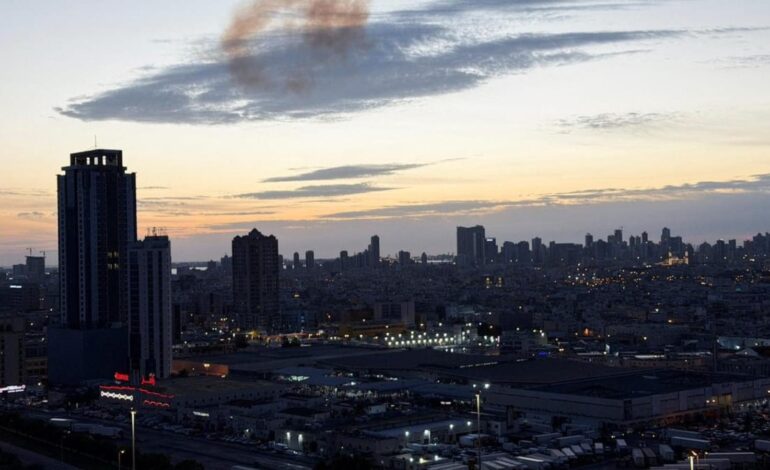

Rising tensions in the Middle East took another serious turn after an Iranian strike damaged a major desalination facility in Bahrain. Authorities quickly confirmed the incident but reassured residents that the country’s water supply remains stable and fully operational.
Officials said the attack targeted critical infrastructure but did not disrupt Bahrain’s national water distribution network. Emergency teams responded immediately to secure the affected facility and assess the damage.
The incident highlights growing concerns about the vulnerability of essential infrastructure during the ongoing regional conflict involving Iran, Israel and their allies.
Despite the strike, Bahraini authorities stressed that drinking water remains available across the kingdom. They urged residents to remain calm and rely on official updates.
Desalination Plant Hit in Iranian Strike
Bahraini officials confirmed that the Iranian strike damaged a key desalination facility that plays an important role in the country’s water supply system.
The plant converts seawater into fresh drinking water through advanced filtration and purification technologies. This process removes salt and minerals to produce water safe for consumption.
Countries in the Gulf region depend heavily on desalination because natural freshwater resources remain extremely limited. As a result, desalination plants provide the majority of drinking water for millions of people.
Authorities said the attack caused structural damage to parts of the facility. However, the strike did not significantly affect Bahrain’s overall desalination capacity.
Engineers and emergency teams immediately inspected the plant after the incident. Security forces secured the surrounding area to prevent further risks.
Officials stated that the facility continues to operate within safe limits while specialists evaluate the damage and begin repairs.
Bahrain Assures Residents that Water Supply Remains Stable
The Bahrain Ministry of Interior reassured residents that the country’s drinking water supply remains stable despite the damage to the desalination facility.
Officials explained that Bahrain operates several desalination plants across the country. These facilities provide redundancy and backup capacity during emergencies.
If one plant experiences damage or technical problems, other facilities can increase production to maintain supply levels.
Authorities confirmed that the national water distribution network continues to function normally. Residents across Bahrain continue to receive uninterrupted water services.
Officials urged the public not to panic and to follow verified updates from government agencies.
They also warned against spreading misinformation on social media platforms, which can cause unnecessary fear during emergency situations.
Desalination’s Critical Role in the Gulf Region
Desalination plays a vital role in water supply across the Gulf region. Countries such as Saudi Arabia, United Arab Emirates, Qatar and Kuwait depend heavily on desalinated seawater for domestic use.
The Gulf region experiences extremely low rainfall and limited natural freshwater resources. Rivers and lakes remain scarce, which makes desalination the primary method for producing drinking water.
Many Gulf countries produce more than 70 to 80 percent of their drinking water through desalination plants located along coastal areas.
These facilities use advanced technologies such as reverse osmosis and thermal desalination to convert seawater into freshwater.
Because millions of residents depend on desalinated water every day, governments classify desalination plants as critical national infrastructure.
Any major disruption to these facilities could potentially affect large populations and economic activity.
The recent strike in Bahrain highlights the strategic importance of protecting such infrastructure during times of conflict.
Three People Injured by Falling Debris
Authorities also reported that three people suffered injuries after debris fell during the incident.
According to the Bahrain Ministry of Interior, emergency responders reached the affected areas quickly and provided medical assistance.
Officials confirmed that the injuries were not life-threatening. The injured individuals received treatment at nearby medical facilities.
Authorities believe the debris came from intercepted aerial threats or fragments produced during the strike.
Air defence systems often intercept missiles or drones in mid-air. When this happens, debris can fall to the ground in nearby areas.
Emergency services remained on high alert after the incident to respond to any additional situations.
University Building Damaged in Muharraq
Authorities also confirmed damage to a university building in the city of Muharraq, located near Bahrain’s capital Manama.
Muharraq serves as one of the country’s most important urban centers. The city hosts several educational institutions, residential communities and historic landmarks.
Officials reported structural damage to the university building following the strike. However, they did not report additional casualties at the site.
Inspection teams quickly arrived to examine the building and evaluate its safety.
Authorities temporarily restricted access to the affected area while engineers conducted safety assessments.
Local officials said they will complete repairs once structural experts confirm that restoration work can proceed safely.
Iran Accuses United States of Similar Infrastructure Strike
The incident in Bahrain occurred shortly after Iran accused the United States of striking a desalination facility on Qeshm Island.
Iranian Foreign Minister Abbas Araghchi said the alleged attack targeted water infrastructure and created a dangerous precedent.
He argued that attacks on essential civilian services could lead to serious humanitarian consequences.
Although details of the allegation remain disputed, the accusation has increased diplomatic tensions across the region.
Security analysts say accusations and counter-accusations over infrastructure attacks could intensify the broader conflict narrative.
Growing Concerns Over Infrastructure Security
Security experts warn that attacks on critical infrastructure could escalate tensions across the Middle East.
Facilities such as desalination plants, power stations, airports and oil facilities support everyday life and economic activity.
When these systems face disruptions, millions of residents can feel the effects.
Infrastructure damage can interrupt water supply, electricity production and transportation services.
For this reason, many Gulf governments have increased security around essential facilities in recent years.
Authorities now deploy advanced surveillance technologies, security patrols and air defence systems to protect critical infrastructure.
Despite these precautions, the Bahrain incident demonstrates that infrastructure remains vulnerable during periods of geopolitical tension.
Bahrain Strengthens Emergency Response Measures
Following the strike, Bahraini authorities activated emergency response procedures across relevant agencies. Security forces, emergency responders and infrastructure specialists coordinated efforts to secure the affected facility.
Teams quickly inspected desalination systems to confirm that water production continued without disruption. Officials stated that public safety remains the government’s highest priority.
Authorities also reviewed contingency plans designed to maintain essential services during emergencies.
Government officials urged residents to follow official announcements and remain cautious when sharing information online.
Clear communication plays a key role in maintaining public confidence during crises.
Rising Regional Tensions
The strike on Bahrain’s desalination facility reflects wider geopolitical tensions across the Middle East.
Conflicts involving Iran, Israel and their regional allies have created an increasingly complex security environment.
Strategic infrastructure often becomes a focus during periods of conflict because of its importance for national stability.
Facilities such as oil terminals, ports, airports and desalination plants support both civilian life and economic activity.
Attacks on these sites can cause widespread disruption and humanitarian challenges.
Analysts warn that continued escalation could increase risks for infrastructure across the Gulf region.
Governments therefore continue strengthening security and emergency preparedness measures.
The Iranian strike that damaged a desalination plant in Bahrain highlights the growing risks facing critical infrastructure during periods of regional conflict.
Although the attack caused structural damage and injuries from falling debris, authorities confirmed that Bahrain’s water supply remains stable and operational.
Emergency response teams quickly secured the affected facility and ensured that water distribution continued without disruption.
The incident also underscores the critical role desalination plants play across the Gulf region, where millions depend on them for daily drinking water.
As tensions across the Middle East continue to rise, governments will likely increase efforts to protect essential infrastructure and maintain the uninterrupted delivery of vital services.
For now, Bahraini officials say the situation remains under control and that residents can continue to rely on the country’s secure water supply.