
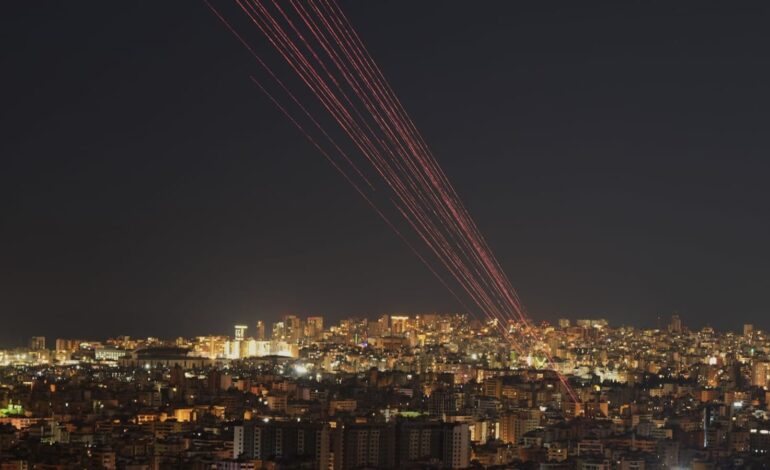

Tensions in the Middle East have intensified after Iran launched a fresh wave of missiles toward Israel, prompting the activation of Israeli air defence systems and emergency alerts across multiple regions. The Israeli military confirmed that the missiles were detected early Saturday, triggering nationwide warning systems and forcing civilians to seek shelter as interception efforts began.
The latest barrage represents another major escalation in the already volatile confrontation between Iran and Israel. Over the past several weeks, the conflict has expanded rapidly, drawing international attention and raising fears that it could evolve into a broader regional war involving multiple countries and armed groups.
As missile threats continue, Israel remains on high alert while global leaders monitor developments closely.
Israeli Military Detects Incoming Missiles
The Israel Defense Forces (IDF) confirmed that several missiles were launched from Iranian territory toward Israel, prompting immediate defensive measures.
According to military officials, early warning systems detected the projectiles shortly after launch. Radar systems tracked the missiles as they approached Israeli airspace, allowing defence forces to activate interception protocols.
Within minutes of detection, Israeli air defence systems were deployed to neutralise the incoming threats before they could reach populated areas or critical infrastructure.
Air raid sirens were heard in several regions across the country as authorities worked to warn civilians about the approaching danger.
Military officials stated that the defensive response was part of Israel’s standard rapid-reaction protocol designed to protect civilians during missile attacks.
Emergency Alerts Sent to Residents
As soon as the missile launches were detected, Israel’s nationwide civil defence alert system sent emergency notifications to residents in affected areas.
These alerts were delivered through mobile phones, public sirens, and digital warning systems, providing people with immediate instructions on how to protect themselves.
Residents were advised to quickly move to designated safe spaces such as reinforced rooms, underground shelters, or public bomb shelters. Authorities urged civilians to remain inside these protected areas until official updates confirmed that the threat had passed.
Israel’s civil defence infrastructure is designed to provide warnings within seconds of missile launches. This rapid alert system allows civilians valuable time to reach shelters before missiles can reach their targets.
Officials emphasised that strictly following safety instructions is essential to reducing casualties during missile attacks.
Israel’s Air Defence Systems Respond
Israel relies on one of the most advanced multi-layered air defence networks in the world to defend against missile and rocket attacks.
Among the key components of this system is the Iron Dome, which is specifically designed to intercept short-range rockets and artillery shells. The system uses radar technology to track incoming projectiles and calculate their trajectory.
If a missile is predicted to strike a populated area or critical infrastructure, interceptor missiles are launched to destroy the threat in mid-air.
Another key system is David’s Sling, which is designed to intercept medium-range ballistic missiles and cruise missiles. Israel also operates additional advanced defence technologies capable of countering long-range ballistic missile threats.
Together, these systems form a layered defence network that provides protection against various types of aerial threats.
Military experts say that this integrated defence structure has significantly improved Israel’s ability to protect civilian populations during periods of conflict.
Escalating Iran–Israel Conflict
The latest missile barrage comes amid a rapidly intensifying confrontation between Iran and Israel.
Tensions escalated dramatically after joint military operations by the United States and Israel targeted Iranian military facilities. These strikes were reportedly aimed at disrupting Iran’s missile and drone capabilities.
In response, Tehran launched retaliatory attacks that included waves of missiles and drones directed toward Israeli territory and allied military installations across the region.
Since then, both sides have engaged in repeated exchanges of strikes and counterstrikes.
Military analysts warn that the confrontation between the two long-standing rivals has entered one of its most dangerous phases in recent years.
The situation is particularly concerning because both countries possess advanced military capabilities and extensive regional influence.
State of Emergency Declared in Israel
As the security situation worsened, Israeli authorities declared a nationwide state of emergency.
Under these emergency measures, schools and universities across the country have been temporarily closed, and public gatherings have been restricted to reduce potential casualties during missile attacks.
The Israeli government has also mobilised thousands of military reservists to strengthen national defence capabilities. Emergency services, including hospitals and medical facilities. Have implemented contingency plans to ensure continued medical care during potential large-scale attacks.
In several cases, hospitals have relocated operations to reinforced underground areas to protect patients and staff from missile strikes. Officials say these precautionary steps are essential to maintaining national resilience during prolonged security crises.
Civil Defence Measures Across the Country
Israel has developed one of the most comprehensive civilian protection systems in the world due to decades of regional conflict.
Most homes, apartment buildings, schools, and public facilities in Israel are equipped with reinforced safe rooms known as “Mamad”.These rooms are designed to withstand explosions and provide protection from missile fragments and shockwaves.
Public bomb shelters are also located throughout cities and towns, allowing residents quick access to protective spaces during emergencies. In addition to physical shelters, Israel maintains a sophisticated alert network that includes air raid sirens, mobile phone alerts, television broadcasts, and real-time digital notifications.
These systems are designed to provide immediate warnings when missile launches are detected. Experts say these extensive civil defence measures have played a critical role in reducing casualties during previous rounds of conflict.
Regional Impact of the Conflict
The ongoing confrontation between Iran and Israel has already had significant consequences across the wider Middle East.
Missile and drone attacks linked to the conflict have affected several countries in the region, raising concerns about further escalation. Iran-aligned armed groups operating in different parts of the Middle East have also increased their military activities.
Among the most prominent of these groups is Hezbollah, the powerful Lebanese militant organisation that has historically maintained close ties with Iran. Hezbollah has launched attacks against Israeli positions in recent weeks, opening another front in the conflict.
Meanwhile, military tensions have also increased around strategic maritime routes, energy infrastructure, and military installations across the region. Several governments in the Middle East have raised their security readiness as the situation continues to develop.
Global Concerns Over Escalation
The rapidly escalating conflict has sparked growing concern among international leaders and diplomatic organisations.
Countries around the world are closely monitoring developments due to the potential global implications of a prolonged war between Iran and Israel. Diplomatic efforts are currently underway to prevent further escalation and encourage restraint from all parties involved.
International organisations have called for urgent dialogue and de-escalation measures to avoid a wider regional war. Analysts warn that continued military confrontation could have serious consequences beyond the Middle East.
One major concern is the potential disruption of global energy markets, particularly if key oil and gas infrastructure or shipping routes are affected. The Middle East plays a crucial role in global energy supply, and instability in the region often leads to increased volatility in international markets.
Additionally, prolonged conflict could disrupt international trade routes and trigger wider economic uncertainty. Financial markets around the world are already closely watching the situation as geopolitical risks continue to rise.
Rising Security Risks in the Middle East
Security analysts warn that the growing confrontation between Iran and Israel could reshape the strategic landscape of the Middle East. The involvement of multiple actors, including regional allies and proxy groups. Increases the complexity of the conflict and raises the risk of miscalculation.
In previous regional conflicts, limited strikes sometimes escalated rapidly into broader military confrontations. Because both Iran and Israel possess advanced missile capabilities. Sophisticated military technologies, any further escalation could have significant consequences.
Experts also warn that cyber warfare, drone operations, and naval incidents could become increasingly important elements of the conflict. The unpredictable nature of these developments makes the situation particularly difficult for policymakers.
Outlook for the Ongoing Conflict
While Israel’s air defence systems continue to intercept incoming missiles, the broader security situation remains highly uncertain. Military operations and retaliatory strikes could continue in the coming days as both sides attempt to assert strategic pressure.
At the same time, diplomatic channels remain active as global leaders attempt to prevent the crisis from spiralling into a wider regional war. The coming weeks will likely play a crucial role in determining whether the conflict stabilises or escalates further.
Iran’s latest missile barrage toward Israel highlights the rapidly deteriorating security situation in the Middle East. With air defence systems activated and civilians seeking shelter across multiple regions. Israel remains on high alert as it faces ongoing missile threats.
The confrontation between Iran and Israel has already drawn international attention and raised fears of a broader regional conflict. As military operations continue and diplomatic efforts intensify, the risk of further escalation remains significant.
Global leaders, analysts, and citizens alike are closely watching the unfolding events. Aware that the outcome of this conflict could have far-reaching consequences not only for the Middle East.






1 Comment
[…] the incident also highlights the growing security challenges facing the Middle East amid escalating geopolitical tensions. As drone and missile technologies become more widely used […]
Comments are closed.