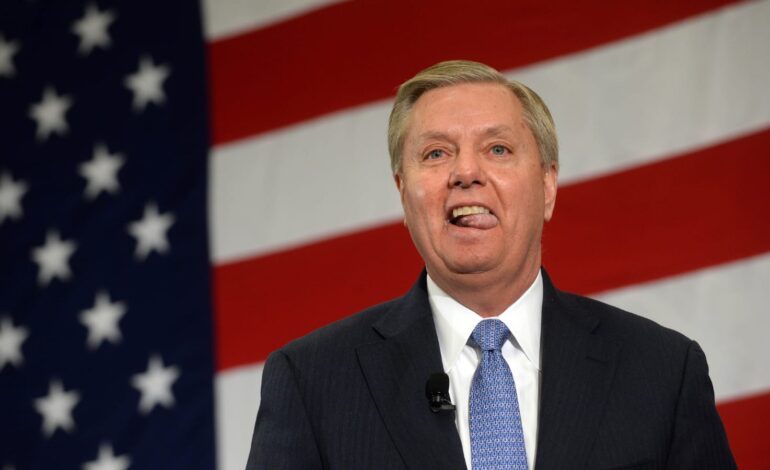

Tensions in the Middle East have intensified following Israeli strikes on Iranian oil infrastructure, prompting a warning from senior United States lawmaker Lindsey Graham. The Republican senator urged Israel to carefully consider its military targets after attacks on oil facilities in Iran triggered global economic concerns and fears of a deeper regional conflict.
The strikes reportedly hit oil facilities near Tehran, sending large plumes of smoke into the sky and raising alarm in international energy markets. Following the attacks, crude oil prices surged above $115 per barrel, reflecting investor fears that the conflict could disrupt global energy supplies.
The escalation highlights the growing risks associated with targeting energy infrastructure during military confrontations. Analysts warn that further attacks on oil facilities could intensify economic instability and push global fuel prices even higher.
Israeli Strikes Target Iranian Oil Infrastructure
Israeli forces launched airstrikes on Iranian oil facilities over the weekend as part of the ongoing military confrontation between Iran and a coalition involving Israel and the United States.
Videos and images circulating online showed thick black smoke rising above industrial areas after explosions struck energy facilities.
The attacks are part of a broader military campaign targeting strategic Iranian infrastructure, including military bases, industrial complexes and energy installations.
Iran’s oil infrastructure represents one of the country’s most important economic assets. Oil exports provide a major portion of government revenue and support funding for infrastructure projects, public services and defence programs.
Because of its economic importance, the targeting of oil facilities has raised concerns about long-term damage to Iran’s economy.
Energy analysts say such attacks could also influence global oil markets because Iran remains a significant energy producer despite international sanctions.
Lindsey Graham Calls for Strategic Restraint
Senator Lindsey Graham addressed the situation through a message posted on social media, praising Israel’s military capabilities while urging caution in selecting targets.
Graham described Israel as a close ally and acknowledged the effectiveness of its military operations against Iranian strategic assets.
However, he warned that damaging Iran’s oil industry could have unintended long-term consequences.
According to Graham, destroying key energy infrastructure may harm the Iranian population and complicate efforts to rebuild the country if political changes occur in the future.
“Our allies in Israel have shown amazing capability when it comes to collapsing the murderous regime in Iran,” Graham wrote.
He added that Israel should carefully weigh its military objectives when targeting infrastructure tied to the Iranian economy.
Graham argued that Iran’s oil sector could play an essential role in rebuilding the country if a future government seeks economic reform.
“Our goal is to liberate the Iranian people in a fashion that does not cripple their chance to start a new and better life when this regime collapses,” he said.
His remarks highlight the complex balance between military strategy and long-term economic stability during conflicts.
Oil Prices Surge After Energy Facilities Hit
The strikes on Iranian oil facilities triggered immediate reactions in global energy markets.
Oil prices surged above $115 per barrel as traders responded to fears of supply disruptions in the Middle East.
The region remains one of the world’s most important energy production hubs, supplying a large share of global oil exports.
When conflicts threaten energy infrastructure, global markets typically respond quickly.
Energy analysts say the price surge reflects investor concerns that further attacks could reduce oil output or disrupt shipping routes.
Higher oil prices often affect economies around the world by increasing fuel costs for businesses and consumers.
Transportation, manufacturing and agriculture sectors tend to feel the impact most strongly when energy costs rise.
The price spike therefore highlights the global economic consequences of instability in the Middle East.
Global Economic Concerns Increase
Rising oil prices have already begun affecting global financial markets.
Higher energy costs can lead to increased inflation, which raises production expenses for businesses and living costs for households.
Financial markets in several regions have reacted negatively to the growing geopolitical tensions.
In Asia, major stock indexes such as Japan’s Nikkei 225 recorded sharp declines as investors reacted to economic uncertainty.
Investors often move their capital into safer assets during periods of geopolitical instability.
Economic analysts warn that prolonged conflict in the Middle East could slow global economic growth.
If oil prices remain elevated for an extended period, countries that rely heavily on imported energy could face serious economic pressure.
Strategic Importance of Iran’s Oil Industry
Iran’s oil industry plays a central role in the country’s economy.
Despite years of international sanctions, Iran remains one of the world’s major oil producers.
Revenue from oil exports supports government spending, public services and economic development projects.
Energy infrastructure includes refineries, pipelines, storage facilities and export terminals.
Damage to these facilities can significantly reduce production capacity and limit export potential.
However, Senator Lindsey Graham’s comments highlight concerns that extensive damage to oil infrastructure could harm civilians more than political leaders.
If Iran’s political system were to change in the future, rebuilding the oil sector would likely be essential for economic recovery.
Oil revenue could help finance reconstruction and economic reform efforts.
For this reason, some policymakers argue that strategic restraint should guide decisions regarding energy infrastructure during conflicts.
Middle East Conflict Continues to Expand
The strikes on Iranian oil facilities are part of a broader regional conflict involving several countries.
Military operations have targeted strategic infrastructure, command centres and military installations across multiple locations.
Missile and drone attacks have also affected Gulf states including the United Arab Emirates, Bahrain and Saudi Arabia.
Air defence systems across the region have been activated repeatedly to intercept incoming threats.
Authorities in several countries have issued safety alerts to residents and increased security around critical infrastructure.
Governments across the Gulf are closely monitoring developments as the conflict continues to escalate.
Regional stability remains a major concern due to the strategic importance of energy resources and shipping routes in the Middle East.
Diplomatic Pressure for De-Escalation
As tensions continue to rise, international leaders are increasingly calling for restraint.
Governments and international organisations have urged all parties involved in the conflict to prioritise diplomatic solutions.
Diplomatic channels remain active as countries attempt to prevent the conflict from expanding further.
Several world leaders have emphasised the importance of avoiding attacks on civilian infrastructure and economic facilities.
Such actions could increase humanitarian risks and worsen global economic instability.
Despite these calls for restraint, military operations continue across multiple fronts.
Analysts say diplomatic engagement remains the most effective way to prevent further escalation.
Outlook for Global Markets and Regional Stability
Experts believe the coming weeks will be critical in determining the direction of the conflict.
If attacks on energy infrastructure continue, global oil prices could rise significantly.
Higher fuel costs would likely affect transportation, manufacturing and trade worldwide.
The targeting of energy infrastructure introduces additional risks for financial markets and global economic stability.
Investors are closely monitoring military developments and diplomatic negotiations.
Any signs of de-escalation could stabilise markets, while further escalation could trigger additional volatility.
Senator Lindsey Graham’s call for caution reflects growing concerns about the strategic consequences of targeting Iran’s oil infrastructure.
While Israeli military operations aim to weaken Iran’s capabilities, attacks on energy facilities carry broader economic and humanitarian implications.