
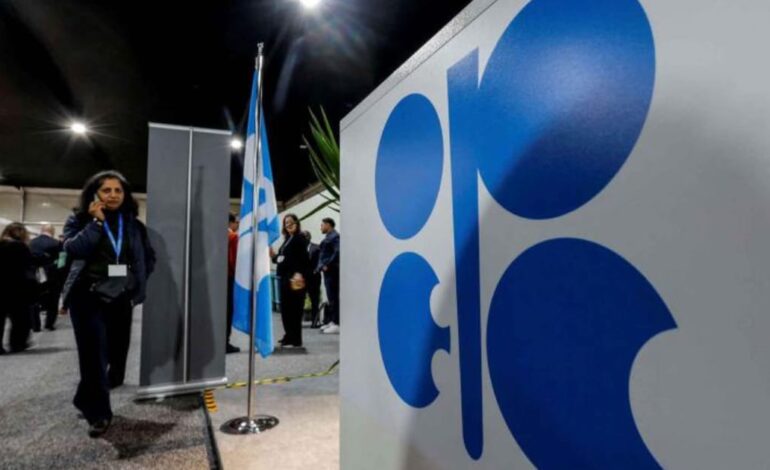

The OPEC+ alliance has decided to keep oil production unchanged through the first quarter of 2026, choosing caution and stability over increasing output at a time of heightened geopolitical uncertainty and fragile market conditions. The move comes as political upheaval in Venezuela sends ripples through global energy markets, while concerns about oversupply and weak demand continue to weigh on crude prices.
This decision underscores OPEC+’s broader strategy of managing supply carefully to protect prices and avoid renewed volatility. As the world enters 2026, oil markets are navigating a complex mix of political risk, economic slowdown fears and uneven demand recovery. In this article, we explore why OPEC+ paused planned production increases, how Venezuela’s political crisis factors into the decision, the wider oil market context, and what it all means for producers, consumers and prices in the months ahead.
OPEC+ Prioritises Stability Over Output Growth
At a recent ministerial meeting, OPEC and its allies agreed to maintain current production levels rather than proceed with previously signalled output increases. This decision extends a stance first adopted in late 2025, when the group halted planned supply hikes for January, February and March, citing market fragility and downside risks to prices.
The renewed pause was backed strongly by major producers including Saudi Arabia, Russia and the United Arab Emirates, all of whom play a central role in shaping OPEC+ policy. Together, these countries emphasised the need for predictability and discipline, arguing that premature increases in output could worsen oversupply and push prices lower.
While Venezuela’s political turmoil was not the sole reason behind the decision, it added to the sense of uncertainty. Delegates indicated that it was too early to adjust production policy in response to rapidly evolving events in Venezuela and that a “wait-and-see” approach was more prudent.
Understanding the “Venezuelan Shock”
The term “Venezuela shock” has gained traction in oil market commentary to describe the sudden political and geopolitical developments affecting the country’s energy sector. These include escalating tensions with the United States, renewed sanctions pressure and disruptions to Venezuela’s already fragile oil exports.
At the centre of the turmoil is President Nicolás Maduro, whose leadership has long been contested internationally. Recent developments, including intensified US actions and enforcement of sanctions, have further complicated Venezuela’s ability to sell oil on global markets.
Venezuela holds the world’s largest proven crude oil reserves, yet its production has collapsed over the past decade due to chronic underinvestment, mismanagement and sanctions. Output today is often below one million barrels per day, far from the roughly three million barrels per day the country once produced at its peak.
PDVSA and Export Constraints
Venezuela’s state oil company, PDVSA, has been under mounting pressure as sanctions restrict access to buyers, shipping and financing. In recent weeks, reports suggest that PDVSA has been forced to curb production in some areas due to storage bottlenecks and limited export capacity.
Several joint ventures have also been instructed to scale back output, not because of physical damage to oilfields or refineries, but due to logistical paralysis. While infrastructure on the ground remains largely intact, the inability to export crude efficiently has effectively capped Venezuela’s supply to global markets.
For OPEC+, this creates a dilemma. On one hand, further Venezuelan supply disruptions could tighten global markets. On the other, assuming a sharp drop in Venezuelan output without clear data could lead to overcorrection and renewed oversupply elsewhere.
Why OPEC+ Is Exercising Caution
Oversupply and Weak Demand Risks
One of the biggest challenges facing oil markets entering 2026 is the risk of oversupply. Global inventories remain comfortable, and economic growth forecasts in key consuming regions point to modest, rather than robust, demand expansion.
China’s recovery has been uneven, Europe continues to grapple with slow growth, and tighter monetary conditions in several economies have dampened fuel consumption. In this environment, adding more barrels to the market could easily tip the balance toward surplus.
By holding production steady, OPEC+ aims to prevent a build-up of excess inventories and reduce the risk of another price slide.
Uncertainty Around Venezuela’s Real Impact
Despite the dramatic headlines, the actual impact of Venezuela’s political crisis on global oil supply is still uncertain. Much of the country’s production has already been constrained for years, meaning any additional losses may be incremental rather than transformational.
OPEC+ officials have signalled that they prefer to rely on hard data rather than speculation. Waiting allows the group to assess whether Venezuelan exports fall materially or whether existing supply buffers absorb the shock.
Focus on Price Stability
Price stability remains a cornerstone of OPEC+ strategy. After oil prices recorded one of their steepest annual declines in 2025 since the pandemic era, producers are keen to avoid policies that could trigger further weakness.
Maintaining steady output sends a signal to markets that the group is committed to defending price levels and responding flexibly if conditions deteriorate.
Seasonal Demand Considerations
Oil demand typically softens in the early months of the year due to seasonal patterns, particularly in the northern hemisphere. OPEC+ has historically adjusted supply during these periods to avoid flooding the market when consumption is weaker.
The first quarter pause aligns with this approach, allowing the group to reassess conditions later in the year when demand may improve.
Venezuela’s Long-Term Oil Outlook
Despite its vast reserves, Venezuela’s prospects for a rapid production rebound remain limited. Rebuilding output to even half of historical levels would require billions of dollars in investment, modern technology, skilled labour and, critically, political stability.
Sanctions continue to deter international oil companies from committing long-term capital, and uncertainty over contracts and regulatory frameworks adds to investor hesitation. While some US and international firms have explored limited engagement under specific licences, analysts agree that any meaningful recovery will take years, not months.
For global markets, this means Venezuela is unlikely to become a major swing supplier in the near term, reinforcing OPEC+’s decision not to rush policy changes based on short-term political events.
How Global Oil Markets Are Reacting
So far, oil prices have reacted cautiously to developments in Venezuela and OPEC+’s production pause. Crude benchmarks have seen modest gains on expectations of tighter supply discipline, but these moves have been capped by ample global inventories and subdued demand growth.
Market participants appear to view the Venezuelan situation as a medium-term risk rather than an immediate supply shock. This measured response supports OPEC+’s strategy of observation rather than intervention.
Implications for Producers, Markets and Consumers
For Oil Producers
By keeping output steady, OPEC+ members aim to protect revenues and maintain fiscal stability. Countries heavily reliant on oil income benefit from predictable price levels, which help support government budgets and long-term investment planning.
For Global Energy Markets
Stable production reduces short-term volatility and provides clarity for traders and refiners. However, prolonged restraint could tighten markets later in 2026 if demand surprises to the upside or if geopolitical risks escalate elsewhere.
For Consumers
In the near term, steady supply helps prevent sudden price spikes at the pump. Over the longer term, consumers could face higher prices if supply growth remains constrained while demand gradually recovers.
Conclusion: A Strategic Pause in an Uncertain World
OPEC+’s decision to pause oil production increases reflects a careful balancing act between geopolitical uncertainty, market fundamentals and long-term strategy. While Venezuela’s political upheaval adds another layer of risk, the dominant concerns remain oversupply, weak demand and price stability.
As 2026 unfolds, the alliance will closely monitor consumption trends, inventory levels and geopolitical developments, including any changes in Venezuela’s oil sector. For now, OPEC+ has made it clear that caution, discipline and flexibility will guide its approach — a strategy designed to navigate an oil market still searching for equilibrium in a volatile global landscape.



2 Comments
[…] removal and arrest of Nicolás Maduro has fundamentally altered Venezuela’s political landscape. After more than a decade in power, Maduro’s leadership came to an abrupt end, closing a long […]
[…] the physical barrels, the decision sends an important strategic signal. Essentially, OPEC+ appears to be demonstrating both responsiveness and […]
Comments are closed.