
Sheikh Mohamed Visits Pakistan to Boost Strategic Ties
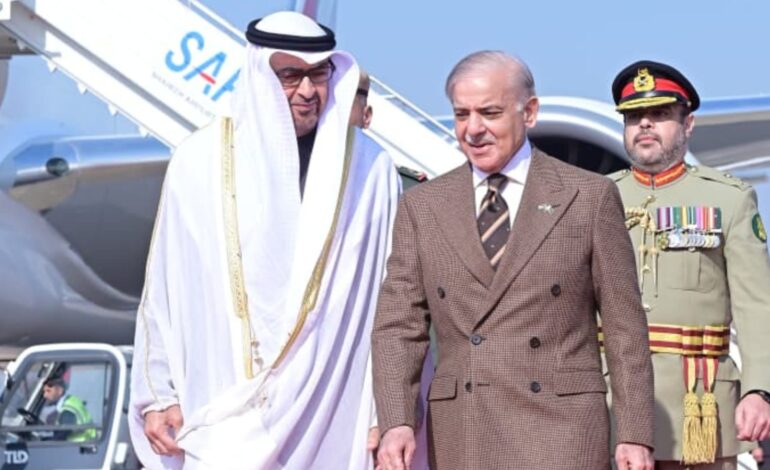

President Sheikh Mohamed bin Zayed Al Nahyan of the United Arab Emirates has arrived in Pakistan on an official state visit, marking a significant moment in relations between the two nations. The visit underscores the UAE’s ongoing commitment to deeper political, economic, and cultural cooperation with Pakistan.
It comes at a time of expanding diplomatic engagement and mutual interest in enhancing strategic partnerships across trade, investment, energy, security, and people-to-people links.
During his arrival, President Sheikh Mohamed was welcomed with official honours, highlighting the warmth and historical connection between the UAE and Pakistan. This visit is expected to further solidify bilateral ties and explore new opportunities for collaboration that benefit both countries.
Official Welcome and Arrival Ceremony
On arrival in Islamabad the capital of Pakistan, President Sheikh Mohamed was received by senior Pakistani officials, including members of the government and diplomatic corps. The official welcome ceremony reflected the longstanding respect between the two nations and set the tone for high-level discussions throughout the visit.
Such state visits typically include ceremonial honours protocol activities and opportunities for the leaders of both countries to engage directly on matters of mutual importance, as well as joint press engagements and cultural exchanges.
Historical Context of UAE–Pakistan Relations
The relationship between the United Arab Emirates and the Islamic Republic of Pakistan dates back to the early days of the UAE’s formation. Pakistan was among the first countries to establish diplomatic relations with the UAE following its independence in 1971, creating a foundation of mutual cooperation that has endured for decades.
Over the years, the partnership has included:
• Trade and investment ties
• Security cooperation
• Labour and expatriate partnerships
• Humanitarian support and development assistance
• Cultural and educational exchange
Millions of Pakistani expatriates live and work in the UAE contributing to key sectors such as construction, healthcare, education, transport and hospitality. The Pakistani diaspora’s contribution to the Emirati economy has strengthened bonds between the two societies.
Key Objectives of the Official Visit
The official visit by President Sheikh Mohamed is multifaceted. It seeks to build on a strong foundation of cooperation and explore new avenues that reflect the evolving priorities of both countries. Several key objectives include:
1. Economic and Trade Cooperation
Pakistan and the UAE have pursued close trade ties for years. The UAE is among Pakistan’s leading trade partners, importing goods such as textiles agricultural produce and manufactured products while exporting energy and investment capital to Pakistan.
During this visit officials are expected to discuss ways to expand trade volumes streamline customs cooperation support investment flows and encourage joint ventures in sectors such as food security logistics technology and energy.
2. Strategic Investment Partnerships
The UAE is a major source of foreign direct investment (FDI) globally and has shown strong interest in investing in Pakistan’s infrastructure real estate industrial zones and renewable energy initiatives. The visit provides a platform for high-level dialogue on investment frameworks that facilitate smoother capital flows and business cooperation.
It also offers an opportunity for the two nations to explore collaboration on initiatives such as special economic zones, technology parks, and sustainable development projects.
3. Energy and Food Security
Energy security remains a priority for both nations. While the UAE is a leading global energy producer Pakistan has been seeking to diversify its energy mix and enhance resilience. Talks may include discussions on energy partnerships renewable energy investment and potential joint ventures in oil and gas infrastructure.
Food security has also emerged as a shared concern globally. The UAE and Pakistan have engaged in dialogues on agricultural cooperation strengthening supply chains and promoting investment in food production and storage.
4. Security and Regional Cooperation
Regional security challenges underscore the need for close coordination among strategic partners. The visit provides an opportunity for both nations to express shared views on peace stability counterterrorism and diplomatic engagement in regional issues.
Defense cooperation discussions often form part of high-level visits and may include cooperation in training joint exercises and enhanced military-to-military engagement.
5. People-to-People and Cultural Ties
The cultural connection between the UAE and Pakistan is deep and multifaceted. Millions of Pakistani residents and expatriates call the UAE home, contributing to the social fabric and workforce of the country. Issues such as labour rights social welfare and community engagement feature prominently in bilateral dialogues, reflecting the commitment to protect rights and enhance opportunities for expatriate communities.
Cultural exchanges educational programmes and tourism partnerships may also be discussed as ways to strengthen bonds between the two societies.
Economic Relations and Trade Trends
Trade between the UAE and Pakistan has grown significantly over recent years. The UAE ranks among Pakistan’s top trading partners and foreign investor sources. Key trade flows include:
Exports from Pakistan to the UAE – Textiles, rice, seafood, leather and other manufactured goods
Imports to Pakistan from the UAE – Petroleum products, investment capital and technology services
The trade relationship supports jobs, business growth and supply chains in both countries. High-level engagement such as this official visit aims to increase trade volume, address logistical challenges, and encourage private sector partnerships.
Investment promotion agencies from both countries often collaborate on investor forums roadshows and business councils that facilitate discussions between business leaders and government officials.
Expatriate and Labour Cooperation
Pakistan’s expatriate population in the UAE remains large and influential. These residents contribute to the UAE’s workforce across many sectors including construction retail healthcare logistics and services.
During state visits labour issues sometimes surface, including:
• Employment conditions
• Skills development cooperation • Visa procedures
• Social welfare protections
Both governments have expressed interest in ensuring safe, fair and mutually beneficial labour arrangements that contribute to growth and stability in both nations.
Development, Education and Healthcare Cooperation
Beyond trade and investment, Pakistan and the UAE have cooperated in areas such as:
Education partnerships – exchanges, scholarships, research collaboration Healthcare cooperation – joint health initiatives, training, medical services Humanitarian efforts – disaster response and community support programmes
These people-centric areas provide additional depth to bilateral ties and highlight the shared commitment to social development and community well-being.
Statements from Leaders
Official statements from the UAE and Pakistan emphasise:
• Mutual respect and shared historical ties
• Commitment to expanded economic engagement
• Desire to enhance strategic stability and cooperation • Support for the rights of expatriate communities
Pakistan’s leadership welcomed President Sheikh Mohamed’s visit as an affirmation of friendship and a catalyst for future cooperation across multiple sectors.
Intergovernmental coordination is expected to continue through joint committees working on economic and social agendas, facilitating implementation of agreements signed during the visit.
Regional Implications of the Visit
The UAE’s engagement with Pakistan is part of a wider strategy of diplomatic outreach. This includes strengthened ties with countries in South Asia, Central Asia, Africa and beyond. High-level state visits reflect the UAE’s evolving role on the global stage as both an economic partner and diplomatic interlocutor.
Pakistan, for its part, values the UAE’s support in regional forums, economic cooperation and investment.
The visit is likely to attract international attention, further positioning both nations as important players in broader regional dynamics.
What Comes Next
Upcoming agenda items during the official visit may include:
- Bilateral meetings
- Discussions on investment frameworks Economic and trade agreements
- Joint press briefings
- Signing of cooperation memoranda
- Cultural and community engagement initiatives
These activities help to formalise agreements and set clear action plans for enhanced cooperation in the months and years ahead.
Public and Media Response
Coverage of President Sheikh Mohamed’s arrival in Pakistan has been positive in both UAE and Pakistani media. Analyses highlight the historical depth of ties between the countries. Potential for expanded cooperation in trade, investment, defence and people-to-peoplerelations.
Public reactions — especially within expatriate communities have also been supportive, reflecting optimism about stronger bilateral links. Increased opportunities for economic and social cooperation.
Conclusion
President Sheikh Mohamed’s official visit to Pakistan represents a key milestone in UAE–Pakistan relations. By focusing on economic cooperation strategic investment, regional security and cultural ties. This visit seeks to strengthen a partnership that has grown over decades.
For both countries, this engagement underscores mutual ambitions for stability, prosperity and shared progress. Rooted in history and extending into future cooperation that benefits citizens, residents and businesses across borders.





1 Comment
[…] and advance joint strategic interests. The latest engagement highlights continued momentum in UAE-Pakistan relations at a time when both countries are prioritising trade expansion, foreign investment and long-term […]
Comments are closed.