Thousands Escape Syria’s Largest ISIS Camp
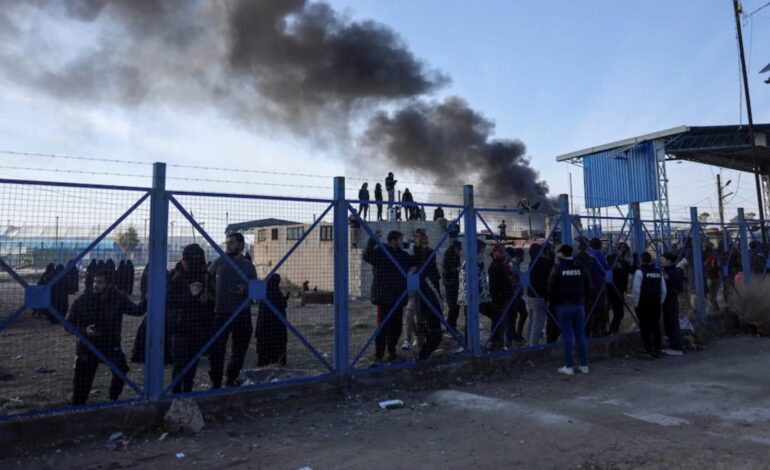

A serious security and humanitarian concern is unfolding in north-east Syria after reports revealed that thousands of people linked to ISIS detainee camps may have slipped out during recent turmoil. Specifically, the crisis centres on the sprawling Al Hol camp, long regarded as one of the most sensitive detention sites housing families of suspected ISIS fighters.
In recent weeks, instability on the ground, shifting control between authorities, and weakened oversight appear to have created conditions that allowed large numbers of detainees and relatives to leave. As a result, regional governments, intelligence agencies, and humanitarian organisations are raising fresh alarms about the risks of ISIS regrouping, cross-border trafficking, and prolonged instability.
Overall, the situation underscores how fragile the post-ISIS environment remains years after the group’s territorial defeat.
Background: Why Al Hol Camp Matters
For several years, the Al Hol camp in north-east Syria has been viewed as one of the most complex humanitarian and security challenges in the post-ISIS era. Currently, the facility houses tens of thousands of women and children with alleged links to ISIS fighters from dozens of countries.
After ISIS lost its territorial stronghold in 2019, large numbers of families associated with the group were transferred into detention camps such as Al Hol. However, many of these individuals were never formally charged or given clear legal pathways. Consequently, the camp population grew rapidly while long-term policy solutions lagged behind.
Over time, Al Hol became:
-
Severely overcrowded
-
Chronically under-resourced
-
Increasingly difficult to secure
-
Politically sensitive
-
Legally ambiguous
Because of these pressures, security experts repeatedly warned that the camp could become a breeding ground for radicalisation if not properly managed. Today, those warnings appear increasingly urgent.
What Triggered the Latest Chaos
The latest wave of concern follows significant shifts on the ground in north-east Syria. According to multiple reports, changes in control of detention facilities combined with military pressure created confusion and gaps in oversight.
In particular, several risk factors appear to have converged.
Key triggers included:
-
Movement of forces in north-east Syria
-
Changes in administrative control
-
Reduced monitoring capacity
-
Growing humanitarian strain
-
Increased smuggling activity
Amid this uncertainty, detainees and their families reportedly began leaving the camp in noticeable numbers. In some cases, organised smuggling networks appear to have facilitated the departures.
Importantly, humanitarian organisations say many exits were poorly documented. Therefore, authorities still lack a clear picture of how many people escaped or where they ultimately travelled.
Scale of the Escapes Raises Alarm
Although precise figures remain difficult to verify, officials and aid groups believe thousands may have left the Al Hol area in recent weeks. Naturally, the scale alone has triggered international concern.
Reports further indicate that departures occurred through multiple methods.
Observed patterns include:
-
Fences allegedly breached or cut
-
Guards overwhelmed or occasionally sympathetic
-
Night-time smuggling operations
-
Transport toward opposition-held areas
-
Weak perimeter monitoring in certain sectors
Because centralised records are incomplete, full verification remains challenging. Nevertheless, regional observers consider the trend serious.
Separately, security worries intensified when approximately 200 ISIS prisoners escaped from another detention facility during military operations. Although most were later recaptured, the incident reinforced fears about systemic vulnerabilities.
Taken together, these developments have revived long-standing concerns about potential extremist regrouping.
Humanitarian Concerns Are Mounting
While security risks dominate policy discussions, aid agencies stress that the chaotic departures also create major humanitarian dangers, particularly for women and children.
In many cases, individuals leaving the camps are minors who have spent most of their lives in detention-like conditions. Without proper safeguards, they face heightened vulnerability.
Major humanitarian concerns include:
Human Trafficking Risks
For example, unregulated movement exposes women and children to exploitation by smugglers and armed groups.
Legal Limbo
At present, thousands of detainees still lack formal charges or clear citizenship pathways. As a result, many remain in prolonged legal uncertainty.
Child Protection Emergency
Notably, a significant proportion of Al Hol residents are children. Therefore, experts warn about:
-
Psychological trauma
-
Interrupted education
-
Social isolation
-
Risk of future radicalisation
Taken together, these issues highlight the urgent need for coordinated international action.
Security Fears: Risk of ISIS Resurgence
Perhaps the most serious concern is the potential security fallout. If left unmanaged, the uncontrolled movement of former detainees could create openings for extremist networks.
Analysts warn, for instance, that even a small number of committed individuals could pose risks if they reconnect with militant groups.
Potential consequences include:
-
Revival of ISIS support networks
-
Increased cross-border smuggling
-
Destabilisation of parts of Syria and Iraq
-
Creation of new recruitment pipelines
Importantly, these fears are grounded in past events. For example, a major ISIS prison assault in 2022 freed hundreds of fighters and demonstrated the group’s continued ability to exploit security gaps.
For this reason, intelligence agencies are closely monitoring the current developments.
Why Repatriation Remains a Sticking Point
At the heart of the crisis lies the slow pace of repatriation of foreign nationals held in Syrian camps. So far, many countries have been reluctant to bring back their citizens.
Governments typically cite:
-
Domestic political pressure
-
Security screening concerns
-
Legal and evidentiary challenges
-
Monitoring difficulties
-
Complex citizenship issues
However, humanitarian organisations argue that leaving families indefinitely in camps only increases long-term risk. In fact, many experts believe the growing backlog is unsustainable.
Therefore, there are renewed calls for countries to accelerate repatriation and rehabilitation programmes.
Tensions Between Local Authorities
Another complicating factor is the fragile relationship between different forces operating in north-east Syria. Currently, multiple actors share overlapping responsibilities.
Key stakeholders include:
-
Kurdish-led Syrian Democratic Forces (SDF)
-
Syrian government authorities
-
Local camp administrations
-
Various armed factions
Because coordination remains inconsistent, camp management has become increasingly difficult. For example, a recent convoy of detainees was reportedly turned back due to lack of inter-agency coordination.
Consequently, such fragmentation creates operational blind spots that smugglers may exploit.
Regional and Global Implications
The developments at Syria’s largest ISIS-linked camp carry consequences far beyond the immediate area.
For the Middle East
-
Potential cross-border militant movement
-
Increased pressure on Iraq’s security forces
-
Continued instability in north-east Syria
For Europe and Western countries
-
Risk of foreign fighters resurfacing
-
Renewed debate over repatriation policies
-
Expanded intelligence monitoring
For humanitarian agencies
-
Growing child protection emergency
-
Strain on limited aid resources
-
Urgent need for coordinated response
Collectively, these risks explain why the situation is being watched so closely worldwide.
What Happens Next
Looking ahead, analysts outline several possible scenarios.
Best-case scenario: Authorities strengthen camp security and accelerate repatriations.
Meanwhile, in a moderate-risk scenario, smuggling continues at lower but persistent levels.
In the worst case, large numbers of former detainees reconnect with extremist networks, increasing regional instability.
Ultimately, outcomes will depend heavily on whether international actors adopt a more unified strategy.
Conclusion
The reported mass departures from Syria’s largest ISIS-linked camp underscore how fragile the post-caliphate environment remains. Years after ISIS lost territorial control, the unresolved status of tens of thousands of detainees continues to generate both humanitarian and security risks.
Going forward, the situation at Al Hol will test whether the international community can move beyond containment toward durable solutions such as repatriation, rehabilitation, and long-term stabilisation.
Without coordinated action, analysts warn the region could once again face renewed threats from the very networks the world worked to dismantle.