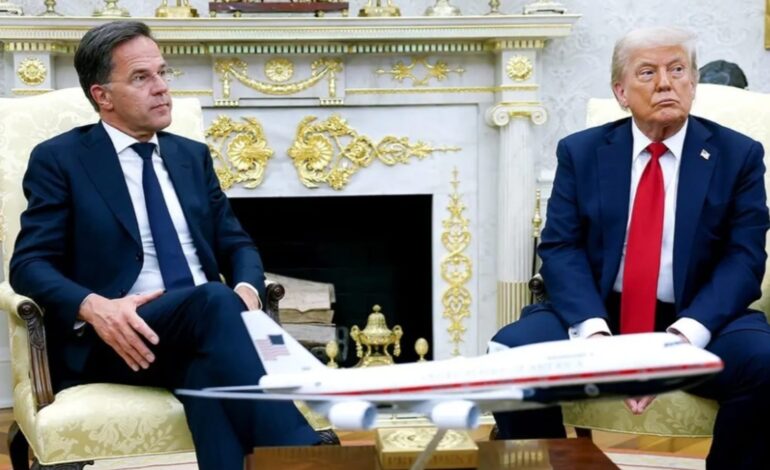

The recent high-level meeting between Donald Trump and Mark Rutte has drawn significant global attention, as it reflects the increasing urgency surrounding geopolitical tensions linked to Iran. At a time when the Middle East is witnessing escalating instability, this discussion underscores the expanding scope of global security challenges and the evolving role of NATO in addressing them.
Although NATO is not directly involved in the Iran conflict, the alliance is deeply concerned about its indirect consequences, particularly regarding maritime security, energy supply chains, and the broader implications for global defence cooperation. The Trump–Rutte meeting serves as a crucial indicator of how international alliances are adapting to complex and rapidly shifting geopolitical realities.
Focus on Middle East Security and Strategic Stability
One of the central themes of the meeting was the deteriorating security situation in the Middle East. The ongoing tensions involving Iran have raised alarm among NATO member states, primarily due to their potential to disrupt global stability.
The discussions focused heavily on protecting vital shipping routes, especially those that are essential for international trade and energy transportation. The Middle East remains a critical region for global oil and gas supplies, and any disruption in this area can have far-reaching consequences for economies worldwide.
Additionally, concerns were raised about the vulnerability of energy infrastructure, including pipelines, refineries, and offshore facilities. Any attack or disruption in these areas could lead to sharp increases in energy prices and economic instability across multiple regions.
Another key issue was the possibility of escalation involving NATO allies. While NATO is not directly engaged in the conflict, several member states have strategic interests in the region, making them vulnerable to spillover effects. This has increased the need for coordination among member nations to ensure a unified and effective response.
NATO’s Role in a Changing Security Landscape
The meeting also brought attention to the evolving role of NATO in the modern geopolitical environment. Traditionally focused on collective defence within Europe and North America, NATO is now increasingly confronted with global challenges that extend beyond its original mandate.
Mark Rutte emphasised the importance of strengthening collective defence mechanisms to address emerging threats. This includes improving military readiness, enhancing rapid response capabilities, and ensuring that member states are adequately prepared to handle crises.
Another critical aspect discussed was intelligence sharing. In an era where threats can emerge quickly and unpredictably, timely and accurate intelligence is essential. Enhanced coordination among NATO members can help in identifying risks early and responding effectively.
The alliance is also exploring ways to safeguard maritime routes, particularly in regions that are prone to conflict. This includes discussions around naval coordination and joint operations aimed at ensuring the free flow of trade.
The Strategic Importance of the Strait of Hormuz
A major point of concern during the discussions was the Strait of Hormuz, one of the most critical chokepoints in the global energy network.
Approximately one-fifth of the world’s oil supply passes through this narrow waterway, making it a vital artery for global commerce. Any disruption in the Strait of Hormuz could lead to severe economic consequences, including skyrocketing energy prices and supply shortages.
The ongoing tensions involving Iran have heightened risks in the region, with threats to shipping becoming a significant concern. NATO members are actively assessing these risks and considering measures to ensure the safety of maritime operations.
Discussions around potential naval coordination are ongoing, although any direct involvement would require careful consideration given the complex political dynamics of the region. Ensuring freedom of navigation remains a top priority, as it is essential for maintaining global economic stability.
Challenges to NATO Unity
While the need for collective action is evident, the Iran conflict has also exposed divisions within NATO. Member states have differing perspectives on how to approach the situation, which complicates the alliance’s ability to present a unified response.
Some countries advocate for stronger military involvement, particularly in protecting shipping routes and deterring potential threats. Others prefer a more diplomatic approach, emphasising dialogue and de-escalation.
There are also differences in attitudes toward US-led initiatives, with some members fully supporting them while others remain cautious. These divergences highlight the inherent challenges of maintaining unity within a diverse alliance.
Despite these differences, NATO continues to work toward consensus, recognising that cooperation is essential for addressing complex global challenges.
Defence Spending and Strategic Priorities
Another significant topic discussed during the Trump–Rutte meeting was defence spending. Donald Trump has long advocated for increased financial contributions from NATO members, arguing that a fairer distribution of defence costs is necessary for the alliance’s sustainability.
This issue remains a key point of discussion within NATO, as member states balance domestic priorities with international commitments. Increasing defence budgets can enhance military capabilities and improve preparedness, but it also requires political will and economic resources.
The meeting also addressed NATO’s long-term strategic direction. As global threats continue to evolve, the alliance must adapt its policies and priorities to remain effective. This includes addressing not only traditional military threats but also emerging challenges such as cyber warfare, terrorism, and hybrid conflicts.
Broader Global Implications
The Trump–Rutte meeting highlights the fact that the Iran conflict is no longer confined to a specific region. Its implications are global, affecting trade, energy security, and international relations.
One of the most significant outcomes of this situation is the potential for increased military coordination among allies. As threats become more interconnected, countries are likely to collaborate more closely in areas such as intelligence sharing, joint operations, and strategic planning.
Another important implication is the growing focus on protecting energy supply chains. Ensuring the stability of oil and gas supplies is critical for economic growth, and disruptions can have widespread consequences.
The situation also points to an expanded role for international alliances in crisis management. NATO, along with other organisations, may need to take on greater responsibilities in addressing global challenges that extend beyond traditional security concerns.
The Complexity of Modern Geopolitics
The discussions between Donald Trump and Mark Rutte reflect the increasing complexity of the modern geopolitical landscape. Unlike traditional conflicts, which were often limited in scope, today’s challenges are interconnected and multifaceted.
The Iran conflict, for example, has implications for regional stability, global trade, energy security, and international diplomacy. Addressing such a complex issue requires a coordinated and comprehensive approach.
NATO’s ability to adapt to these challenges will play a crucial role in shaping the future of global security. The alliance must balance its core principles of collective defence with the need to address emerging threats in a rapidly changing world.
The high-level meeting between Donald Trump and NATO Secretary General Mark Rutte underscores the growing significance of the Iran conflict in the global security framework. While NATO is not directly involved in the war, its indirect consequences have far-reaching implications that cannot be ignored.
From protecting strategic shipping routes and safeguarding energy infrastructure to maintaining alliance unity and adapting to new threats, NATO faces a range of complex challenges. The discussions highlight the need for stronger coordination, enhanced defence capabilities, and a unified approach to addressing global security issues.
As tensions in the Middle East continue, the role of NATO and other international alliances will become increasingly important. The Trump–Rutte meeting serves as a reminder that in today’s interconnected world, regional conflicts can quickly evolve into global concerns.
Ultimately, the ability of NATO to navigate these challenges will determine its effectiveness in maintaining peace, stability, and security in an increasingly volatile world.