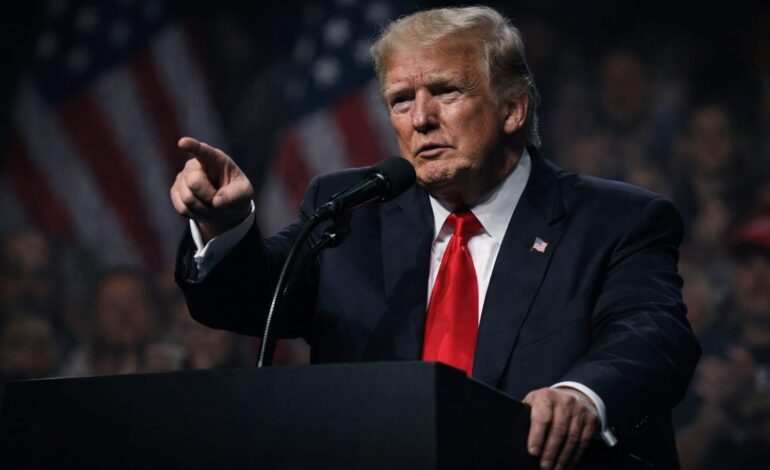

Former US President Donald Trump has issued a strong warning to Iran, saying the country would face devastating consequences if it attempts to disrupt oil shipments through the Strait of Hormuz. The narrow waterway is one of the world’s most important energy shipping routes and plays a crucial role in global oil supply.
Trump’s warning comes at a time when tensions across the Middle East are rising sharply. Military confrontations involving the United States, Israel and Iran have intensified, raising fears that the conflict could threaten global energy security and disrupt international trade.
In recent statements, Trump emphasised that the United States would respond with overwhelming force if Iran interferes with the flow of oil through the strategic maritime corridor. His remarks have drawn global attention as governments, energy companies and financial markets closely monitor the situation.
The Strait of Hormuz remains a critical chokepoint for global energy transportation. Any disruption could significantly affect oil prices, international trade routes and economic stability worldwide.
Trump Issues Strong Warning to Iran
Trump delivered the warning through a message on his social media platform Truth Social. In the post, he cautioned Iran against interfering with oil shipments passing through the Strait of Hormuz.
He stated that Iran would face massive retaliation if it attempted to block or disrupt the route. According to Trump, the United States would respond with force far greater than previous military actions.
Trump wrote that Iran would be “hit by the United States twenty times harder than they have been hit thus far” if the flow of oil through the strait were interrupted.
The former president also suggested that the United States could target key Iranian infrastructure if Tehran interferes with international shipping lanes.
In his statement, Trump warned that such retaliation could make it extremely difficult for Iran to rebuild its infrastructure if the conflict escalates further.
Despite the strong language, Trump expressed hope that Iran would avoid taking actions that could trigger such consequences.
Strategic Importance of the Strait of Hormuz

The Strait of Hormuz is one of the most strategically important waterways in the world. It connects the Persian Gulf to the Gulf of Oman and the Arabian Sea.
The narrow maritime corridor lies between Iran and the Arabian Peninsula. Despite its limited width, it serves as the primary route for transporting oil from several major energy producing countries.
A large share of the world’s oil supply passes through this route every day. Because of this, the strait plays a vital role in maintaining stability in global energy markets.
Major oil exporting countries rely heavily on this shipping route. These include Saudi Arabia, the United Arab Emirates, Kuwait, Qatar and Iraq.
Oil tankers carrying crude oil and liquefied natural gas regularly pass through the strait on their way to international markets in Asia, Europe and North America.
Any disruption in this corridor could have immediate consequences for global energy supply and international trade.
Rising Concerns Over Global Energy Supply
Growing tensions in the Middle East have raised fears about the security of global energy supplies.
Energy markets often react quickly to geopolitical risks affecting major oil producing regions. Even the possibility of disruptions in the Strait of Hormuz can trigger volatility in global oil prices.
Analysts say that a blockade or attack on shipping vessels could severely disrupt energy transportation.
If tankers cannot safely travel through the strait, global oil supply chains may face significant delays.
Such disruptions could lead to higher fuel prices, increased transportation costs and broader economic instability.
Energy dependent economies in Asia and Europe could feel the effects quickly if oil exports from the Gulf region decline.
For this reason, governments and energy companies are closely monitoring developments in the region.
Trump Suggests Possible US Control of the Strait
In a separate interview with CBS News, Trump raised the possibility of the United States taking control of the Strait of Hormuz to ensure the uninterrupted flow of oil shipments.
He suggested that maintaining control over the strategic waterway could protect international trade and stabilise global energy markets.
Trump’s comments came amid rising fuel prices in the United States and growing concerns about disruptions to oil supply.
According to Trump, securing the strait could help prevent hostile actions against shipping vessels and ensure that energy supplies continue reaching global markets.
However, such a move would represent a major escalation in military involvement in the region.
Military analysts warn that direct US control of the strait could intensify the conflict and provoke further confrontations.
Global Powers Closely Monitoring the Situation
Governments around the world are watching developments in the Strait of Hormuz very closely.
Many of the world’s largest economies depend heavily on oil transported through this route.
Countries such as China, India, Japan and South Korea import large quantities of energy from Gulf producers.
European nations also rely on stable energy supplies from the region.
A disruption in shipping through the strait could therefore affect economies far beyond the Middle East.
Shipping companies have also begun reviewing security measures and shipping routes as tensions rise.
Some vessels have reportedly altered their routes due to security concerns in the Gulf region.
International naval forces from several countries continue to patrol the waters to protect commercial shipping.
Regional Tensions Continue to Escalate
The warning from Trump comes as military tensions across the Middle East continue to intensify.
Recent weeks have seen a series of missile and drone attacks across several countries in the region.
Air defence systems in Gulf states have intercepted aerial threats targeting strategic infrastructure.
Military analysts say the conflict between the United States, Israel and Iran has expanded across multiple fronts.
These developments have raised concerns that the crisis could evolve into a broader regional conflict.
Countries across the Gulf have increased security measures around critical infrastructure, including oil facilities, shipping ports and desalination plants.
Governments are also strengthening air defence systems to counter potential threats.
Economic Impact of a Potential Strait Disruption
A disruption in the Strait of Hormuz could have far reaching economic consequences.
Energy experts warn that global oil prices could surge sharply if shipping routes are blocked or restricted.
Higher oil prices would increase fuel costs worldwide. This could affect transportation, manufacturing and electricity generation.
Air travel and shipping industries could also face increased operational costs.
Financial markets typically react quickly to geopolitical crises involving energy supply.
Stock markets and currency values often fluctuate in response to rising oil prices and economic uncertainty.
For many countries, stable energy supplies remain essential for economic growth and industrial production.
Diplomatic Efforts Continue
Despite rising tensions, diplomatic efforts are continuing to prevent the situation from escalating further.
Several governments and international organisations are attempting to mediate between the parties involved in the conflict.
Global leaders have called for restraint and dialogue to avoid a wider war.
However, diplomatic negotiations face significant challenges due to the complex geopolitical dynamics in the region.
Security analysts say the coming weeks may prove critical in determining whether the crisis stabilises or intensifies.
Trump’s warning to Iran over the Strait of Hormuz highlights the growing concern about global energy security and regional stability.
The waterway remains one of the most important oil transportation routes in the world. Any disruption could significantly affect international energy markets and global trade.