UAE and Nigeria Sign Historic CEPA
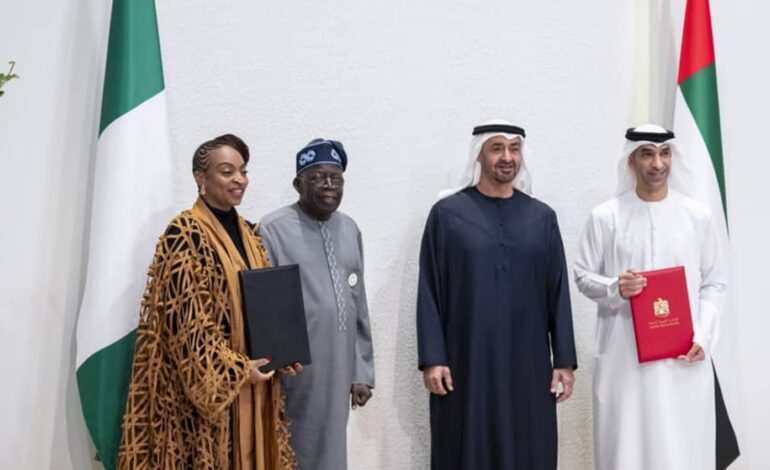

The United Arab Emirates and the Federal Republic of Nigeria have taken a major step forward in strengthening bilateral economic ties by signing a Comprehensive Economic Partnership Agreement (CEPA) in Abu Dhabi. The landmark accord was signed on the sidelines of the Abu Dhabi Sustainability Week Summit 2026, in the presence of Sheikh Mohamed bin Zayed Al Nahyan, President of the UAE, and Bola Ahmed Tinubu, President of Nigeria.
The agreement ushers in a new era of enhanced economic cooperation between one of the Middle East’s most dynamic trade hubs and Africa’s largest economy. It is expected to significantly expand trade, boost investment flows, and unlock wide-ranging opportunities for businesses and industries in both countries.


A Milestone in UAE–Africa Economic Relations
The UAE–Nigeria CEPA is part of the UAE’s broader strategy to deepen trade and investment partnerships with high-growth economies across Africa, Asia, and Latin America. Nigeria, as Africa’s most populous nation and largest economy, plays a pivotal role in this strategy.
The agreement reflects a shared commitment to:
-
Economic diversification
-
Sustainable development
-
Industrial growth
-
Integration into global value chains
For Nigeria, the CEPA represents a critical step toward expanding export markets, attracting foreign direct investment, and accelerating industrialisation.
What the UAE–Nigeria CEPA Includes
The Comprehensive Economic Partnership Agreement is a wide-ranging trade and investment framework designed to reduce barriers, improve market access, and promote long-term economic collaboration.
Tariff Reductions and Trade Liberalisation
Under the CEPA:
-
Tariffs on a wide range of goods and services will be reduced or eliminated
-
Trade flows between the two countries will become more cost-effective
-
Export competitiveness for businesses on both sides will improve
This liberalisation is expected to stimulate two-way trade and reduce the cost of doing business.
Expanded Market Access
The agreement grants Nigerian exporters improved access to the UAE market, particularly for:
-
Agricultural products such as fish, seafood, cereals, and cotton
-
Pharmaceuticals and chemical products
-
Industrial and manufactured goods
At the same time, tariffs on machinery, vehicles, and key UAE exports will be phased out over time, supporting increased trade volumes.
Investment Promotion and Protection
A key pillar of the CEPA is enhanced investor confidence. The agreement strengthens protections for investors and encourages capital flows across strategic sectors, including:
-
Energy and renewable power
-
Technology and digital services
-
Agriculture and agribusiness
-
Manufacturing and logistics
This framework is expected to attract long-term investment and support joint ventures between Emirati and Nigerian companies.
Business Facilitation and Mobility
To support commercial activity, the CEPA introduces measures to:
-
Make it easier for Nigerian companies to establish branches or subsidiaries in the UAE
-
Improve entry privileges for business visitors
-
Facilitate trade missions, exhibitions, and commercial engagement
These provisions are designed to strengthen private-sector collaboration and knowledge exchange.
Why the UAE–Nigeria CEPA Matters
The agreement represents a significant milestone in bilateral relations and builds on already strong economic foundations.
Boosting Trade Volumes
Bilateral non-oil trade between the UAE and Nigeria reached approximately US$4.3 billion in 2024, highlighting robust commercial ties even before the agreement. The CEPA is expected to accelerate this growth by lowering barriers and expanding market access.
Strengthening a Strategic Partnership
Nigeria is one of the UAE’s most important partners in Africa. The agreement reinforces shared priorities around:
-
Economic diversification
-
Industrial development
-
Job creation
-
Sustainable growth
It also strengthens political and diplomatic ties between the two nations.
Supporting Small and Medium Enterprises (SMEs)
The CEPA includes provisions aimed at supporting SMEs by:
-
Reducing bureaucratic hurdles
-
Simplifying licensing and trade procedures
-
Enhancing access to market information
This is particularly important for Nigerian SMEs seeking international expansion and Emirati firms exploring opportunities in Africa.
Enhancing Supply Chain Integration
As global supply chains become more interconnected, the CEPA will help:
-
Improve logistics and trade efficiency
-
Strengthen regional and global supply chains
-
Facilitate smoother movement of goods and services
This integration enhances resilience amid global economic uncertainty.
Leaders’ Remarks on the Historic Signing
President Sheikh Mohamed bin Zayed Al Nahyan described the agreement as a landmark development in UAE–Nigeria relations, reaffirming the UAE’s commitment to building bridges of partnership with countries worldwide and supporting shared prosperity.
President Bola Ahmed Tinubu highlighted the CEPA’s role in opening new avenues for trade, investment, and cooperation, noting that it aligns with Nigeria’s development priorities and supports sustainable economic growth.
Strategic Importance for African and Global Trade
The UAE’s CEPA programme aims to position the country as a global hub for trade, investment, and logistics. Agreements with major economies such as Nigeria enhance this role by linking the Middle East with Africa’s fast-growing markets.
For Nigeria, the CEPA:
-
Expands access to global markets via the UAE
-
Attracts capital, technology, and expertise
-
Supports export diversification beyond oil
The deal also strengthens Nigeria’s engagement with Gulf economies and international investors.
Key Sectors Poised to Benefit
Energy and Renewables
Nigeria’s energy transition and the UAE’s clean energy expertise create opportunities for collaboration in renewable power, energy infrastructure, and sustainability projects.
Agriculture and Food Security
Improved market access supports Nigerian agricultural exports while enhancing food security partnerships and agribusiness investment.
Manufacturing and Industry
Lower tariffs and investment protection encourage industrial collaboration, supporting Nigeria’s industrialisation agenda and UAE manufacturing exports.
Digital Economy and Technology
The agreement facilitates cooperation in:
-
Digital services
-
Fintech and innovation
-
Skills and technology transfer
Economic Outlook and Long-Term Potential
With the CEPA in force, analysts expect:
-
Increased cross-border investment and joint projects
-
Growth in trade volumes across multiple sectors
-
Greater integration into global value chains
-
Enhanced technology and skills transfer
The agreement comes at a time when both countries are seeking resilient growth strategies amid global economic uncertainty.
Gateway to Wider African Markets
For UAE businesses, Nigeria serves as a strategic gateway to West Africa and the wider African Continental Free Trade Area (AfCFTA). The CEPA strengthens this gateway by providing a stable framework for long-term engagement with Africa’s largest consumer market.
Conclusion: A New Chapter in UAE–Nigeria Relations
The signing of the Comprehensive Economic Partnership Agreement between the UAE and Nigeria marks the beginning of an exciting new chapter in bilateral economic cooperation. By reducing trade barriers, promoting investment, and expanding market access, the agreement is set to drive stronger economic growth and deeper ties between the two nations.
As both countries pursue diversification, industrialisation, and sustainable development, the UAE–Nigeria CEPA stands as a forward-looking model for international trade partnerships that deliver shared prosperity and long-term resilience.