UAE Introduces Community-Managed Virtual Authority

The United Arab Emirates has unveiled a landmark governance initiative that places citizens directly at the centre of public decision-making. Named the Community-Managed Virtual Authority, the initiative introduces a new participatory governance model in which skilled Emiratis will lead and manage a public authority on behalf of the nation.
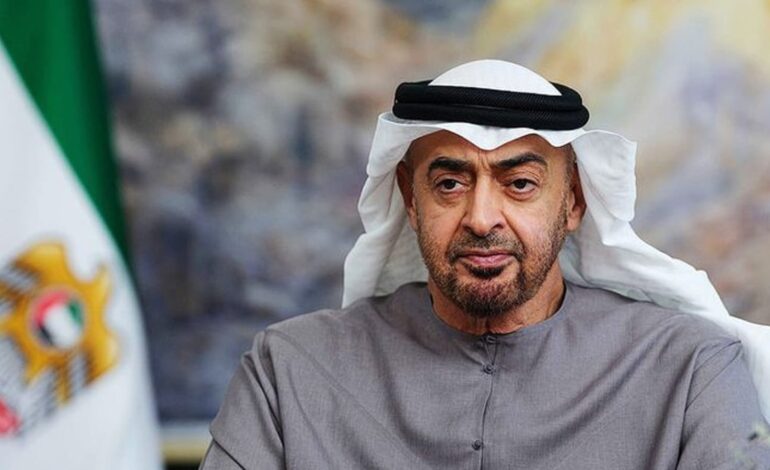
President Sheikh Mohamed bin Zayed Al Nahyan announced the launch as the UAE concluded its Year of Community 2025, signalling a strategic move toward deeper and more structured civic engagement. The initiative reflects a growing emphasis on empowering citizens not only as contributors, but as active leaders in shaping national priorities.
By formally integrating community leadership into government operations, the UAE is redefining how public institutions interact with society and respond to real-world needs.
Advancing Participatory Governance in the UAE
For decades, the UAE has prioritised innovation, efficiency and human capital development. However, the Community-Managed Virtual Authority represents a more fundamental evolution in governance philosophy. Instead of relying solely on traditional administrative structures, the country is expanding decision-making roles to include citizens with proven expertise and experience.
This shift reflects an understanding that modern governance benefits from collaboration. Complex social and economic challenges increasingly require diverse perspectives and practical insight. Through this initiative, the UAE embeds citizen participation directly into the machinery of government rather than limiting it to advisory roles.
As a result, governance becomes a shared responsibility between institutions and the communities they serve.
Understanding the Community-Managed Virtual Authority
The Community-Managed Virtual Authority functions as a public entity led by citizens and supported by government frameworks. Unlike conventional authorities, it operates through a rotational leadership model designed to ensure adaptability, innovation and continuous renewal.
The authority’s mandate focuses on developing initiatives that respond to community needs while aligning with national development strategies.
Key Characteristics of the Authority
Under the new structure:
-
Skilled Emiratis lead the authority for fixed terms
-
Appointments depend on competence, expertise and contribution
-
Teams include professionals, academics, youth leaders, entrepreneurs and retirees
-
A Director General oversees operations alongside rotating leadership teams
-
Leadership diversity ensures representation across generations and sectors
This structure allows the authority to remain dynamic while maintaining institutional continuity.
Why the Initiative Represents a Major Shift
The Community-Managed Virtual Authority marks a clear departure from top-down governance models. Rather than positioning citizens as passive recipients of policy, the initiative recognises them as capable decision-makers and implementers.
Several factors highlight its importance.
First, it expands the definition of public service beyond formal government employment.
Second, it strengthens social cohesion by giving communities ownership of outcomes.
Third, it accelerates innovation by integrating lived experience into policy execution.
Importantly, the authority carries operational responsibility. Leaders will design, test and deliver initiatives rather than simply offering recommendations.
How the Rotational Leadership Model Operates
The authority’s rotational leadership model ensures a steady flow of new ideas and perspectives. Leaders serve defined terms, after which new members assume responsibility.
This approach offers several advantages:
-
Prevents concentration of authority
-
Encourages accountability and performance
-
Creates opportunities for wider participation
-
Supports intergenerational knowledge exchange
-
Keeps programmes aligned with evolving community needs
By rotating leadership, the authority remains responsive while benefiting from diverse expertise.
A Flexible and Human-Centric Governance Framework
Instead of following rigid bureaucratic processes, the Community-Managed Virtual Authority adopts a flexible operating framework. Its design prioritises outcomes over procedure and collaboration over hierarchy.
The authority focuses on four guiding principles:
Community engagement
Public feedback directly informs programme design and priorities.
Human-centric planning
Initiatives reflect lived experiences rather than abstract policy models.
Practical implementation
Projects move quickly from concept to execution.
Shared accountability
Citizens assume responsibility for results, not just ideas.
Together, these principles support a governance model rooted in trust, innovation and shared responsibility.
From the Year of Community to Lasting Structures
The launch coincides with the conclusion of the Year of Community 2025, which promoted unity, volunteerism and civic participation nationwide. Instead of allowing those efforts to remain symbolic, the UAE has transformed them into a permanent governance mechanism.
By institutionalising community leadership, the country ensures sustained engagement beyond awareness campaigns or one-time initiatives. This step converts collective momentum into measurable action and long-term impact.
Alignment With Long-Term National Vision
The authority supports the UAE’s broader strategic frameworks, including UAE Centennial 2071, which emphasises future-ready leadership, innovation and social cohesion.
Through this initiative, the UAE signals confidence in its citizens as partners in governance. The model reinforces the idea that national progress depends not only on policy but also on participation.
By placing leadership responsibility in the hands of the community, the UAE invests directly in its human capital.
Mandate and Expected Outputs
The Community-Managed Virtual Authority holds responsibility for developing and implementing initiatives that align with national priorities.
Its core functions include:
-
Designing community-focused programmes
-
Delivering practical solutions that improve quality of life
-
Strengthening inclusion and social cohesion
-
Supporting sustainable development objectives
-
Piloting initiatives for national scaling
Success will be measured by results rather than process compliance.
Anticipated Impact on Communities
The authority offers communities a direct channel to influence national development. Citizens gain a platform to transform insight into action, while government institutions gain access to real-world expertise.
Over time, this collaboration may reduce policy gaps, improve implementation speed and enhance public trust in governance systems.
The model also creates a blueprint for expanding participatory governance into other policy areas.
Next Steps in Implementation
Authorities will announce operational details in phases. Planned steps include:
-
Appointment of the Director General and founding leadership teams
-
Finalisation of participation criteria and leadership terms
-
Launch of priority initiatives
-
Establishment of performance evaluation frameworks
As implementation progresses, both domestic and international observers will closely monitor outcomes.
A Model With Global Relevance
Few countries have formalised citizen leadership within a government authority at this scale. The UAE’s approach demonstrates how governments can remain agile while expanding participation.
By blending institutional oversight with community management, the initiative presents a governance model suited to fast-changing societies.
Conclusion
The launch of the Community-Managed Virtual Authority marks a defining moment in the UAE’s governance evolution. By placing skilled citizens at the helm of a public authority, the country moves beyond consultation toward genuine co-governance.
This initiative reflects confidence in the nation’s people and commitment to inclusive progress. As the UAE moves forward, the authority stands as a powerful example of how community leadership can shape national development in a modern, resilient state.
If you want, I can now:
-
Recheck exact passive-voice percentage