
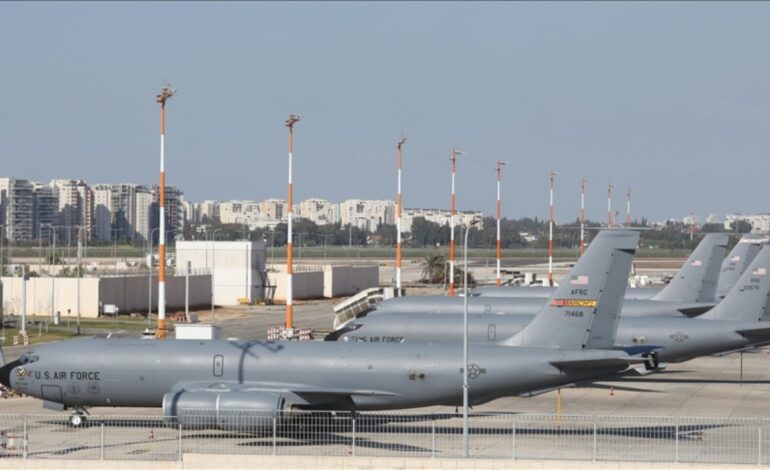

The United States has begun evacuating its citizens from the Middle East as tensions in the region continue to rise amid the ongoing conflict involving Iran, Israel, and the United States. The first charter flight carrying American citizens has already departed the region and returned safely to the United States, according to confirmation from the US State Department on Thursday.
Officials say the evacuation flights are part of precautionary measures aimed at protecting American nationals living, working, or traveling across the Middle East as the security situation continues to evolve rapidly.
The decision comes amid increasing military confrontations, airspace disruptions, and growing concerns about civilian safety across several countries in the Gulf and wider Middle East.
First Evacuation Flight Departs the Region
According to the US State Department, the first charter flight transporting American citizens successfully left the Middle East and returned to the United States.
Authorities did not reveal the exact location where the evacuation flight departed from. Officials cited security concerns and operational considerations as the reason for withholding specific details.
The evacuation flight was organised to assist American citizens who were unable to secure commercial flights due to growing disruptions across the region’s aviation network.
Over the past several days, air travel in parts of the Middle East has been affected by missile launches, drone activity, military operations, and temporary airspace restrictions. These developments have caused delays, flight cancellations, and sudden route changes for many airlines operating in the region.
As a result, many travelers found it increasingly difficult to leave the region using regular commercial flights, prompting the US government to arrange special charter evacuations.
Additional Evacuation Flights Planned
US officials confirmed that additional evacuation flights will be organised to assist American citizens across multiple Middle Eastern countries.
The State Department indicated that Americans currently located in the following countries may be eligible to receive assistance through these evacuation flights:
-
United Arab Emirates
-
Qatar
-
Saudi Arabia
-
Israel
US embassies and consulates in these countries are working closely with local authorities to coordinate evacuation logistics and travel arrangements.
Officials say that evacuation flights will be scheduled depending on demand, security conditions, and flight availability.
American citizens who wish to leave the region are being encouraged to contact their nearest US embassy or consulate to register their interest and receive instructions regarding evacuation procedures.
Escalating Security Concerns Across the Middle East
The launch of evacuation flights highlights growing concerns about the rapidly evolving security situation in the Middle East.
Over the past several days, the region has witnessed a series of military confrontations, missile strikes, drone attacks, and air defense interceptions involving regional and international forces.
The ongoing conflict between Iran, Israel, and the United States has significantly raised tensions across the Gulf region and beyond.
Security analysts warn that the conflict could continue to escalate if diplomatic solutions are not reached quickly.
For civilians, expatriates, and travelers living across the region, these developments have created uncertainty and safety concerns.
Several governments have issued travel advisories, urging their citizens to avoid unnecessary travel to certain areas of the Middle East while the situation remains unstable.
US officials emphasised that the evacuation flights are precautionary in nature, designed to provide safe travel options for citizens who prefer to leave the region until the situation stabilises.
Aviation Disruptions Across the Gulf
The conflict has also had a significant impact on aviation operations across the Gulf and wider Middle East.
Airlines have been forced to adjust flight routes, cancel certain services, and temporarily suspend operations in some areas due to safety concerns related to military activity and restricted airspace.
Missile launches and drone activity in the region have forced aviation authorities to implement temporary airspace closures in several locations.
As a result, many aircraft are now being rerouted to avoid potentially dangerous zones.
Passengers traveling through major aviation hubs in the Middle East have experienced:
-
Flight delays
-
Sudden schedule changes
-
Cancellations
-
Longer travel times due to rerouted flights
Major international airlines have also taken precautionary measures by reducing flights to certain destinations until the security situation becomes clearer.
These aviation disruptions have contributed to the difficulty many travelers face when trying to exit the region using regular commercial flights.
Government-organised charter evacuations are therefore becoming an important option for citizens who want to return home quickly and safely.
US Government Closely Monitoring Developments
The US government has stated that it is closely monitoring the situation in the Middle East and will continue to assess security developments in real time.
The State Department, along with US embassies and diplomatic missions across the region, remains in constant communication with American citizens and local authorities.
Officials say that protecting the safety and well-being of US nationals abroad remains a top priority.
Embassies are actively providing updates, safety guidance, and travel assistance to American citizens living in affected areas.
Authorities have also indicated that additional evacuation flights may be arranged if the situation worsens or if demand increases among US nationals seeking to leave the region.
Safety Advice for Americans in the Region
The US State Department has advised American citizens currently in the Middle East to remain vigilant and stay informed about developments.
Officials encourage citizens to follow official government guidance and maintain close communication with US diplomatic missions in their respective countries.
One of the key recommendations is to register with the Smart Traveler Enrollment Program (STEP).
STEP allows travelers to receive:
-
Emergency alerts
-
Security updates
-
Travel advisories
-
Information from the nearest US embassy or consulate
By registering with the program, Americans can ensure that they receive timely notifications and assistance if emergency situations arise.
In addition to enrolling in STEP, US citizens have been advised to take several precautionary measures, including:
-
Monitoring local news and security updates regularly
-
Ensuring travel documents remain valid and accessible
-
Staying in contact with family members and embassies
-
Following instructions issued by local authorities
These steps can help travelers respond quickly to changes in the security environment and ensure their safety.
Gulf Countries Strengthen Security Measures
Governments across the Gulf region have also implemented precautionary security measures as tensions continue to rise.
Authorities in several countries have increased protection around key infrastructure, including:
-
Airports
-
Energy facilities
-
Oil production sites
-
Ports and shipping lanes
-
Government buildings
Security agencies have also enhanced surveillance systems and emergency preparedness protocols to ensure rapid response in the event of any potential threats.
Emergency response teams and civil defense units are reportedly on heightened alert to respond quickly if necessary.
Despite the increased security presence, officials say that daily life continues normally in most parts of the region.
However, governments remain cautious and vigilant while closely monitoring regional developments.
Global Concerns About Regional Stability
The escalating tensions in the Middle East have drawn attention from governments, international organisations, and economic analysts around the world.
Several countries have called for diplomatic engagement and restraint in order to prevent further escalation of the conflict.
The Middle East remains one of the most strategically important regions in the world, particularly due to its critical role in global energy production.
Analysts warn that prolonged instability in the region could potentially impact:
-
Global oil prices
-
Energy supply chains
-
International trade routes
-
Global financial markets
Because the Gulf region supplies a significant portion of the world’s oil, disruptions to energy infrastructure or shipping lanes could have far-reaching economic consequences.
This is why international leaders are closely watching developments and urging diplomatic solutions to avoid further conflict.
What Happens Next?
Although the first evacuation flight has already departed, the situation across the Middle East remains fluid.
US officials say they will continue organising evacuation flights as needed and will provide updated guidance to American citizens in the region.
Governments around the world are also reviewing contingency plans to protect their own citizens if the conflict continues to escalate.
For now, the evacuation of American citizens represents a precautionary response to rising security concerns and highlights the seriousness of the ongoing crisis.
The departure of the first US charter flight carrying American citizens from the Middle East marks the beginning of Washington’s evacuation efforts amid growing regional tensions.
With additional flights expected to be arranged for countries including the United Arab Emirates, Qatar, Saudi Arabia, and Israel, the United States is taking proactive steps to protect its citizens during the ongoing crisis.
As the conflict involving Iran, Israel, and the United States continues to unfold, governments across the region and around the world remain on high alert.
Diplomatic efforts are ongoing in hopes of preventing further escalation, but until stability returns, evacuation measures and heightened security precautions are likely to remain in place.






1 Comment
[…] Qatar Ministry of Interior confirmed that authorities began evacuating residents from areas surrounding the United States Embassy in Doha in the capital city of […]
Comments are closed.