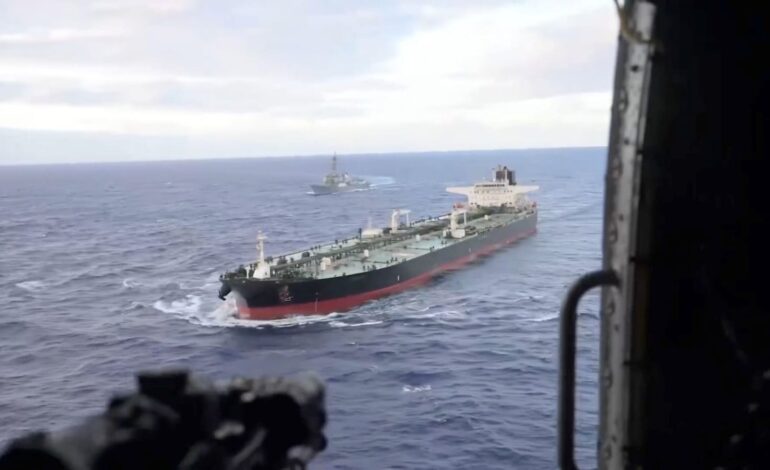

US naval forces boarded a sanctioned oil tanker in the Indian Ocean after a prolonged pursuit that began in the Caribbean, marking a high-profile enforcement action against illicit energy trade. The operation highlights Washington’s intensified efforts to enforce economic sanctions and strengthen maritime security across critical global shipping routes.
Officials said the tanker attempted to evade international sanctions while transporting crude oil linked to sanctioned entities. By intercepting the vessel after weeks of monitoring, US authorities reinforced their message that sanctions enforcement now extends across oceans and into vital maritime corridors.
How US Authorities Identified the Tanker
US authorities first identified the tanker in the Caribbean Sea after maritime intelligence systems flagged unusual sailing patterns. Analysts noticed repeated course changes, irregular transmission of tracking signals, and inconsistencies in the vessel’s registration data all common indicators of sanctions evasion.
Investigators also suspected the tanker of concealing its destination and ownership structure, tactics frequently used to bypass international monitoring systems. These red flags prompted US agencies to place the vessel under sustained surveillance.
Officials from the US Treasury and defense agencies coordinated closely to assess the tanker’s risk profile and determine whether it violated sanctions tied to energy shipments.
Increased Scrutiny of Sanctions Evasion at Sea
In recent years, the United States has expanded its focus on maritime sanctions enforcement, particularly in the oil and gas sector. Energy exports generate critical revenue for sanctioned governments and organisations, making tanker movements a central target for enforcement agencies.
To counter evasion tactics, US authorities now rely on:
-
Satellite imagery and maritime intelligence
-
Financial and shipping data analysis
-
Coordination with allied naval forces
-
Legal authorities permitting vessel interdiction
This case reflects how enforcement strategies now combine economic policy with naval capability to disrupt illicit trade networks.
Tracking the Vessel Across Oceans
After leaving the Caribbean, the tanker continued eastward, prompting US authorities to maintain continuous tracking across international waters. Surveillance teams monitored the vessel’s movements as it crossed major sea lanes and approached the Indian Ocean.
Experts say tracking a single vessel across multiple oceans requires extensive coordination and resources. The sustained pursuit suggested strong confidence in intelligence linking the tanker to sanctions violations.
As the ship entered the Indian Ocean one of the world’s busiest maritime regions US naval forces prepared to intercept.
Boarding Operation in the Indian Ocean
US warships and surveillance aircraft intercepted the tanker in the Indian Ocean and executed a controlled boarding operation. Trained maritime interdiction teams boarded the vessel and secured it without incident.
Naval forces detained the crew and took control of the ship to begin inspections. Investigators examined cargo documentation, shipping records, and onboard systems to determine whether the tanker carried sanctioned crude oil.
Officials emphasised that the operation followed strict legal and safety protocols to prevent escalation in a region critical to global commerce.
What Investigators Are Examining
Authorities are focusing on several key areas to determine the outcome of the case:
-
Cargo Verification
Investigators are analysing whether the oil onboard matches declared shipping documents and identifying its origin. -
Sanctions Compliance
Officials are determining whether the shipment violated US or international sanctions. -
Ownership and Flag State
Analysts are reviewing ownership structures and flag-state registration, which often obscure accountability. -
Crew Interviews and Ship Logs
Investigators are questioning crew members and reviewing navigation logs, communications, and tracking data.
Based on these findings, authorities may seize the vessel, detain it for further legal action, or release it if no violations emerge.
Sanctions Enforcement as Economic Strategy
The United States uses economic sanctions as a core foreign policy tool to restrict funding for governments and organisations accused of destabilising activities. In the energy sector, sanctions aim to cut off revenue streams that support such actions.
By boarding the tanker, US authorities demonstrated their willingness to enforce sanctions beyond financial systems and into physical supply chains. Maritime interdictions send a strong warning to shipping firms, traders, and insurers that sanctions violations carry operational and legal risks.
Legal and Maritime Security Considerations
Interdicting a commercial vessel in international waters requires careful adherence to international maritime law. Authorities must respect freedom of navigation while ensuring compliance with sanctions regimes.
Legal experts say such actions typically rely on:
-
Evidence of sanctions violations
-
Consent from the vessel’s flag state or applicable legal authority
-
Coordination with international partners
US officials stated that the operation complied with international law and respected sovereign rights.
Why the Indian Ocean Matters
The Indian Ocean serves as a vital artery for global trade, linking energy producers in the Middle East with markets in Asia and Europe. A significant share of the world’s oil shipments passes through this region each year.
Any enforcement action in these waters attracts global attention because it can affect:
-
Energy supply chains
-
Shipping insurance costs
-
Trade route stability
-
Diplomatic relations
By acting in the Indian Ocean, US authorities underscored their intent to protect the integrity of global shipping lanes.
Potential Impact on Shipping and Energy Markets
Although a single interdiction may not disrupt global oil supplies, repeated actions could reshape shipping behaviour. Companies may tighten compliance procedures and avoid high-risk cargoes or routes.
Possible ripple effects include:
-
Increased compliance and insurance costs
-
Greater scrutiny of vessel tracking systems
-
Route adjustments to avoid enforcement zones
-
Higher transparency requirements from regulators
Energy analysts warn that intensified enforcement could contribute to short-term market volatility if shipments face delays or seizures.
Responses From Officials and Analysts
US officials described the boarding as lawful and necessary to uphold sanctions and maritime security. They stressed that compliant shipping operations face no risk from such actions.
Maritime analysts, however, caution that enforcement must balance sanctions policy with navigational freedom. Excessive intervention could raise concerns among neutral shipping nations and complicate diplomatic relations.
Most experts agree that the operation reflects a broader global shift toward stricter oversight of maritime energy trade.
Broader Implications for Sanctions Compliance
The incident sends a clear signal to the shipping and energy industries: sanctions evasion is becoming increasingly difficult. Advanced tracking technologies, intelligence sharing, and naval enforcement leave little room for illicit operations.
Shipping companies may respond by:
-
Strengthening due diligence processes
-
Enhancing cargo verification systems
-
Reassessing relationships with high-risk partners
-
Investing in compliance technology
These changes could permanently reshape how companies manage risk in global trade.
What Comes Next
Authorities will determine the tanker’s fate after completing inspections and legal reviews. Potential outcomes include:
-
Seizure of the vessel or cargo
-
Legal proceedings against owners or operators
-
Diplomatic engagement with the flag state
-
Release of the ship if investigators find no violations
Regardless of the outcome, the case will likely influence future sanctions enforcement strategies.
Conclusion
The boarding of a sanctioned oil tanker by United States military in the Indian Ocean, following a prolonged pursuit from the Caribbean, illustrates the evolving nature of sanctions enforcement in a globalised economy. The operation highlights how economic policy, maritime security, and military capability now intersect on the world’s oceans.
As investigations continue, the incident will shape discussions around energy trade, compliance, and maritime law. For the global shipping industry, the message is unmistakable: sanctions enforcement has become more visible, more assertive, and increasingly global.